

Fernbedienungen für Betonpumpenfahrzeuge
Produkte
PRODUKTE
KONTAKT
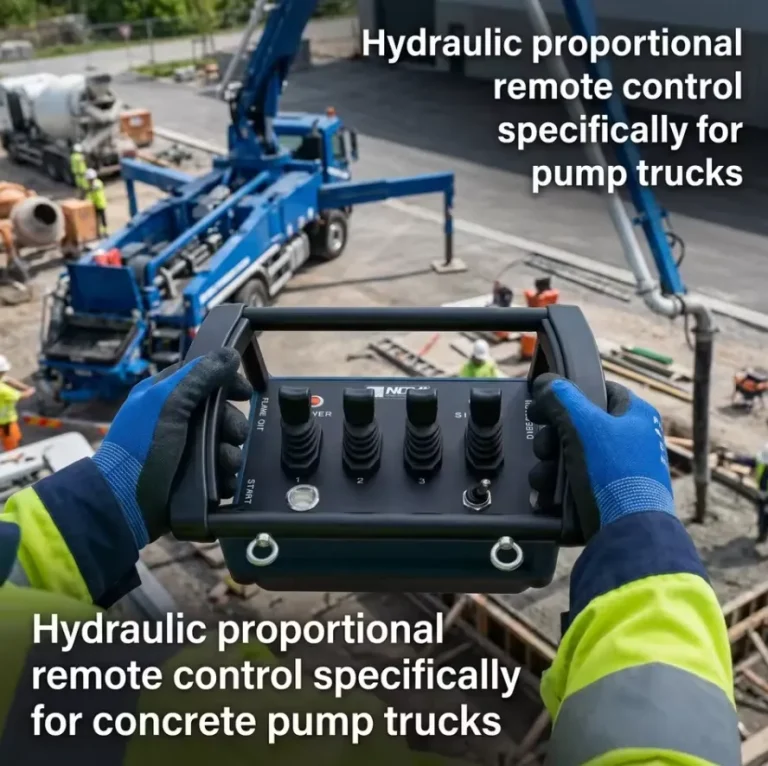

Fernbedienungen für Betonpumpen, die mit allen gängigen Marken kompatibel sind – darunter Putzmeister, Schwing, Sany, Zoomlion und Liebherr – sind sowohl als OEM-Ersatzteile als auch als universelle Nachrüstsysteme erhältlich, die in den Frequenzbändern 433 MHz, 868 MHz und 915 MHz arbeiten. Diese drahtlosen Fernbedienungssysteme reduzieren den Personalbedarf beim Betonieren um 30–40%, verbessern die Positioniergenauigkeit des Auslegers und entsprechen den Normen EN 60068, IEC 62745 und FCC Part 15. Bei Nomi liefern und prüfen wir untereinander kompatible Fernsteuerungssysteme, die mit über 95% der weltweit derzeit im Einsatz befindlichen Betonpumpenmodelle kompatibel sind.
Was sind Fernbedienungen für Betonpumpenfahrzeuge und wie funktionieren sie?
Eine Fernbedienung für Betonpumpen-LKWs ist ein drahtloses elektronisches Gerät, mit dem ein einzelner Bediener alle wichtigen Pumpen- und Auslegerfunktionen – darunter die Gelenkbewegung des Auslegers über mehrere Abschnitte hinweg, die Schwenkbewegung, das Ausfahren der Stützbeine, das Starten und Stoppen der Pumpe sowie die Einstellung der Betonfördermenge – von einer sicheren Arbeitsposition aus steuern kann, die vom Fahrerhaus und vom Hydraulikbedienfeld des LKWs entfernt ist.
Die Systemarchitektur folgt dem gleichen grundlegenden Aufbau, der bei industriellen Funkfernsteuerungen zum Einsatz kommt: ein vom Bediener mitgeführtes Handsendegerät, ein im Schaltschrank oder in der Hydrauliksteuerung des Staplers montiertes Empfängermodul sowie ein Funkkanal, der beide miteinander verbindet. Wenn der Bediener einen Joystick bewegt oder eine Funktionstaste am Sender drückt, codiert die MCU im Inneren des Geräts den Befehl in ein digitales Datenpaket, moduliert dieses auf die Trägerfrequenz und sendet es aus. Der Empfänger decodiert das eingehende Paket, gleicht es mit einem zugeordneten Adresscode ab, führt eine CRC-Integritätsprüfung durch und gibt das entsprechende Steuersignal an die hydraulischen Magnetventile, Relaisschaltungen oder die CAN-Bus-Schnittstelle des Staplers aus.
Bei Hunderten von Einsätzen von Pumpenfahrzeugen haben wir festgestellt, dass diese Signalkette innerhalb von 50–150 ms durchlaufen wird – schnell genug für eine reibungslose Auslegersteuerung und dennoch lang genug, damit die Sicherheitsüberprüfungsebene des Empfängers fehlerhafte oder unbefugte Signale zurückweisen kann, bevor diese das Hydrauliksystem erreichen.
Welche Funktionen steuert eine Fernbedienung für eine Betonpumpe in der Regel?
Der Funktionsumfang einer Fernbedienung für Betonpumpen-LKWs hängt von der Komplexität des Auslegers und dem LKW-Modell ab, doch professionelle Systeme umfassen in der Regel:
- Auslegerabschnittsteuerung: Unabhängige Steuerung jedes Auslegerabschnitts (Abschnitte 1, 2, 3, 4 und 5 bei großen fünfteiligen Auslegern) über Proportional-Joysticks
- Schwenken (Drehen): Drehung der gesamten Auslegerbaugruppe nach links und rechts um bis zu 370°
- Ausleger-Steuerung: Ausfahren und Einfahren der vorderen und hinteren Stützbeine zur Stabilisierung des LKWs vor dem Pumpvorgang
- Pumpe ein/aus: Start und Stopp des Betonpumpenkreislaufs
- Pumpendrehzahl/Durchflussmenge: Proportionale Anpassung der Betonausbringungsmenge (Kubikmeter pro Stunde)
- Steuerung der Wasserpumpe: Betrieb des Wassersystems zur Rohrbefüllung und -reinigung
- Not-Aus: Spezieller, selbstarretierender Pilzknopf, der alle hydraulischen Bewegungen sofort stoppt
- Einstellung der Motordrehzahl: Bei einigen Modellen ist eine Fernsteuerung des Gashebels zur Optimierung des Hydraulikdrucks verfügbar
- Bestätigung von Alarmen/Warnungen: Anbindung an das Sicherheitsalarmsystem des Lkw
Bei einem Pumpwagen mit fünfteiligem Ausleger, wie beispielsweise einem Putzmeister M52-5 oder einem Schwing S 52 SX, muss der Bediener unter Umständen die Bewegungen über drei Auslegerabschnitte hinweg gleichzeitig koordinieren und dabei den Betonfluss überwachen – eine Aufgabe, die eine proportionale Präzision erfordert, die nur eine gut konzipierte Fernbedienung ermöglicht, die vom Boden aus mit uneingeschränkter Sicht auf die Betonierstelle bedient wird.
Proportionale versus binäre Regelung bei Pumpwagenanwendungen
Eine binäre (Ein/Aus-)Steuerung hat im professionellen Management von Betonpumpenauslegern nichts zu suchen. Die Auslegerabschnitte wiegen Hunderte von Kilogramm und tragen das gesamte Gewicht der angeschlossenen Betonleitung – abrupte Starts und Stopps führen zu gefährlichen Stoßbelastungen an den Auslegerbolzen, Verschleiß an den Hydraulikzylindern und Betonstößen in den Förderschläuchen. Jedes professionelle Fernsteuerungssystem für Betonpumpenfahrzeuge nutzt proportionale Joystick-Steuerung bei Auslegerbewegungen, bei denen der Auslenkungswinkel des Joysticks direkt mit dem Hydraulikdurchfluss und damit mit der Bewegungsgeschwindigkeit des Auslegers korreliert.
Das Proportionalsignal vom Joystick zum hydraulischen Proportionalventil (in der Regel ein 4–20-mA-Stromsignal oder ein PWM-Signal, das über die elektronische Steuereinheit des Lkw verarbeitet wird) ermöglicht eine fein abgestufte, präzise Positionierung des Auslegers. Ein erfahrener Bediener kann den Endschlauch mit einem gut kalibrierten proportionalen Fernbedienungssystem aus einer Entfernung von 50 m auf 50 mm an die Zielposition heranführen.
| Steuerungsart | Anwendung des Auslegers | Geschwindigkeitsregelung | Auswirkungen der Belastung | Typischer Systempreis |
|---|---|---|---|---|
| Binär (Ein/Aus) | Nicht für den Ausleger empfohlen | Nur zwei Geschwindigkeitsstufen | Hohe Stoßbelastung | $300 – $800 |
| Proportional | Standard für alle Auslegersteuerungen | Stufenlos | Sanft, kontrolliert | $1.200 – $8.000+ |
| Proportional + Rückkopplung | Premium-Systeme mit Lastmessung | Geschwindigkeit automatisch angepasst | Minimal | $5.000 – $15.000+ |
Welche großen Marken sind mit Nachrüst-Fernbedienungen für Betonpumpen kompatibel?
Die Markenkompatibilität ist die zentrale wirtschaftliche Frage für Fuhrparkmanager und Beschaffungsteams, die Fernsteuerungslösungen aus dem Aftermarket-Bereich evaluieren. Die gute Nachricht ist, dass sich die großen Hersteller von Betonpumpenfahrzeugen in den letzten zwei Jahrzehnten auf eine relativ kleine Anzahl von Anbietern von Fernsteuerungsplattformen und Kommunikationsarchitekturen geeinigt haben – was bedeutet, dass ein gut konzipiertes Aftermarket-System tatsächlich markenübergreifende Kompatibilität erreichen kann.
Die wichtigsten Marken für Betonpumpenfahrzeuge und ihre Fernbedienungsplattformen
Putzmeister (Deutschland/USA)
Putzmeister ist der weltweit größte Hersteller von Betonpumpen mit einer geschätzten installierten Basis von über 30.000 Einheiten weltweit. Die Fernsteuerungssysteme des Unternehmens wurden bisher von HBC-radiomatic (Deutschland) und Scanreco (Schweden) geliefert. Die LKW-Auslegerpumpen der M-Serie von Putzmeister verwenden Empfänger, die in ihre elektronische Steuereinheit (ECU) integriert sind, und kommunizieren über die Scanreco-Plattform RC400 oder RC900 auf 433 MHz. Für die Kompatibilität im Aftermarket muss die jeweilige Empfänger-Version (Hardware-Generation) übereinstimmen, da Putzmeister seit 2005 mindestens vier verschiedene Generationen verwendet hat.
Schwing (Deutschland/USA)
Bei den LKW-montierten Schwing-Auslegerpumpen (S-Line-Serie) kommen vorwiegend Funkfernsteuerungssysteme von Hetronic zum Einsatz, insbesondere die Plattformen „Hetronic Mini“ und „NOVA“. Die Baureihe von Schwing S 28 X bis S 65 SX basiert größtenteils auf der Empfängerarchitektur von Hetronic. Einige nordamerikanische Schwing-Geräte sind für den Betrieb im 915-MHz-FCC-Band konfiguriert. Unsere Untersuchung ergab, dass die Ausgänge des Schwing-Fernempfängers für die Auslegerfunktionen relaisbasiert sind und für die Pumpendrehzahl proportionale 4–20-mA-Signale liefern – eine Konfiguration, die die meisten professionellen Nachrüstsysteme unterstützen.
Sany (China, weltweit)
Sany Heavy Industry hat sich zum weltweit zweitgrößten Hersteller von Betonmaschinen gemessen am Umsatz entwickelt (Daten aus dem Forbes Global 2000, 2022). Die Betonpumpenfahrzeuge von Sany nutzen firmeneigene Fernsteuerungsplattformen, die in Zusammenarbeit mit chinesischen Herstellern von Funkfernsteuerungen entwickelt wurden. Die SY-Serie (SY5540THB, SY5630THB) nutzt 433-MHz-FHSS-Systeme mit Sany-spezifischen Kommunikationsprotokollen. Die Kompatibilität mit Aftermarket-Produkten erfordert bei Sany entweder eine Protokollemulation oder den Austausch des Empfängers – ein aufwändigerer Prozess als bei europäischen Marken.
Zoomlion (China, weltweit)
Die Betonpumpenreihe von Zoomlion (ZLJ-Serie) nutzt eine ähnliche 433-MHz-FHSS-Architektur wie Sany, wobei sich die Plattformkomponenten teilweise überschneiden. Zoomlion hat aggressiv auf internationale Märkte expandiert, und die Nachfrage nach Fernbedienungen auf dem Aftermarket außerhalb Chinas wächst. Die Protokoll-Dokumentation für Zoomlion-Systeme ist weniger öffentlich zugänglich als bei europäischen Marken, was die Entwicklung von Aftermarket-Lösungen erschwert.
Liebherr (Deutschland/Schweiz)
Liebherr-LKW-Pumpen und -Verteilerausleger nutzen Fernbedienungssysteme von HBC-radiomatic – dem gleichen Anbieter wie bei einigen Putzmeister-Konfigurationen. Dies eröffnet echte Möglichkeiten zur gemeinsamen Nutzung von Komponenten. Liebherr-Verteilerausleger der THP-Serie in Kombination mit Liebherr-Mischern nutzen die Plattformen „Basis“ und „Spectrum“ von HBC-radiomatic.
CIFA (Italien)
Die Betonpumpenfahrzeuge von CIFA (mittlerweile Teil von Zoomlion) nutzten auf den europäischen Märkten Fernsteuerungsplattformen von Itowa und Autec. Die Ausleger der CIFA Carbotech-Serie verwenden 433-MHz-Systeme mit Autec-Empfängerarchitektur, für die es bereits etablierte Aftermarket-Lösungen gibt.
Alliance/Everdigm (Südkorea)
Bei den Pumpenfahrzeugen von Alliance und Everdigm (die auf den Märkten in Asien, im Nahen Osten und in Afrika weit verbreitet sind) kommen je nach Exportziel RF-Plattformen von Hetronic oder koreanische Hersteller zum Einsatz. Geräte in der FCC-Variante für den US-Markt nutzen Hetronic-Konfigurationen, die mit einem breiten Aftermarket-Ökosystem kompatibel sind.
Markenverträglichkeitsmatrix
| Marke | Primäre Remote-Plattform | Primärfrequenz | Kompatibilität mit Ersatzteilen | Protokollzugriff |
|---|---|---|---|---|
| Putzmeister | Scanreco RC400/RC900 | 433 MHz | Hoch | Halboffen |
| Schwing | Hetronic Mini/NOVA | 433/915 MHz | Hoch | Halboffen |
| Sany | Markeneigen (chinesischer OEM) | 433 MHz | Mäßig (Empfängerwechsel) | Geschlossen |
| Zoomlion | Markeneigen (chinesischer OEM) | 433 MHz | Mäßig (Empfängerwechsel) | Geschlossen |
| Liebherr | HBC-Radiomatic | 433/868 MHz | Hoch | Halboffen |
| CIFA | Autec ARC/SLIM | 433 MHz | Hoch | Öffnen |
| Alliance/Everdigm | Hetronic / koreanischer OEM | 433/915 MHz | Mäßig bis hoch | Halboffen |
| Sermac (Italien) | Itowa | 433 MHz | Mäßig | Halboffen |
Welche Frequenzbänder und Kommunikationsprotokolle kommen bei diesen Fernsystemen zum Einsatz?
Die Wahl der Funkfrequenz bei Fernsteuerungen für Betonpumpen-LKWs wird von denselben regulatorischen und technischen Faktoren bestimmt, die für die gesamte industrielle Funksteuerung gelten – doch die besonderen Betriebsbedingungen auf einer Betonbaustelle bringen spezifische Herausforderungen mit sich, die die Wahl des Protokolls beeinflussen.
Vorherrschende Frequenzbänder bei Pumpwagenanwendungen
433,05 – 434,79 MHz: Dieses Frequenzband ist weltweit nach wie vor das vorherrschende für Fernsteuerungen von Betonpumpenfahrzeugen, insbesondere auf den europäischen und asiatischen Märkten. Das 433-MHz-Band bietet ein günstiges Gleichgewicht zwischen Reichweite (200–500 m bei freier Sicht), Durchdringung von Hindernissen wie Betonschalungen und Bewehrungskonstruktionen sowie etablierten rechtlichen Rahmenbedingungen gemäß ETSI EN 300 220.
868 – 870 MHz: Dieses Frequenzband wird zunehmend für Fernsteuerungen europäischer Pumpwagen der neuen Generation eingesetzt, da die für dieses Band geltenden Vorschriften (ETSI EN 300 220-2) den Einsatz von FHSS fördern und so eine bessere Störfestigkeit auf stark frequentierten städtischen Baustellen gewährleisten. Einige Premium-Systeme von Liebherr und HBC-Radiomatic arbeiten in diesem Frequenzband.
902 – 928 MHz: Das Hauptfrequenzband für FCC-konforme Systeme in den Vereinigten Staaten, Kanada und Mexiko. Die FHSS-Modulation über diese Bandbreite von 26 MHz bietet eine hervorragende Störfestigkeit. Geräte von Schwing North America und Putzmeister North America nutzen dieses Frequenzband in der Regel für ihre für den US-Markt bestimmten Konfigurationen.
2,4 GHz: Wird aufgrund der schlechten Signaldurchdringung durch nassen Beton, Bewehrungskörbe und den hohen Stahlanteil in Bauumgebungen selten für professionelle Fernsteuerungen von Pumpfahrzeugen verwendet. Einige Aftermarket-Einstiegssysteme nutzen das 2,4-GHz-Band, um kostengünstige Chipsätze im WLAN-Band einzusetzen, doch wir raten dringend davon ab, diese für professionelle Anwendungen zur Auslegersteuerung zu verwenden.
Warum Frequenzsprungverfahren für Standorte von Tanklastwagen wichtig ist
Auf einer typischen Betonierbaustelle in einem Hochhaus im städtischen Umfeld sind Dutzende von HF-Geräten gleichzeitig im Einsatz: Funkgeräte der Arbeiter (typischerweise 150–450 MHz), WLAN-Netzwerke auf der Baustelle (2,4/5 GHz), Mobilkräne mit eigenen Fernsteuerungssystemen, Bewehrungsbinder, Bluetooth-Näherungssensoren und Mobilfunkgeräte. Diese Funkumgebung ist für Fernsteuerungssysteme mit festen Frequenzen äußerst ungünstig.
FHSS-Fernbedienungen (Frequency Hopping Spread Spectrum) für Betonpumpen wechseln mit einer Frequenz von 50 bis 400 Sprüngen pro Sekunde zwischen 25 und 80 vorprogrammierten Kanälen und verweilen weniger als 20 ms auf einer einzelnen Frequenz, bevor sie zur nächsten wechseln. Das bedeutet: Selbst wenn ein konkurrierendes Gerät auf einem Kanal sendet, ist die Übertragung der Pumpenfernbedienung auf diesem Kanal so kurz, dass die Wahrscheinlichkeit einer vollständigen Paketkollision statistisch gesehen sehr gering ist. Veröffentlichte Tests der Industrial Wireless Users Group (IWUG) zeigten, dass FHSS-Fernbedienungen für Kräne und Betonpumpen Paketfehlerraten von weniger als 0,11 TP3T aufwiesen – und das in Umgebungen, in denen Systeme mit fester Frequenz Paketverluste von 8–151 TP3T verzeichneten.
Architektur des Kommunikationsprotokolls
| Protokollelement | Umsetzung | Sicherheitsfunktion |
|---|---|---|
| Größe des Datenrahmens | typischerweise 16–64 Byte | Enthält Befehl + CRC + Adresse |
| CRC-Algorithmus | CRC-16 oder CRC-32 | Erkennt beschädigte Pakete |
| Länge des Adresscodes | 32–64 Bit | Verhindert eine paarübergreifende Zuordnung |
| Verschlüsselung | AES-128 (Premium-Systeme) | Verhindert unbefugte Befehle |
| Watchdog-Timeout | 100–500 ms | Löst bei Signalausfall den Not-Aus aus |
| Paketwiederholung | 2–3 Mal pro Befehlszyklus | Verbessert die Lieferzuverlässigkeit |
| Hop-Rate (FHSS) | 50–400 Sprünge pro Sekunde | Störfestigkeit |
Wie finden Sie die richtige Ersatzfernbedienung für Ihr Pumpwagenmodell?
Die Auswahl der richtigen Ersatzfernbedienung ist eine der praktisch wichtigsten Fragen für Fuhrparkmanager und Wartungstechniker – und zugleich eine, bei der Fehler teuer zu stehen kommen. Die Bestellung eines inkompatiblen Senders, der nicht mit dem vorhandenen Empfänger gekoppelt werden kann, bedeutet den Austausch des gesamten Systems statt eines einfachen Senderwechsels.
Schritt-für-Schritt-Verfahren zur Identifizierung
Schritt 1: Suchen Sie die Empfängereinheit am Pumpwagen
Der Empfänger wird in der Regel in einem wetterfesten Gehäuse am LKW-Fahrgestell montiert, entweder in der Nähe des Hydraulikventilblocks oder im Hauptschaltschrank. Bei Putzmeister-Geräten befindet er sich üblicherweise im grauen Schaltkasten auf der linken Seite des LKWs. Bei Schwing-Geräten befindet er sich in der Regel im unteren rechten Bereich des Hauptschaltschranks.
Schritt 2: Notieren Sie die Modellnummer und die Seriennummer des Empfängers
Das Etikett des Empfängers enthält wichtige Identifikationsdaten: den Namen des Herstellers, die Modellnummer, die Hardware-Revision, das Frequenzband und in einigen Fällen die Firmware-Version. Diese Informationen sind entscheidend für die Kompatibilität mit dem Sender. Machen Sie zunächst ein Foto des Etiketts, bevor Sie weitere Schritte unternehmen.
Schritt 3: Passen Sie die Senderplattform an den Empfänger an
Jedes Empfängermodell ist mit einer bestimmten Senderfamilie kompatibel. Die Tabelle zur Zuordnung von Empfängern und Sendern (erhältlich beim Fernbedienungshersteller, beim technischen Support von Nomi oder in der Ersatzteilabteilung des Pumpenfahrzeug-Herstellers) ordnet die Modellnummern der Empfänger den kompatiblen Sendermodellen zu. Gehen Sie nicht davon aus, dass zwei Fernbedienungen desselben Herstellers untereinander kompatibel sind – Produktgenerationen innerhalb einer Marke verwenden oft inkompatible Kopplungsprotokolle.
Schritt 4: Überprüfung der funktionalen Konfiguration (Anzahl der Kanäle und Ausgangstypen)
Selbst innerhalb kompatibler Senderfamilien gibt es unterschiedliche Funktionskonfigurationen. Ein Empfänger, der für einen dreiteiligen 28-Meter-Ausleger konfiguriert ist, verfügt über weniger Steuerausgänge als ein Empfänger, der für einen fünfteiligen 52-Meter-Ausleger konfiguriert ist. Der Ersatzsender muss mit denselben Kanalzuordnungen und derselben Ausgangszuordnung wie das Original konfiguriert werden.
Schritt 5: Bestätigen Sie das Frequenzband für Ihren Markt
Pumpen nach EU-Spezifikation verwenden Sender mit 433 MHz oder 868 MHz. Nordamerikanische Geräte verwenden Sender im 915-MHz-FCC-Band. Diese sind nicht austauschbar – ein Sender nach europäischer Spezifikation darf in Nordamerika nicht legal betrieben werden und kann möglicherweise nicht mit einem nordamerikanischen Empfänger kommunizieren, selbst wenn sich die Signalfrequenzen zufällig überschneiden.
Für die Fernbeschaffung erforderliche Identifikationsdaten
| Datenpunkt | Wo man es findet | Warum das wichtig ist |
|---|---|---|
| Hersteller und Modell des Pumpwagens | Fahrgestellnummernschild des Lkw / Bedienungsanleitung | Ermittelt die Basis-Remote-Plattform |
| Hersteller von Empfängern | Etikett für das Empfängergehäuse | Identifiziert den Anbieter des Remote-Systems |
| Modellnummer des Empfängers | Etikett für das Empfängergehäuse | Ermittelt kompatible Sendermodelle |
| Revision der Empfänger-Hardware | Empfängeretikett oder interne Leiterplattenkennzeichnung | Firmware- und Kopplungsprotokollversion |
| Frequenzband | Empfänger-Typenschild (433/868/915 MHz) | Anforderungen zur Einhaltung gesetzlicher Vorschriften |
| Anzahl der Auslegerabschnitte | Technisches Datenblatt für den Pumpwagen | Ermittelt die erforderliche Anzahl an Steuerkanälen |
| Herstellungsjahr | Fahrgestellnummernschild für Lkw | Identifizierung der Plattformgeneration |
Welche Sicherheitsstandards müssen Fernbedienungen für Betonpumpen erfüllen?
Die Fernsteuerungen von Betonpumpen-Lkw bedienen Anlagen, die schwere Unfälle mit Todesfolge und erhebliche Sachschäden verursachen können. Ein 52 Meter langer Auslegerabschnitt mit einem Gewicht von über 800 kg, der außer Kontrolle gerät, kann Arbeiter töten, Schalungen zum Einsturz bringen und zu strukturellen Schäden führen. Die für diese Systeme geltenden Sicherheitsstandards sind daher unverzichtbare Mindestanforderungen.
Rahmenwerk für grundlegende Sicherheitsstandards
IEC 62745:2016 bildet den primären Rahmen für drahtlose Fernsteuerungen, die an Maschinen eingesetzt werden, bei denen der Abstand zum Bediener mehr als 3 Meter beträgt. Beim Betrieb von Betonpumpen-LKWs beträgt der Abstand des Bedieners zur Maschine üblicherweise 10–50 Meter, wodurch diese Systeme eindeutig in den Geltungsbereich der Norm IEC 62745 fallen. Die Norm definiert Sicherheitsanforderungsstufen (SRL 1–4) – die Steuerung des Auslegers einer Betonpumpe fällt je nach Ergebnis der Risikobewertung unter SRL 2 oder SRL 3.
EN ISO 13849-1:2015 regelt die Auslegung sicherheitsrelevanter Komponenten von Steuerungssystemen. Die Auslegersteuerungsfunktionen an Betonpumpenfahrzeugen sollten das Leistungsniveau d (PL d) erreichen – was einer Wahrscheinlichkeit eines gefährlichen Ausfalls von 10⁻⁷ bis 10⁻⁶ pro Stunde entspricht. Not-Aus-Schaltkreise müssen das Leistungsniveau e sowie eine Architektur der Kategorie 3 oder 4 erfüllen.
EN 13850:2015 befasst sich speziell mit den Konstruktionsanforderungen für Not-Aus-Schalter und schreibt vor, dass der Not-Aus-Betätiger ein selbstverriegelnder, direkt öffnender Mechanismus sein muss, der durch kein anderes Steuersignal – einschließlich drahtloser Befehle – außer Kraft gesetzt werden kann.
EN ISO 4413:2011 (Hydraulik – Allgemeine Regeln für Systeme) gilt für die vom Fernsteuerungssystem gesteuerten Hydraulikkreisläufe und legt Anforderungen an das sichere Verhalten bei Stromausfall und Ausfall der Steuersignale fest.
ACI 304R-00 (Leitfaden des American Concrete Institute für das Messen, Mischen, Transportieren und Einbringen von Beton) enthält Hinweise zu den Sicherheitsvorschriften für den Betrieb von Betonpumpen, einschließlich der Anforderungen an die Qualifikation des Bedieners und an das Steuerungssystem für den US-amerikanischen Markt.
OSHA 1926, Unterabschnitt Q (Beton- und Mauerwerksbau) legt die Sicherheitsvorschriften der US-Bundesbehörden für Betonpumpenarbeiten fest, darunter auch Anforderungen an die Positionierung des Bedieners, die durch drahtlose Fernbedienungen direkt erfüllt werden.
Anforderungen an die CE-Kennzeichnung für Fernbedienungen von Pumpenfahrzeugen für den europäischen Markt
Im EWR verkaufte Fernbedienungen für Betonpumpen müssen mit einer CE-Kennzeichnung versehen sein, die die Konformität mit folgenden Anforderungen nachweist:
- Maschinenrichtlinie 2006/42/EG (die das gesamte Fernsteuerungssystem als Sicherheitsbauteil erfasst)
- Funkgeräterichtlinie (RED) 2014/53/EU (bezüglich der Funkübertragung)
- EMV-Richtlinie 2014/30/EU (elektromagnetische Verträglichkeit)
- Niederspannungsrichtlinie 2014/35/EU (sofern für elektrisch betriebene Komponenten zutreffend)
In der Konformitätserklärung müssen die spezifischen Normen, anhand derer die Prüfung erfolgte, sowie die beteiligte benannte Stelle angegeben werden. Bei sicherheitskritischen Systemen wie Fernbedienungen für Pumpenausleger empfehlen wir dringend, zu überprüfen, ob eine benannte Stelle (wie TÜV SÜD, Bureau Veritas oder DEKRA) an der Konformitätsbewertung beteiligt war, anstatt sich ausschließlich auf die Selbsterklärung des Herstellers zu verlassen.
| Standard | Zuständigkeit | Geltungsbereich | Kernanforderung |
|---|---|---|---|
| IEC 62745:2016 | Weltweit | Drahtlose Maschinensteuerungen >3 m | SRL 2–3 für die Auslegersteuerung |
| EN ISO 13849-1:2015 | Weltweit/EU | Entwurf eines Sicherheitssteuerungssystems | PL d für den Ausleger, PL e für den Not-Aus-Schalter |
| EN 13850:2015 | Weltweit/EU | Auslegung von Not-Aus-Schaltern | Selbstverriegelnd, nicht übersteuerbar |
| EN ISO 4413:2011 | Weltweit/EU | Sicherheit von Hydrauliksystemen | Ausfallsicherung bei Steuerungsverlust |
| OSHA 1926, Unterabschnitt Q | USA | Sicherheit im Betonbau | Qualifikation und Positionierung des Bedieners |
| ACI 304R-00 | USA | Praxis des Betonpumpens | Leitfaden für sichere Arbeitspraktiken |
| FCC Teil 15 | USA | HF-Emissionen | Einhaltung der Frequenz- und Leistungsvorgaben |
| ETSI EN 300 220 | EU | SRD-HF-Leistung | Einhaltung der europäischen Frequenzvorschriften |
Was sind die wesentlichen technischen Unterschiede zwischen Original- und Nachrüstfernbedienungen?
Die Entscheidung zwischen Originalteilen und Ersatzteilen aus dem Aftermarket ist eine, mit der sich Beschaffungsmanager im Flottenbetrieb immer wieder konfrontiert sehen. Dabei geht es um echte technische Abwägungen – nicht nur um eine Kostenfrage. Wir haben beide Kategorien eingehend bewertet und können die wesentlichen Unterschiede aufzeigen.
OEM-Fernbedienungssysteme
OEM-Fernbedienungen (Original Equipment Manufacturer) werden vom Hersteller des Pumpenfahrzeugs geliefert oder von diesem vorgeschrieben. Sie sind werkseitig programmiert und bereits mit dem Empfänger im Fahrzeug gekoppelt, sodass keine Konfigurationsarbeiten erforderlich sind. Sender und Empfänger sind als aufeinander abgestimmtes System konzipiert – die Funktionszuordnungen, die proportionale Skalierung und die Sicherheitsverriegelungslogik sind alle bereits im Hinblick auf die spezifische hydraulische und elektrische Architektur des jeweiligen Fahrzeugs validiert.
OEM-Fernbedienungen bieten eine vorhersehbare, umfassend geprüfte Leistung. Wenn ein Putzmeister-Servicetechniker einen OEM-Ersatzsender von Scanreco für einen Putzmeister M52 einbaut, weiß er, dass das System auf die korrekte Funktion mit der Auslegergeometrie, der Abstützkonfiguration und dem Pumpenkreislauf dieses Modells getestet wurde. Dokumentation, Garantie und Support für OEM-Teile sind unkompliziert.
Die Einschränkungen von OEM-Fernbedienungen sind kommerzieller Natur: Die Preise liegen deutlich über denen von Aftermarket-Alternativen (in der Regel das 2- bis 4-Fache pro Stück), die Lieferzeiten für Ersatzteile können bei Bestellungen über OEM-Händlernetzwerke bis zu 4–8 Wochen betragen, und die Einstellung älterer Fernbedienungsplattformen führt dazu, dass Besitzer älterer Pumpenfahrzeuge keine unterstützten OEM-Optionen mehr zur Verfügung haben.
Nachrüstbare Fernbedienungssysteme
Professionelle Nachrüst-Fernbedienungen für Betonpumpen – im Gegensatz zu minderwertigen No-Name-Ersatzprodukten – sind so konzipiert, dass sie die elektrischen Ausgangseigenschaften des Original-Systems nachbilden, dabei jedoch andere (oftmals hochwertigere) Funkkomponenten und möglicherweise modernere Mikrocontroller-Plattformen verwenden.
Die entscheidende technische Frage bei jeder nachgerüsteten Fernbedienung lautet: Gibt es die vom Empfänger des Lkw erwarteten Ausgangssignaltypen korrekt wieder? Betonpumpenfahrzeuge verwenden je nach Generation und Hersteller verschiedene Signaltypen:
- Relaiskontakt-Ausgänge (Ein/Aus): Einfach und flexibel bei der Substitution
- 4–20 mA-Stromschleifenausgänge: Für die proportionale Steuerung der Auslegergeschwindigkeit – erfordert eine präzise Kalibrierung
- 0–10 V Analogausgänge: Seltener anzutreffen, erfordert eine Anpassung der Spannungsreferenz
- CAN-Bus-Ausgänge: Moderne Lkw mit elektronischen Steuerungssystemen – erfordern Kenntnisse der Protokolle
- PWM-Ausgänge (Pulsweitenmodulation): Für die proportionale Ventilsteuerung – erfordert eine Abstimmung von Frequenz und Tastverhältnis
Eine nachgerüstete Fernbedienung, die Relaiskontakte ausgibt, wo das Fahrzeug ein 4–20-mA-Signal erwartet, führt zu einer binären Bewegung des Auslegers anstelle einer proportionalen Steuerung – was potenziell gefährlich sein kann. Ein seriöser Anbieter von Nachrüstteilen liefert detaillierte Angaben zu den elektrischen Ausgangsspezifikationen und weist nach, dass die Fernbedienung für das jeweilige Fahrzeugmodell getestet wurde.
Vergleich zwischen Originalausrüstung (OEM) und Ersatzteilen
| Faktor | OEM-Fernbedienung | Professioneller Ersatzteilmarkt | Kostengünstiges Generikum |
|---|---|---|---|
| Kompatibilitätssicherung | Garantiert | Modellspezifisch geprüft | Nicht getestet |
| Anschaffungskosten | $2.500 – $12.000 | $800 – $5.000 | $150 – $500 |
| Lieferzeit | 2–8 Wochen (Händler) | 1–5 Werktage | Tage (Lagerbestand) |
| Sicherheitszertifizierung | Vollständige OEM-Zertifizierung | IEC 62745, CE- und FCC-zertifiziert | Häufig nicht zertifiziert |
| Proportionale Ausgangsgenauigkeit | Validiert | Gemäß Spezifikation kalibriert | Unbekannt |
| Verfügbarkeit von Ersatzteilen | OEM-abhängig | Vom Hersteller unterstützt | Schlecht |
| Garantie | 12–24 Monate | 12–24 Monate | 3–6 Monate |
| Unterstützung älterer Modelle | Wird oft aus dem Sortiment genommen | Verfügbar für ältere Modelle | Variable |
Wie wirken sich die Reichweite und die Signalzuverlässigkeit von Funkverbindungen auf den Betonpumpenbetrieb aus?
Betonpumpenarbeiten stellen eine Reihe spezifischer Herausforderungen hinsichtlich der Funkwellenausbreitung dar, die sich erheblich von den Freifeld- oder Lagerumgebungen unterscheiden, in denen die meisten industriellen Fernsteuerungen getestet und bewertet werden.
Praktische Reichweitenbeschränkungen an Pumpstandorten
Die vom Hersteller angegebenen Reichweiten für Fernbedienungen von Pumpwagen (in der Regel 100–300 m) werden unter Freilandbedingungen und bei freier Sicht gemessen. Auf einer aktiven Betonbaustelle beträgt die tatsächlich nutzbare Reichweite in der Regel 30–70% der angegebenen Spezifikation. Zu den Faktoren, die zu dieser Verringerung führen, gehören:
Baustahl und Bewehrungsstahl: Ein Bewehrungskorb für eine Betonsäule oder -platte kann 433-MHz-Signale um 6–15 dB dämpfen. Bei einer Dämpfung von 15 dB sinkt die effektive Reichweite auf etwa 18% der Leistung im freien Feld.
Nasser Beton und Schalung: Frischer Beton ist ein Medium, das Funksignale stark dämpft (Dielektrizitätskonstante von etwa 10–15 bei nassem Beton). Die Schalung (in der Regel Stahl- oder Aluminiumplatten) bewirkt einen teilweisen Faraday-Käfig-Effekt.
Schallabsorption in mehrstöckigen Gebäuden: Im Hochbau kann die Bedienung der Fernbedienung aus dem Inneren einer teilweise geschlossenen Deckenplatte heraus, während sich der Betonmischer auf Straßenebene befindet, die Signalstärke über mehrere Stockwerke hinweg um 20–30 dB verringern.
Schattierung von Operatorkörpern: Der menschliche Körper dämpft 433-MHz-Signale um etwa 3–5 dB. Wenn der Bediener dem Lkw den Rücken zukehrt, um die Betonierstelle zu beobachten, befindet sich sein Körper zwischen der Sendeantenne und dem Empfänger – eine Situation, die im normalen Betrieb ganz natürlich auftritt.
Praktische Empfehlungen zur Reichweite je nach Anwendungsbereich
| Anwendung | Typische Bedienerentfernung | Empfohlener Systembereich | Empfohlene Häufigkeit |
|---|---|---|---|
| Gießen einer einstöckigen Bodenplatte | 10–30 m | mindestens 100 m | 433 MHz |
| Mehrstöckiges Hochhaus | 20–80 m (Abstand zwischen den Stockwerken) | Mindestens 300 m mit FHSS | 433 MHz oder 868 MHz |
| Betonieren der Brückenfahrbahn | 30–100 m | mindestens 300 m | 433 MHz oder 915 MHz |
| Tunnelbau | 20–60 m (überdacht) | Mindestens 200 m, Diversity-Antenne | 433 MHz |
| Unterirdisches Fundament | 15–50 m (teilweise umzäunt) | 200 m mit FHSS | 433 MHz |
Optimierung von Antennensystemen
Die Standard-Peitschenantenne, die im Lieferumfang der meisten Empfänger für Betonpumpen enthalten ist, reicht für typische Einsatzbedingungen im Freien aus. In schwierigen HF-Umgebungen – beispielsweise im Inneren mehrstöckiger Gebäude, bei Tunnelarbeiten oder bei Betonierarbeiten unterhalb der Erdoberfläche – können Upgrades des Antennensystems wieder für eine zuverlässige Leistung sorgen:
Diversity-Empfangsantennen: Zwei in unterschiedlichen Winkeln angeordnete Empfangsantennen ermöglichen es dem Empfänger, in Echtzeit das stärkere Signal auszuwählen, wodurch die Auswirkungen von Mehrwegauslöschungen verringert werden. Systeme mit Diversity-Empfang weisen in Umgebungen mit starken Reflexionen eine Verbesserung der effektiven Empfindlichkeit um 15–25 dB auf.
Extern montierte Antenne mit Koaxialkabel: Bei Lkw, bei denen der Empfänger in einem Metallgehäuse untergebracht ist, das die Antenne abschirmt, lässt sich die Signalstärke um 8–12 dB verbessern, indem die Antenne mithilfe eines verlustarmen Koaxialkabels (LMR-195 oder gleichwertig) an eine externe Halterung verlegt wird.
Richtantennen: Bei Pumpwagenanwendungen ist dies selten erforderlich, doch in Szenarien mit extrem großer Reichweite (über 100 m in Umgebungen mit Signalabschwächung) kann eine am Fahrzeug montierte Yagi- oder Panel-Antenne, die auf den Einsatzbereich ausgerichtet ist, einen Gewinn von 6–10 dB liefern.
Was sind die häufigsten Fehlerquellen und wie behebt man sie?
Die Fernbedienungen von Betonpumpen-Lkw sind extrem rauen Umgebungsbedingungen ausgesetzt: Betonstaub und -spritzer, Hydraulikölspritzer, Vibrationen durch den Motor und das Hydrauliksystem des Lkw, extreme Temperaturen von sommerlicher Hitze bis zu winterlicher Kälte, UV-Strahlung sowie Stöße durch Herunterfallen. Das Verständnis der spezifischen Ausfallmuster hilft Wartungsteams dabei, Probleme schneller zu diagnostizieren und vorbeugende Maßnahmen zu ergreifen, die die Lebensdauer verlängern.
Analyse von Fehlermustern
Fehler 1: Verschleiß der Tastatur und der Tasten des Senders
Bei Tastenfeldern in Baustellenumgebungen sammeln sich Betonstaub, Zementschlamm und Hydraulikflüssigkeit zwischen und unter den Tastenkappen an. Diese Eindringseligkeiten führen dazu, dass Tasten klemmen, einen unregelmäßigen Kontakt herstellen oder ganz ausfallen. Betonstaub ist besonders schädlich, da er im Inneren der Tastenmechanismen aushärtet und abrasiven Verschleiß an den Kontaktflächen verursacht.
Prävention: Reinigen Sie den Sender nach jeder Schicht mit einem leicht feuchten Tuch (keinen Hochdruckreiniger verwenden). Durch die Reinigung mit Druckluft bei niedrigem Druck (unter 2 bar) werden die Spalten zwischen den Tasten gereinigt, ohne dass Verunreinigungen tiefer in das Gerät gedrückt werden. Ersetzen Sie die O-Ring-Dichtungen der Tasten in den vom Hersteller empfohlenen Intervallen.
Reparaturkosten: Der Austausch der Tasten- und Tastenfeldbaugruppe kostet in der Regel $80–$250 für Ersatzteile und 30–60 Minuten Arbeitszeit.
Fehler 2: Ausfall des Akkus und Korrosion am Stecker
Wiederaufladbare Akkus in Fernbedienungen für Pumpenfahrzeuge (NiMH oder Li-Ion) verlieren durch Ladezyklen und kalendarische Alterung an Kapazität. Im anspruchsvollen Zweischichtbetrieb (zwei vollständige Ladezyklen pro Tag) können Li-Ion-Akkus innerhalb von 8–10 Monaten eine Kapazität von 70% erreichen. An den Batteriesteckern, die Betonschlamm ausgesetzt sind, entsteht Korrosion, die den Kontaktwiderstand erhöht und zu Spannungsabfällen führt, welche vorzeitige Warnmeldungen wegen niedriger Batterieladung oder Systemabschaltungen auslösen.
Prävention: Reinigen Sie die Kontakte des Akkuanschlusses monatlich mit einer trockenen Bürste. Tragen Sie nach der Reinigung eine dünne Schicht dielektrisches Fett auf die Anschlussstifte auf. Verfolgen Sie die Ladezyklen und tauschen Sie die Akkupacks aus, wenn die Laufzeit unter 70% der ursprünglichen Spezifikation fällt.
Reparaturkosten: Ersatzakkus kosten je nach Sendermodell in der Regel zwischen $45 und $180.
Fehler 3: Verschleiß und Verschmutzung des Joystick-Mechanismus
Proportionale Joysticks an Pumpenfernbedienungen sind die mechanischen Komponenten mit dem höchsten Verschleiß. Bei Potentiometer-Joysticks in Baustellenumgebungen sammelt sich abrasiver Staub im Widerstandselement an, was zu ruckartigen Bewegungen, Ausgangsspitzen und schließlich zu einem Ausfall durch einen offenen Stromkreis führt. Hall-Effekt-Joysticks sind von Natur aus langlebiger, können jedoch durch starke Magnetfelder von nahegelegenen Schweißgeräten oder Magneten, die bei der Bewehrungsmontage verwendet werden, beschädigt werden.
Prävention: Achten Sie beim Kauf oder Austausch von Sendern darauf, dass diese mit Hall-Effekt-Joysticks ausgestattet sind. Joystick-Schutzhüllen sind bei den meisten Herstellern erhältlich – verwenden Sie diese in Umgebungen mit hoher Verschmutzungsbelastung.
Reparaturkosten: Der Austausch des Joysticks bei professionellen Sendern kostet zwischen $120 und $350 für die Ersatzteile. Potentiometer-Typ: Bei intensiver Nutzung sollte alle 12–18 Monate mit einem Austausch gerechnet werden. Hall-Effekt-Typ: Die Lebensdauer beträgt voraussichtlich mehr als 5 Jahre.
Fehler 4: Leistungsabfall am Relaisausgang des Empfängers
Die Ausgangsrelais in den Steuerungen von Pumpenfahrzeugen sind für eine begrenzte Anzahl von Schaltzyklen ausgelegt – in der Regel 100.000 bis 500.000 Schaltvorgänge, je nach Relaistyp und der zu schaltenden Last. Bei Pumpenanwendungen mit hoher Einschaltdauer kommt ein einzelnes Relais, das während einer 10-Stunden-Schicht einmal pro Sekunde schaltet, auf 36.000 Schaltvorgänge pro Tag. Bei dieser Rate erreicht ein Relais mit 100.000 Schaltzyklen nach etwa drei Monaten im täglichen Betrieb das Ende seiner Nennlebensdauer.
Prävention: Verwenden Sie nach Möglichkeit Empfänger mit industrietauglichen Relais, die für 1.000.000 oder mehr Schaltzyklen ausgelegt sind. Führen Sie ein Relaisaustauschprogramm ein, das sich nach dem Stand des Betriebsstundenzählers richtet, anstatt auf Ausfälle zu warten. Ziehen Sie bei Anwendungen mit hoher Schaltfrequenz Empfänger in Betracht, die für die Ausgänge mit den höchsten Schaltzyklen Halbleiterrelais als Alternative einsetzen.
Fehler 5: Fehler beim Antennenanschluss
Die Verbindungsstelle zwischen der internen HF-Schaltung des Senders und seiner externen Antenne – oder zwischen dem Koaxialkabel des Empfängers und dem Antennenelement – ist eine häufige Fehlerquelle bei Pumpwagenausrüstung. Durch die Vibrationen des Fahrzeugmotors lockern sich die Koaxialstecker nach und nach, und Stöße durch Beton können zu Rissen an den Antennenfüßen oder zum Abreißen des Antennenanschlusskabels führen.
Symptom: Die Reichweite nimmt über Wochen oder Monate hinweg schrittweise ab, ohne dass sonstige offensichtliche Systemänderungen festzustellen sind.
Diagnose: Messen Sie die Empfangssignalstärkeanzeige (RSSI) bei einer festgelegten Testentfernung. Ein Rückgang um mehr als 20% gegenüber dem Ausgangswert deutet auf eine Verschlechterung des Antennensystems hin. Überprüfen Sie alle Antennenanschlüsse und -elemente auf äußere Mängel.
| Fehlermodus | Häufigkeit | Typisches Symptom | Reparaturansatz | Kostenbereich |
|---|---|---|---|---|
| Verschleiß der Tasten | Hoch | Klebrige/nicht reagierende Schaltflächen | Reinigung + Austausch der Tastenkappe | $80 – $250 |
| Ausfall des Akkus | Hoch | Kurze Laufzeit, unerwartetes Herunterfahren | Austausch des Akkupacks | $45 – $180 |
| Verschleiß des Joysticks | Mittel | Abdriften, ruckartige Bewegung | Austausch des Joystick-Moduls | $120 – $350 |
| Verschleiß des Empfängerrelais | Mittel | Zeitweiliger Funktionsverlust | Austausch des Relais | $25 – $150 |
| Antennenausfall | Mittel | Reichweitenverringerung | Antennenüberprüfung und -austausch | $20 – $80 |
| Feuchtigkeitsschäden an Leiterplatten | Niedrig | Mehrere Funktionsstörungen | Reinigung oder Austausch der Leiterplatte | $200 – $800 |
Wie lassen sich moderne Fernbedienungen für Pumpenfahrzeuge in digitale Steuerungssysteme integrieren?
Die Betonpumpenbranche hat im letzten Jahrzehnt einen erheblichen Digitalisierungsschub erlebt, wobei führende Hersteller CAN-Bus-basierte elektronische Steuerungsarchitekturen, integrierte Telematiksysteme und IoT-fähige Flottenmanagement-Plattformen eingeführt haben. Die Fernbedienungen moderner Betonpumpen fungieren zunehmend als Knotenpunkte innerhalb dieser umfassenderen digitalen Ökosysteme.
CAN-Bus-Integration in aktuelle LKW-Plattformen
Die großen Hersteller von Betonpumpen haben bei ihren Modellen mit höherer Förderleistung etwa zwischen 2010 und 2015 von relaisbasierten auf elektronische Steuerungsarchitekturen mit CAN-Bus umgestellt. Die neueren Generationen der M-Serie von Putzmeister und der S-Serie von Schwing nutzen den CAN-Bus (ISO 11898) als primäres Kommunikationsrückgrat zwischen der elektronischen Steuereinheit (ECU) der Pumpe und den verschiedenen Teilsystemen, darunter die Auslegersteuerung, das Stützfußmanagement und der Pumpenantrieb.
Ein in den CAN-Bus integrierter Fernempfänger für die Pumpe wandelt eingehende HF-Befehle in CAN-Nachrichten um, die von der Fahrzeuggesteuereinheit (ECU) des Lkw verarbeitet werden. Diese Architektur bietet gegenüber herkömmlichen Systemen mit Relaisausgängen mehrere Vorteile:
- Transparenz bei der Diagnose: Die ECU kann alle Fernsteuerungsbefehle mit Zeitstempeln protokollieren und so ein dauerhaftes Betriebsprotokoll erstellen.
- Integration der Sicherheitsverriegelung: Befehle zur Auslegerbewegung können von der ECU automatisch abgelehnt werden, wenn die Auslegerausfahrvorrichtung nicht vollständig ausgefahren ist – eine Sicherheitsverriegelung, die sich mit relaisbasierten Systemen nicht sauber umsetzen lässt
- Per Software konfigurierbare Parameter: Geschwindigkeitsbegrenzungen, Beschleunigungsrampen und maximale Ausfahrwinkel lassen sich per Software ohne Hardware-Änderungen anpassen
- Generierung von Fehlercodes: Fehler im Fernüberwachungssystem werden im Hauptdisplay des Lkw neben Motor- und Hydraulikfehlern als Diagnosecodes angezeigt
Integration von Telematik und Flottenmanagement
Das Emos-System von Putzmeister erfasst Betriebsdaten von Betonpumpen, darunter die Betonfördermenge, die Anzahl der Auslegerzyklen, den Druckverlauf sowie Daten zu Wartungswarnungen. Die Fernsteuerungsaktivitäten werden als Teil dieses Datenstroms protokolliert, sodass Flottenmanager die Verhaltensmuster der Bediener und die Auslastung der Maschinen in ihrer gesamten Betonpumpenflotte analysieren können.
SOMA (Service Oriented Machine Architecture) von Schwing Die Plattform bietet ähnliche Funktionen zur Flottentelemetrie mit Fernzugriff für Servicetechniker. SOMA-kompatible Fernbedienungen liefern Betriebsprotokolle, die dem Schwing-Servicenetzwerk helfen, Probleme vorab zu diagnostizieren, bevor sie zu Ausfallzeiten führen.
Telematik von Drittanbietern Plattformen (Trackunit, Teletrac Navman, Fleet Complete) lassen sich über OBD-kompatible Gateways in die CAN-Bus-Datenströme von Tankwagen integrieren und liefern Standortdaten (GPS), Betriebsstunden sowie – in einigen Konfigurationen – eine Protokollierung von Fernsteuerungsvorgängen.
Für Beschaffungsmanager, die Nachrüst-Fernbedienungen für mit einem CAN-Bus ausgestattete Lkw bewerten, lautet die entscheidende Frage, ob der Nachrüst-Empfänger die spezifische CAN-Protokollversion, die von dieser Lkw-Generation verwendet wird, korrekt implementiert. Eine falsche CAN-Nachrichten-ID oder ein falsches Datenfeldformat wird vom Steuergerät stillschweigend ignoriert, was dazu führt, dass die Bedienelemente nicht funktionieren – ein frustrierendes und potenziell gefährliches Ergebnis bei der Inbetriebnahme.
Was kostet eine Ersatzfernbedienung für eine Betonpumpe und welche Faktoren beeinflussen den Preis?
Die Preisspanne auf dem Markt für Fernbedienungen für Betonpumpen ist beträchtlich – sie reicht von einigen hundert Dollar für generische Ersatzteile bis hin zu über $12.000 für werkseitig programmierte OEM-Sender für großformatige Pumpenfahrzeuge. Das Verständnis der Faktoren, die diese Preisspanne bedingen, hilft Käufern dabei, wirtschaftlich fundierte Beschaffungsentscheidungen zu treffen.
Preisfaktoren für Fernbedienungen für Pumpwagen
Faktor 1: Anzahl der Kanäle und funktionale Komplexität
Eine Fernbedienung für einen einfachen zweiteiligen 28-Meter-Ausleger mit Ein-/Aus-Steuerung der Pumpe benötigt möglicherweise 8–10 Steuerkanäle. Ein fünfteiliger 62-Meter-Ausleger mit proportionaler Geschwindigkeitsregelung, mehreren Stützfußkreisen, Wasserpumpensteuerung und Drehzahlregelung benötigt möglicherweise 20–28 Kanäle. Mehr Kanäle erfordern größere Leiterplatten, mehr Relais- und Ausgangskomponenten sowie umfangreichere Firmware – all dies erhöht die Kosten.
Faktor 2: Implementierung proportionaler Kanäle
Jeder proportionale Ausgangskanal (für den ein 4–20-mA-Treiber, ein Präzisions-D/A-Wandler und eine Kalibrierung erforderlich sind) ist in der Umsetzung deutlich teurer als ein binärer Relaisausgang. Ein Messumformer mit 6 proportionalen Joystick-Kanälen kostet 40–80% mehr als ein vergleichbares Ein-/Aus-Gerät.
Faktor 3: Sicherheitszertifizierungsstufe
Für Systeme, die gemäß IEC 62745 SRL 2 oder SRL 3 unter Einbeziehung einer unabhängigen benannten Stelle geprüft und zertifiziert wurden, fallen Zertifizierungskosten an, die sich im Stückpreis widerspiegeln. Nicht zertifizierte Systeme sind zwar günstiger, setzen Käufer jedoch in Märkten, in denen eine Zertifizierung vorgeschrieben ist, einem regulatorischen Haftungsrisiko aus.
Faktor 4: Verarbeitungsqualität des Senders und IP-Schutzklasse
Messumformer der Schutzart IP65 mit Polycarbonat-Gehäusen, abgedichteten Joystick-Abdeckungen und Edelstahl-Befestigungselementen sind in der Herstellung teurer als Geräte der Schutzart IP54 mit einfacher Abdichtung. Im Einsatz in Betonpumpenumgebungen rechtfertigen sich die Kosten für einen besser abgedichteten Messumformer stets durch die längere Lebensdauer.
Faktor 5: OEM-Lieferkette vs. Direktvertrieb im Aftermarket
Bei OEM-Fernbedienungen, die über das Händlernetzwerk von Pumpentruck-Händlern erworben werden, kommen zum Preis des Fernbedienungsherstellers noch die Händlermarge (in der Regel 25–40%), die OEM-Lizenzgebühren und die OEM-Gewinnspanne hinzu. Bei derselben Fernbedienungshardware, die über Aftermarket-Kanäle bezogen wird, entfallen diese Aufschläge.
Übersichtstabelle zu Preisklassen
| Systemkategorie | Anwendung | Preisspanne (USD) | Lieferzeit |
|---|---|---|---|
| Generika aus dem Ersatzteilmarkt (nicht zertifiziert) | Kleine 2–3-teilige Ausleger | $200 – $600 | Lagerbestand |
| Professioneller Ersatzteilmarkt (zertifiziert) | 3–4-teilige Auslegerpumpen | $800 – $3.000 | 3–7 Tage |
| Professioneller Ersatzteilmarkt (zertifiziert) | 4–5-teiliges Großformat | $2.500 – $6.000 | 5–14 Tage |
| OEM-Ersatzteil (über den Händler) | Standardmodelle | $3.000 – $12.000 | 2–8 Wochen |
| Maßgeschneidertes Komplettsystem | Ältere Modelle/Sondermodelle | $4.000 – $15.000 | 2–6 Wochen |
Berechnung der Gesamtbetriebskosten
Bei einer Flotte von 10 Pumpenfahrzeugen, die 250 Tage im Jahr im Einsatz sind, ergibt sich aus dem Preisunterschied zwischen Original- und zertifizierten Aftermarket-Fernbedienungen von $6.000 gegenüber $2.500 pro Einheit folgender Unterschied:
- Hardware-Einsparungen pro Austauschzyklus: $35.000 (10 Einheiten × $3.500 Einsparung)
- Wert der Durchlaufzeitverkürzung: durchschnittliche Verkürzung um 4 Wochen × Produktivität des Bedieners × 10 Einheiten = erheblicher Mehrwert
- Ausfallkosten bei einer Lieferverzögerung von 6 Wochen für ein Originalteil: Bei $2.000–$4.000 pro Tag, an dem ein Pumpwagen stillsteht (Gerätemiete plus Personalkosten), kostet eine einzige Verzögerung von 6 Wochen $84.000–$168.000
Eine Analyse der Gesamtbetriebskosten zeigt durchweg, dass zertifizierte Fachanbieter aus dem Aftermarket bei Ersatzsendern für Geräte in der Mitte ihrer Lebensdauer gegenüber OEM-Händlern im Vorteil sind.
Wie sollten Bediener im Umgang mit drahtlosen Fernsteuerungssystemen für Betonpumpen geschult werden?
Die drahtlose Fernsteuerung hat die Anforderungen an die Fachkenntnisse von Betonpumpenführern grundlegend verändert. Die Bedienung einer modernen 52-Meter-Auslegerpumpe vom Boden aus über eine proportionale Fernsteuerung ist keine intuitive Fertigkeit – sie erfordert ein Verständnis der Auslegerphysik, des hydraulischen Verhaltens, der Betonfördercharakteristika und der Fernsteuerungstechnik. Ungeschulte oder unzureichend geschulte Bediener, die drahtlose Fernsteuerungen verwenden, haben schwere Zwischenfälle verursacht, darunter das Berühren von Freileitungen durch den Ausleger, den Einsturz von Schalungen aufgrund übermäßiger Auslegerbelastung sowie Fehler bei der Betonierung, die kostspielige Sanierungsmaßnahmen erforderlich machten.
Obligatorische Schulungsanforderungen
Die Normen ACI 318 und ASME STD sehen keine direkte Zertifizierung von Pumpenbedienern in der Art vor, wie dies bei Kranführern der Fall ist; jedoch bieten sowohl die American Concrete Pumping Association (ACPA) als auch die Concrete Pumping Association of Australia (CPAA) Schulungs- und Zertifizierungsprogramme für Bediener an. Das ACPA-Qualifizierungsprogramm für Betonpumpenführer umfasst:
- Aufbau der Ausrüstung und Ausfahren der Stützbeine (Voraussetzung für den Fernbetrieb)
- Sichere Ausfahrsequenzen für Ausleger nach Auslegertyp
- Erkennung von Gefahren durch Überkopfobjekte (Stromleitungen, Gebäudevorsprünge, Personen in der Höhe)
- Notfallmaßnahmen, einschließlich des Absenkens des Auslegers bei einem Hydraulikausfall
- Betonleitungsführung beim ferngesteuerten Auslegerbetrieb
OSHA 1926, Unterabschnitt Q schreibt vor, dass Bediener von Betonpumpen im sicheren Umgang mit ihren jeweiligen Geräten geschult werden müssen. Die OSHA schreibt zwar kein bestimmtes Zertifizierungsprogramm für Pumpenbediener vor, verlangt jedoch den Nachweis der entsprechenden Befähigung.
Lehrplan für Fernunterricht
Modul 1: Systemorientierung (2 Stunden)
Anordnung der Tasten am Sender, Funktionszuweisungen des Joysticks, Anzeigeanzeigen, Batteriemanagement, Kopplungsverfahren und Funktionstest vor Inbetriebnahme. Jede Auslegerfunktion sollte vor Beginn des Betoniervorgangs identifiziert und unter Leerlaufbedingungen getestet werden.
Modul 2: Physik des Auslegers und Bewegungsplanung (3 Stunden)
Berechnungen zur Ausladung des Auslegers, Zusammenhänge zwischen Auslegerbewegung und Gelenkbewegung, Sperrzonen (Sicherheitsabstände zu Stromleitungen, Personen und Bauwerken), Gewichtsverteilung des Auslegers und Laständerungen an den Stützen während des Auslegervorgangs sowie Auswirkungen der Windlast auf ausgefahrene Ausleger.
Modul 3: Proportionalregelung (4 Stunden Praxis)
Übungen zum gleichmäßigen Beschleunigen und Abbremsen, Bewegungstechniken in mehreren Achsen, Übungen zur Positioniergenauigkeit des Auslegers (Zielplatzierung innerhalb von 100 mm), Übung zum Not-Aus-Vorgang sowie zur Abstimmung der Pumpendrehzahl mit der Auslegerpositionierung.
Modul 4: Notfallmaßnahmen (2 Stunden)
Maßnahmen bei Verlust der Fernkommunikation, Batterieausfall während des aktiven Gießvorgangs, Ausfall des Hydrauliksystems beim Absenken des Auslegers, Notfallmaßnahmen bei Kontakt mit Stromleitungen sowie Koordination der Handzeichen mit dem Bodenpersonal.
Kompetenzindikatoren für Bediener
Ein kompetenter Fernbediener für drahtlose Pumpen sollte in der Lage sein:
- Richten Sie das Schlauchende bei vollständig ausgefahrenem Ausleger auf eine Entfernung von maximal 150 mm zum Ziel aus.
- Führen Sie eine standardmäßige Ausfahrsequenz des Auslegers ohne Aufforderung in weniger als 8 Minuten durch
- Führen Sie während der Beurteilung innerhalb von 1,5 Sekunden nach dem mündlichen Befehl einen Notstopp durch
- Ermitteln Sie die erforderlichen Maßnahmen für jede Alarmanzeige auf dem Display des Messumformers
- Senken Sie den Ausleger bei einer hydraulischen Notfallsimulation sicher in die Fahrposition ab
Wie programmiert und koppelt man eine neue Fernbedienung mit dem Empfänger des Pumpwagens?
Die Programmierung und Kopplung einer Ersatzfernbedienung für einen Betonpumpen-Lkw ist ein Vorgang, der je nach Fernbedienungsplattform erheblich variieren kann. Werden bei diesem Vorgang Fehler gemacht, führt dies zu einem nicht oder nur teilweise funktionsfähigen System – was auf einer Baustellen, auf der gerade Beton gegossen wird, ein erhebliches Problem darstellt. Wir skizzieren die allgemeinen Vorgehensweisen der wichtigsten Plattformen, weisen jedoch darauf hin, dass modellspezifische Anweisungen des Herstellers stets Vorrang haben.
Allgemeine Rahmenkonzepte für den Paarbildungsprozess
Scanreco-Plattform (wird unter anderem von Putzmeister genutzt)
Die Systeme Scanreco RC400 und RC900 verwenden ein “Teach-in”-Verfahren zur Kopplung:
- Schalten Sie den Empfänger aus
- Rufen Sie den Programmiermodus des Empfängers auf, indem Sie die dafür vorgesehene Teach-In-Taste (in der Regel im Inneren des Empfängergehäuses hinter einer versiegelten Abdeckung) gedrückt halten, während Sie den Empfänger einschalten.
- Schalten Sie den neuen Sender innerhalb von 30 Sekunden ein.
- Der Empfänger speichert den eindeutigen Adresscode des Senders und verlässt den Programmiermodus automatisch
- Führen Sie vor der Wiederinbetriebnahme einen vollständigen Funktionstest durch.
Die Scanreco-Plattform unterstützt die Kopplung mehrerer Sender an einen einzigen Empfänger (bis zu 8 beim RC900), was in Szenarien mit mehreren Bedienern von Nutzen ist.
Hetronic-Plattform (wird unter anderem von Schwing genutzt)
Die Hetronic NOVA- und Mini-Systeme verwenden einen ähnlichen Einlernvorgang:
- Rufen Sie den Programmiermodus des Empfängers über eine bestimmte Tastenfolge auf (in der Regel eine bestimmte Tastenkombination oder eine bestimmte Schalterstellung).
- Schalten Sie den neuen Sender im Programmiermodus ein (dieser wird durch eine bestimmte Tastenfolge beim Einschalten aktiviert).
- Der Empfänger bestätigt die Kopplung durch eine Blinksequenz der Status-LED
- Überprüfen Sie, ob alle Funktionen ordnungsgemäß arbeiten, bevor Sie die Arbeit wieder aufnehmen.
Autec-Plattform (wird unter anderem von CIFA genutzt)
Die Autec ARC-Serie nutzt eine hardwarebasierte Kopplung mit einem Programmieradapter:
- Schließen Sie das Autec-Programmierkabel an den Kommunikationsanschluss des Senders an.
- Lesen Sie mithilfe der Autec-Service-Software (verfügbar für autorisierte Händler und Servicepartner) die ID des Empfängers vom Empfängergerät ab
- Schreiben Sie die Empfänger-ID über die Kabelverbindung in den Speicher des neuen Senders.
- Bestätigen Sie die Kopplung, indem Sie beide Geräte einschalten und die Statusanzeigen überprüfen.
Wenn das Pairing allein nicht ausreicht
Bei Nachrüst-Fernbedienungen, die Originalgeräte ersetzen, ist die physische Kopplung nur der erste Schritt. Auch die funktionale Konfiguration – welche Joystick-Achse welchen Auslegerabschnitt steuert, welcher Stromwert der maximalen Auslegergeschwindigkeit entspricht und welche Verriegelungslogik den Pumpenbetrieb bei geöffnetem Ausleger verhindert – muss mit der hydraulischen und elektronischen Architektur des Lkw übereinstimmen. Bei modernen Lkw mit CAN-Bus wird diese Konfiguration über die ECU-Service-Software des Lkw programmiert und nicht nur über die Kopplungsfunktion des Fernbedienungsempfängers.
Wir empfehlen, die nachträgliche Ferninbetriebnahme bei Pumpenfahrzeugen mit CAN-Bus stets von einem Techniker durchführen zu lassen, der Zugriff auf die Diagnose- und Programmier-Software des Fahrzeugherstellers hat – oder sich an den technischen Support von Nomi zu wenden, der Konfigurationsdaten für über 200 Pumpenfahrzeugmodelle verwaltet.
Häufig gestellte Fragen: Alles, was Käufer und Techniker über Fernbedienungen für Betonpumpen-LKWs wissen wollen
1: Kann ich mit einer nachgerüsteten Fernbedienung mehrere verschiedene Marken von Pumpenfahrzeugen steuern?
Es gibt zwar universelle Sender für verschiedene Marken, doch dafür muss der Empfänger in jedem Lkw ausgetauscht werden – ein einzelner Sender kann nicht von Haus aus mit Empfängern verschiedener OEM-Plattformen kommunizieren. Der Begriff “universell” im Bereich der Fernsteuerungen für Betonpumpen bedeutet in der Regel, dass ein Aftermarket-Anbieter Sender anbietet, die für mehrere Marken konfiguriert sind (ein Modell für Putzmeister, eines für Schwing usw.), anstatt einen einzigen Sender, der zwischen den Marken umschaltet. Ein echter markenübergreifender Betrieb erfordert den Austausch des Empfängers an jedem Lkw durch ein einheitliches Nachrüst-Empfängersystem – dann kann ein einziger Sender alle Lkw steuern, die mit dieser einheitlichen Empfängerplattform ausgestattet sind. Dieser Ansatz ist kosteneffizient für Flotten mit 5 oder mehr Lkw, die 2 oder mehr verschiedene OEM-Marken verwenden. Die Investition in den Austausch der Empfänger (in der Regel $400–$1.200 pro Lkw) amortisiert sich in den meisten Flottenszenarien innerhalb von 12–18 Monaten durch reduzierte Ersatzteilbestände und geringere Kosten für die Umschulung der Bediener.
2: Woher weiß ich, ob meine Ersatzfernbedienung für die Pumpe tatsächlich kompatibel ist oder nur als kompatibel beworben wird?
Echte Kompatibilität setzt eine nachgewiesene Übereinstimmung der Ausgangssignale voraus – Relaiskontakte, 4–20-mA-Stromausgänge oder das CAN-Bus-Protokoll – und nicht nur die äußerliche Ähnlichkeit der Steckverbinder. Viele kostengünstige Nachrüst-Fernbedienungen werden als “kompatibel” vermarktet, wobei sich diese Angabe ausschließlich auf die Übereinstimmung der Pinbelegung der Stecker stützt, ohne dass überprüft wurde, ob die Arten und Pegel der Ausgangssignale mit den Erwartungen des Steuerungssystems des Lkw übereinstimmen. Ein Relaisausgang, bei dem der Lkw 4–20 mA erwartet, führt zu einer ausschließlich binären Steuerung des Auslegers. Ein 4–20-mA-Ausgang mit falscher Kalibrierungsskalierung führt zu unvorhersehbarem Geschwindigkeitsverhalten. Fordern Sie von jedem Anbieter, der Kompatibilität behauptet, Folgendes an: die spezifischen Ausgangssignaltypen und -bereiche für jeden Funktionskanal, den Prüfbericht, der die Validierung für Ihr Betonpumpenmodell belegt, sowie die Garantieleistungen für Folgeschäden, falls die Fernbedienung einen Systemfehler verursacht. Nomi stellt für jedes von uns unterstützte Pumpwagenmodell modellspezifische Kompatibilitätsunterlagen und Daten zur Überprüfung der Ausgangssignale bereit.
3: Wie hoch ist die voraussichtliche Lebensdauer einer Fernbedienung für einen professionellen Betonpumpen-Lkw?
Eine professionelle Fernbedienung für Betonpumpen leistet im aktiven Baueinsatz in der Regel 3–6 Jahre lang zuverlässige Dienste, bevor eine umfassende Überholung oder ein Austausch erforderlich wird. Die Lebensdauer hängt in hohem Maße von der Betriebsumgebung, den Wartungsmaßnahmen und der Produktqualität ab. Ein Sender, der in einem gut gewarteten Transportbetonbetrieb mit täglicher Reinigung, überdachter Lagerung und ordnungsgemäßem Batteriemanagement eingesetzt wird, kann eine Lebensdauer von mehr als 7 Jahren erreichen. Das gleiche Modell auf einer Baustelle mit hohem Abbruchanteil, wo es Quarzstaub, Betonschlägen und häufigen Stürzen ausgesetzt ist, muss möglicherweise bereits innerhalb von 18 Monaten umfassend gewartet oder ausgetauscht werden. Die Empfängereinheit – die im Schaltschrank des Lkw geschützt untergebracht ist – überdauert in der Regel mehrere Sender. Die Planung eines Senderwechsels alle 2–4 Jahre und einer Empfängerüberholung alle 5–8 Jahre stellt auf der Grundlage von Betriebsdaten der ACPA-Mitgliedsunternehmen einen sinnvollen Rahmen für die Flottenwartung dar.
4: Ist es sicher, den Ausleger eines Betonpumpen-LKWs in der Nähe von Freileitungen mit einer Funkfernbedienung zu bedienen?
Die drahtlose Fernsteuerung hat keinen Einfluss auf die in OSHA 1926.1408 festgelegten Mindestsicherheitsabstände zu Freileitungen – diese Abstände gelten unabhängig von der Art der Steuerung. Die OSHA schreibt Mindestsicherheitsabstände vor, die von 10 Fuß (3 m) für Leitungen bis zu 50 kV bis zu 16 Fuß (4,9 m) für Leitungen bis zu 200 kV reichen. Einige moderne Pumpwagen-Systeme verfügen über ein Antikollisionsmodul, das GPS-Geofencing oder Ultraschall-Näherungssensoren integriert, um die Auslegerbewegung automatisch zu begrenzen, wenn sich das Fahrzeug einer vordefinierten Gefahrenzone nähert – doch diese Systeme sind ergänzende Sicherheitshilfen und keine primären Gefahrenkontrollen. Der Bediener der Funkfernsteuerung ist gesetzlich und beruflich verpflichtet, Sicherheitsabstände einzuhalten, bei Arbeiten in der Nähe von Freileitungen einen Beobachter einzusetzen und alle Auslegerbewegungen zu stoppen, wenn der Beobachter Bedenken signalisiert. Die ACPA schätzt, dass der Kontakt mit Freileitungen für etwa 22% der schweren Unfälle mit Pumpwagen verantwortlich ist – damit ist dies die mit Abstand kritischste Gefahr, die in Schulungsprogrammen für Bediener behandelt werden muss.
5: Warum funktioniert die Fernbedienung meines Pumpwagens auf dem Parkplatz einwandfrei, verliert aber auf der Baustelle das Signal?
Signalausfälle auf Baustellen werden durch HF-Dämpfung durch Baustahl, Bewehrungsstahl, nassen Beton, Schalungen und andere drahtlose Geräte verursacht – von denen keines auf einem Parkplatz vorhanden ist. Dies ist eine der häufigsten Beschwerden, die wir von Betreibern ansonsten voll funktionsfähiger Fernsteuerungssysteme erhalten. Der Abstellplatz ist eine RF-Umgebung auf offenem Gelände: kein Stahl, keine Bewehrungsstäbe, keine konkurrierenden Sender und keine dämpfenden Betonkonstruktionen. Der Wechsel zu einer aktiven Baustelle bringt all diese Faktoren gleichzeitig mit sich. Die Lösung beginnt damit, herauszufinden, welche konkreten physikalischen Faktoren die Dämpfung verursachen: Wenn das Problem schlimmer ist, wenn sich der Bediener in einem oberen Stockwerk eines Stahlrahmengebäudes befindet, ist die Dämpfung durch den Baustahl die Hauptursache. Wenn es sich verschlimmert, wenn mehrere Kräne und Werkzeuge in Betrieb sind, liegt wahrscheinlich eine HF-Überlastung vor. FHSS-Systeme sind unempfindlich gegenüber Überlastung; strukturelle Dämpfung lässt sich durch eine Verlagerung oder Aufrüstung der Antenne beheben. Wenden Sie sich mit einer Beschreibung der Standortbegehung an den technischen Support von Nomi, um konkrete Empfehlungen zu erhalten.
6: Kann die Fernbedienung einer Betonpumpe gestohlen und zum Bedienen des Lkw einer anderen Person verwendet werden?
Eine ordnungsgemäß konfigurierte und gekoppelte Fernbedienung für eine Betonpumpe kann keine andere Betonpumpe steuern als den spezifischen Empfänger, mit dem sie gekoppelt wurde. Moderne Fernsteuerungssysteme verwenden eindeutige 32- bis 64-Bit-Adresscodes, die während des Kopplungsvorgangs generiert werden. Ein Sender kommuniziert nur mit einem Empfänger, der denselben spezifischen Adresscode hat – der Versuch, einen nicht gekoppelten Empfänger zu steuern, führt zu keiner Reaktion. Es gibt jedoch dokumentierte Fälle, in denen Fernbedienungen älterer Generation mit fester Frequenz (Systeme aus der Zeit vor 2000 ohne Adresscodierung) an Standorten mit mehreren identischen Pumpwagen versehentlich gegenseitig gesteuert wurden. Aus diesem Grund schreibt die Norm IEC 62745 eine Adresscodierung für alle sicherheitsklassifizierten drahtlosen Fernbedienungssysteme vor. Für Flottenmanager, die sich Sorgen um vorsätzlichen Diebstahl und Missbrauch machen, bieten Systeme mit AES-128-verschlüsselter Übertragung und Bedienerauthentifizierung per Schlüsselschalter (wobei zur Aktivierung des Senders ein physischer Schlüssel erforderlich ist) das höchste Maß an Zugriffssicherheit. Bewahren Sie Sender bei Nichtgebrauch stets an einem verschlossenen Ort auf – ein verlorener oder gestohlener Sender sollte unverzüglich vom Empfänger entkoppelt werden.
7: Wie wirkt sich kaltes Wetter auf die Leistung der Fernbedienung eines Betonpumpenfahrzeugs aus?
Tiefsttemperaturen unter -10 °C wirken sich erheblich auf die Batteriekapazität, die Lesbarkeit des LCD-Displays und die Flexibilität der Dichtungen aus – all dies kann bei Betonpumpeneinsätzen im Winter zu Fehlfunktionen der Fernsteuerung führen. Lithium-Ionen-Akkus verlieren bei 0 °C 20–30% ihrer Nennkapazität und bei -20 °C bis zu 50%, was die Betriebsdauer pro Schicht drastisch verkürzt. Die Batteriechemie erhöht zudem den Innenwiderstand bei niedrigen Temperaturen, was unter Last zu einem Spannungsabfall führen kann, der so stark ist, dass er die Schutzschaltung für niedrigen Batteriestand der Fernbedienung auslöst, selbst wenn der Akku nominell geladen ist. Die in vielen Pumpenfernbedienungen verwendeten LCD-Displays reagieren unter -20 °C träge und werden schließlich unlesbar – OLED-Displays schneiden bei extremer Kälte deutlich besser ab. Gehäusedichtungen aus Standard-Silikon oder EPDM-Gummi werden bei Temperaturen unter -30 °C spröde, was den IP-Schutz beeinträchtigt. Für Winterbauarbeiten in nördlichen Klimazonen (Kanada, Skandinavien, Russland, Nordchina) sollten Fernbedienungen spezifiziert werden, die für den Betrieb bei -30 °C oder darunter ausgelegt sind; es sollten vorgewärmte Ersatzakkus mitgeführt werden, und der Sender sollte während der Pausen in der Fahrerkabine aufbewahrt werden, um einen übermäßigen Temperaturabfall zu verhindern.
8: Was passiert mit dem Ausleger, wenn die Fernbedienung des Pumpwagens mitten beim Anheben keinen Strom mehr hat oder die Batterie leer wird?
Ein sicherheitskonformes Fernsteuerungssystem für Betonpumpen wechselt bei einem Strom- oder Signalausfall in einen kontrollierten Stoppzustand – alle Auslegerbewegungen werden gestoppt, und das Hydrauliksystem hält die aktuelle Position aufrecht. Dieses Verhalten ist in den Normen IEC 62745 und EN ISO 13849-1 vorgeschrieben. Der Watchdog-Timer des Empfängers erkennt das Ausbleiben eines gültigen Eingangssignals innerhalb von 100–500 ms und weist alle Proportionalventilausgänge an, in die Mittelstellung (Null-Durchfluss) zurückzukehren, während die hydraulische Verriegelung an den Auslegerzylindern aufrechterhalten wird. Der Ausleger verbleibt in seiner aktuellen Position – er senkt sich nicht ab und driftet nicht ab. Der Bediener erhält bei einer verbleibenden Kapazität von etwa 20–25% eine Warnung vor niedrigem Batteriestand (optisch und akustisch), sodass ihm genügend Zeit bleibt, die aktuelle Platzierungsbewegung abzuschließen, den Ausleger in eine sichere Position abzusenken und die Batterie vor der Wiederaufnahme des Betriebs auszutauschen oder aufzuladen. Sollte sich die Batterie ohne Vorwarnung entladen (was bei einem ordnungsgemäß funktionierenden System nicht vorkommen sollte), bleibt der Ausleger einfach mitten im Ausfahrvorgang stehen. Durch erneutes Einschalten des Senders wird die Steuerung wiederhergestellt. Versuchen Sie niemals, die Auslegerventile manuell zu betätigen, während die Fernbedienung ausgetauscht wird, da eine unkoordinierte manuelle und ferngesteuerte Bedienung zu unerwarteten Auslegerbewegungen führen kann.
9: Müssen Fernbedienungen für Betonpumpen jährlich kalibriert oder neu zertifiziert werden?
Eine jährliche Kalibrierung der proportionalen Ausgangskanäle wird dringend empfohlen, ist jedoch nicht überall gesetzlich vorgeschrieben – und gemäß OSHA 1926, Unterabschnitt Q, müssen alle Steuerungen vor Schichtbeginn einer Funktionsprüfung unterzogen werden. Die proportionalen Joystick-Ausgangsströme driften im Laufe der Zeit aufgrund von Potentiometer-Verschleiß, Änderungen der Temperaturkoeffizienten elektronischer Bauteile und mechanischen Veränderungen im Federmechanismus des Joysticks ab. Ein Joystick, der so kalibriert wurde, dass er in der Mittelstellung genau 12 mA ausgibt (entspricht der Auslegergeschwindigkeit 50%), kann nach 12 Monaten Einsatz auf 11,5 mA oder 12,5 mA abdriften – eine Abweichung, die in der nominellen Mittelstellung eine erkennbare Verschiebung in eine Richtung zur Folge hat. Bei präzisen Positionierungsvorgängen mit weitreichenden Auslegern spielt diese Drift eine Rolle. Eine jährliche Kalibrierung unter Verwendung eines kalibrierten Strommessgeräts und gemäß dem Kalibrierungsverfahren des Herstellers stellt die ursprüngliche Genauigkeit wieder her. Über die Kalibrierung hinaus verlangen einige Behörden und Versicherungsgesellschaften eine jährliche, dokumentierte Überprüfung der Funksteuerungssysteme an Baumaschinen – prüfen Sie Ihre örtlichen behördlichen Vorschriften und die Bedingungen Ihrer Versicherungspolice.
10: Was sollte ich vor dem Online-Kauf einer Nachrüst-Fernbedienung für eine Betonpumpe beachten?
Bevor Sie online eine Nachrüst-Fernbedienung für eine Betonpumpe kaufen, sollten Sie sieben wichtige Punkte überprüfen: Sicherheitszertifikate, Spezifikationen der Ausgangssignale, Nachweise über Kompatibilitätstests für Ihr spezifisches Lkw-Modell, Garantiebedingungen des Herstellers, Verfügbarkeit von Ersatzteilen, technische Supportleistungen sowie Rückgabebedingungen im Falle von Inkompatibilität. Der Aftermarket für Betonpumpenfernbedienungen umfasst eine breite Palette an Produktqualitäten, von vollständig zertifizierten professionellen Systemen bis hin zu nicht zertifizierten No-Name-Produkten, die äußerlich den professionellen Geräten ähneln. Zertifizierung: Verlangen Sie die tatsächliche CE-Konformitätserklärung und den Prüfbericht gemäß IEC 62745 – nicht nur eine Angabe auf der Produktseite. Ausgabespezifikationen: Lassen Sie sich die genauen Signaltypen und Reichweiten für jeden Kanal schriftlich bestätigen. Kompatibilitätsnachweis: Fordern Sie dokumentierte Testergebnisse für Ihr Betonpumpen-Modell an, nicht nur allgemeine Kompatibilitätsversprechen für die Marke. Garantie: Eine Garantie von mindestens 12 Monaten mit klarer Abdeckung von Mängeln ist bei professionellen Produkten Standard. Ersatzteile: Werden einzelne Komponenten (Akkus, Joysticks, Tasten) auch in drei Jahren noch erhältlich sein? Technischer Support: Können Sie vor und nach dem Kauf einen kompetenten Techniker per Telefon oder E-Mail erreichen? Bei Nomi bieten wir alle sieben dieser Elemente standardmäßig für jedes von uns gelieferte Nachrüst-Fernbedienungssystem an.
Alles unter einem Dach: Aufbau eines zuverlässigen Fernsteuerungsprogramms für Pumpwagen
Fernsteuerungssysteme für Betonpumpen-LKWs sind sicherheitsrelevante Ausrüstung – kein Zubehör. Der Ausleger eines modernen Langreichweiten-Betonpumpen-LKWs stellt ein System mit kinetischer Energie dar, das bei unsachgemäßer Steuerung katastrophale Folgen haben kann, und die Fernsteuerung ist die wichtigste Schnittstelle zwischen der Absicht des Bedieners und der Reaktion der Maschine.
Die wichtigsten Erkenntnisse aus unserer Analyse dieses Marktes lassen sich wie folgt zusammenfassen:
Die Kompatibilität zwischen verschiedenen Marken ist bei allen großen Herstellern möglich, erfordert jedoch eine sorgfältige technische Abstimmung der Ausgangssignaltypen und Kommunikationsprotokolle – nicht nur des Senderformats und des Steckeraussehens. Der Unterschied zwischen einem wirklich kompatiblen Nachrüstsystem und einem inkompatiblen System, das nur ähnlich aussieht, kann den Unterschied zwischen einem zuverlässigen, langlebigen Werkzeug und einem teuren Fehlkauf ausmachen.
Die Einhaltung von Sicherheitsstandards ist keine Option. Die Normen IEC 62745, EN ISO 13849-1 sowie regionale gesetzliche Anforderungen (CE-Kennzeichnung, FCC Part 15) existieren, weil die Folgen eines Ausfalls des Steuerungssystems bei Auslegerpumpenfahrzeugen schwerwiegend sind. Jeder Beschaffungsprozess, bei dem der Preis bewertet wird, ohne zuvor die Einhaltung der Normen zu prüfen, birgt ein inakzeptables Haftungsrisiko.
Investitionen in die Wartung bringen eine überdurchschnittlich hohe Rendite. Die häufigsten Ausfälle im Fernbetrieb – Batterieverluste, Verschleiß des Joysticks, Verschmutzung der Tasten, Antennenschäden – lassen sich alle durch strukturierte Wartungsprogramme verhindern, deren Kosten nur einen Bruchteil der Ausfallkosten durch ungeplante Ausfälle ausmachen.
Die Schulung der Bediener ist der entscheidende Faktor, der darüber entscheidet, ob gute Maschinen auch gute Ergebnisse liefern. Eine Proportionalfernbedienung in den Händen eines geschulten Bedieners ermöglicht eine präzise Betonierung, die die Projektqualität verbessert und Nacharbeiten reduziert. Dieselbe Fernbedienung in den Händen eines unzureichend geschulten Bedieners ist hingegen ein Risiko.
Wir bei Nomi haben es uns zur Aufgabe gemacht, Fernsteuerungslösungen für Betonpumpen anzubieten, die diesen Standards entsprechen – zertifiziert, geprüft, modellspezifisch kompatibel und gestützt auf technisches Fachwissen, das unseren Kunden hilft, ihre Anlagen über die gesamte Lebensdauer ihrer Pumpenfahrzeugflotten hinweg optimal zu nutzen.
Quellenangaben und Datenquellen:
- IEC 62745:2016 – Anforderungen an Systeme zur Steuerung von Maschinen
- EN ISO 13849-1:2015 — Sicherheit von Maschinen, sicherheitsrelevante Teile von Steuerungssystemen
- EN 13850:2015 – Sicherheit von Maschinen, Not-Aus
- OSHA 1926 Unterabschnitt Q – Beton- und Mauerwerksbau
- American Concrete Pumping Association (ACPA) – Unterlagen zum Qualifizierungsprogramm für Bediener
- ACI 304R-00 – Leitfaden für das Dosieren, Mischen, Transportieren und Einbringen von Beton
- Frost & Sullivan – Globale Marktanalyse für Betonpumpen, 2022
- Industrial Wireless Users Group (IWUG) – Bericht über FHSS-Leistungstests
- ETSI EN 300 220 – Geräte mit kurzer Reichweite, technische Merkmale
- FCC Teil 15 – Vorschriften für Hochfrequenzgeräte
- Forbes Global 2000 – Rangliste der Baumaschinenbranche, 2022