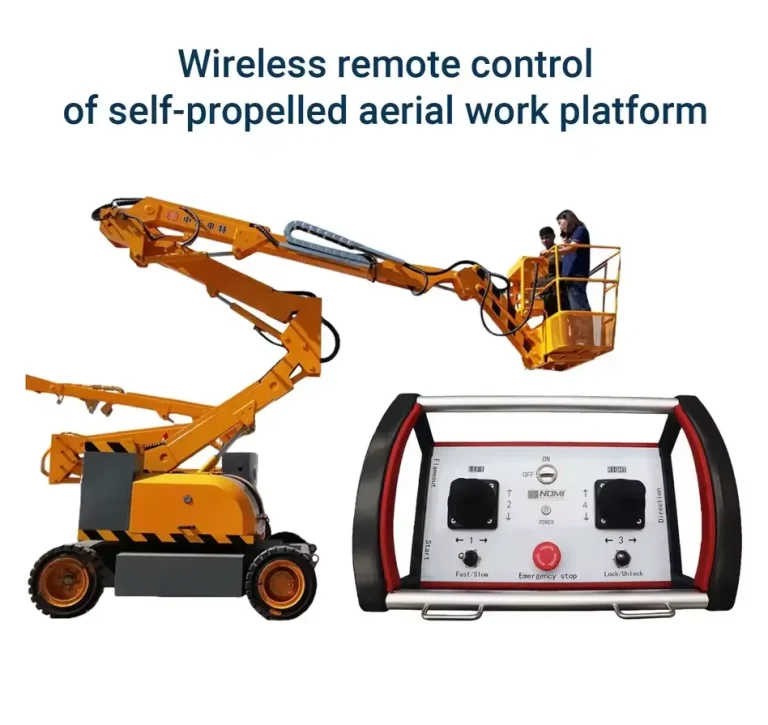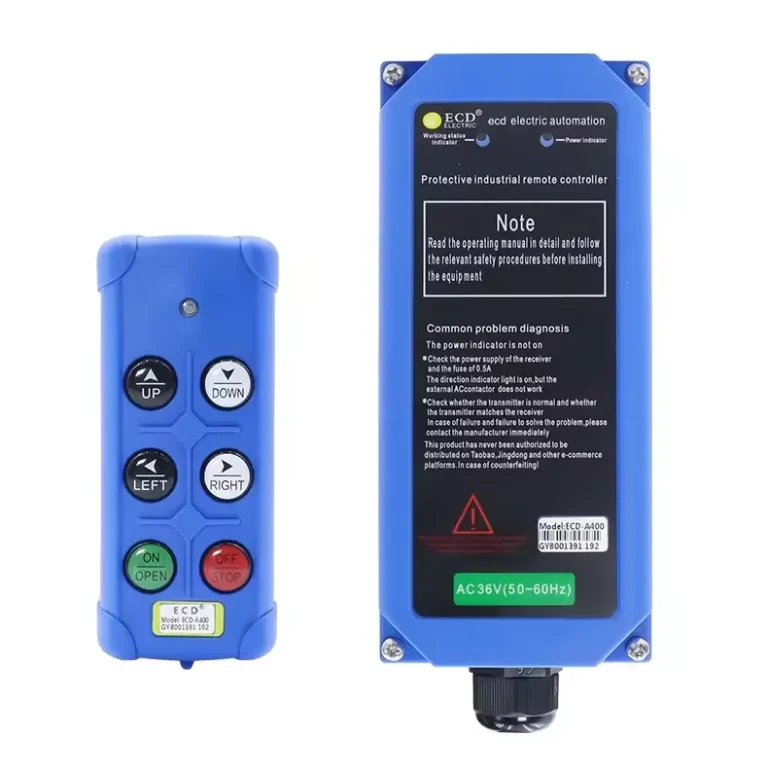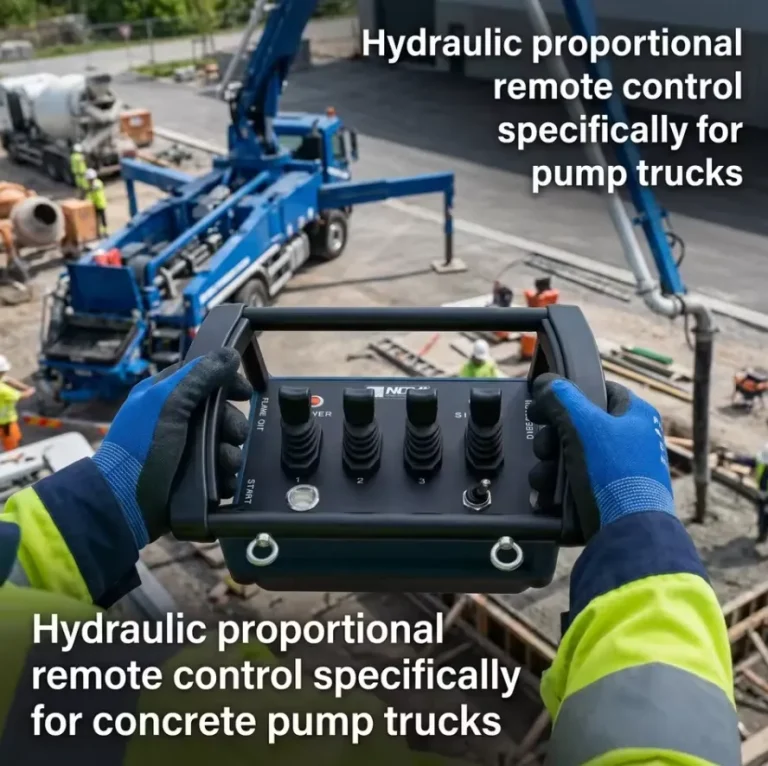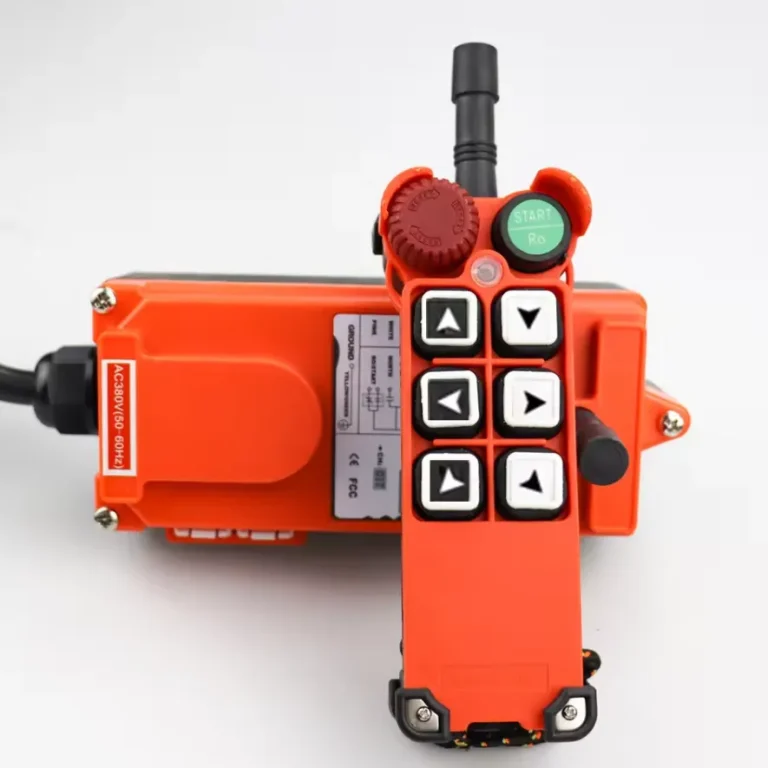

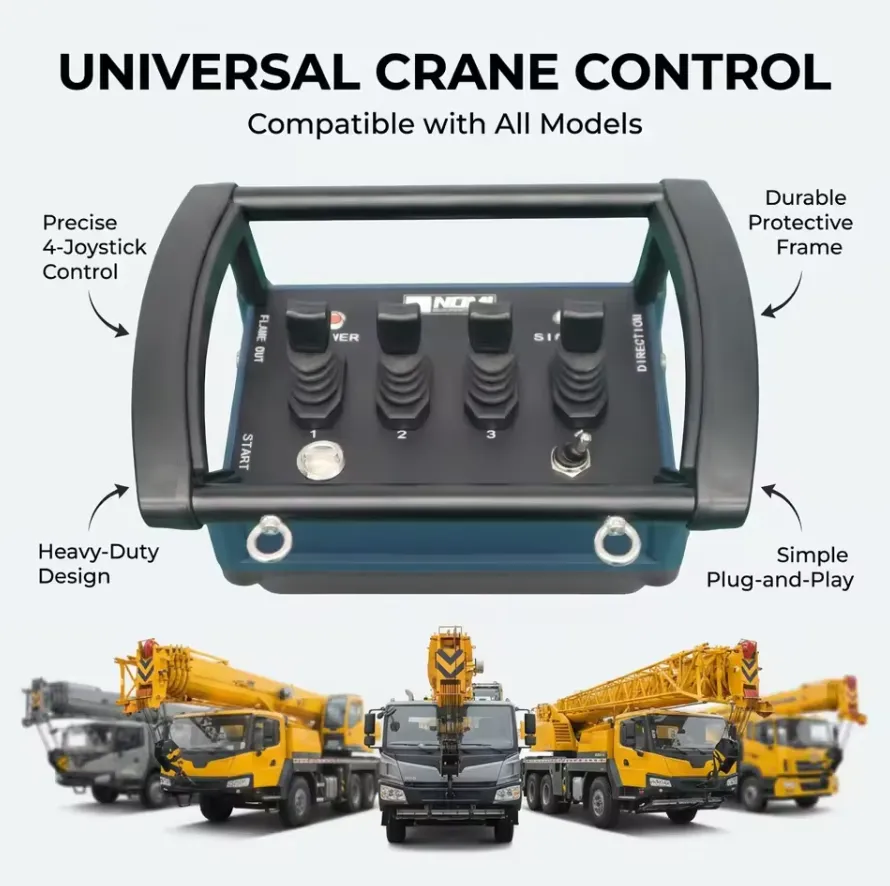
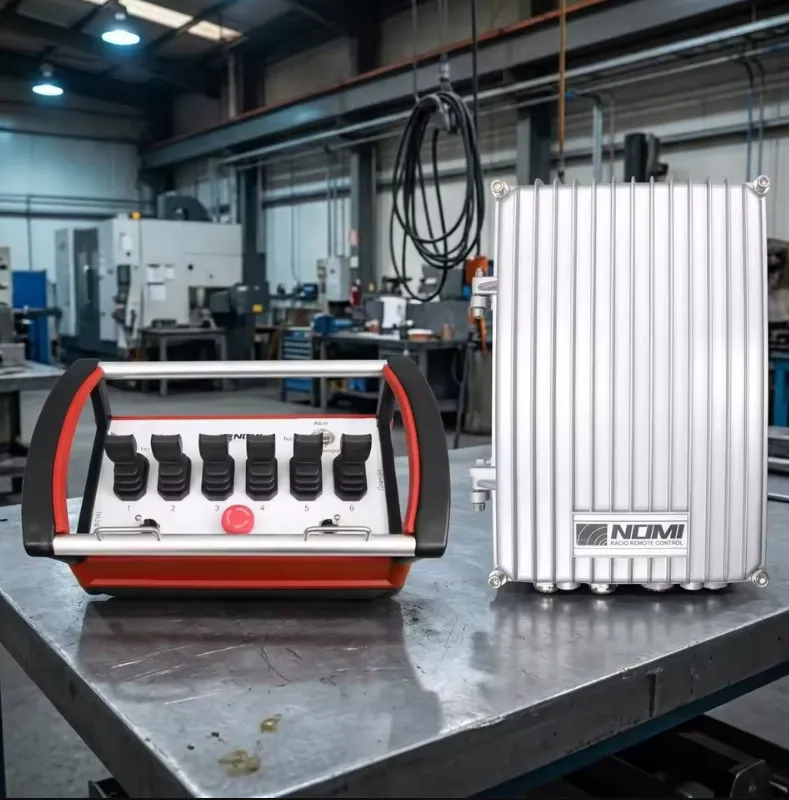
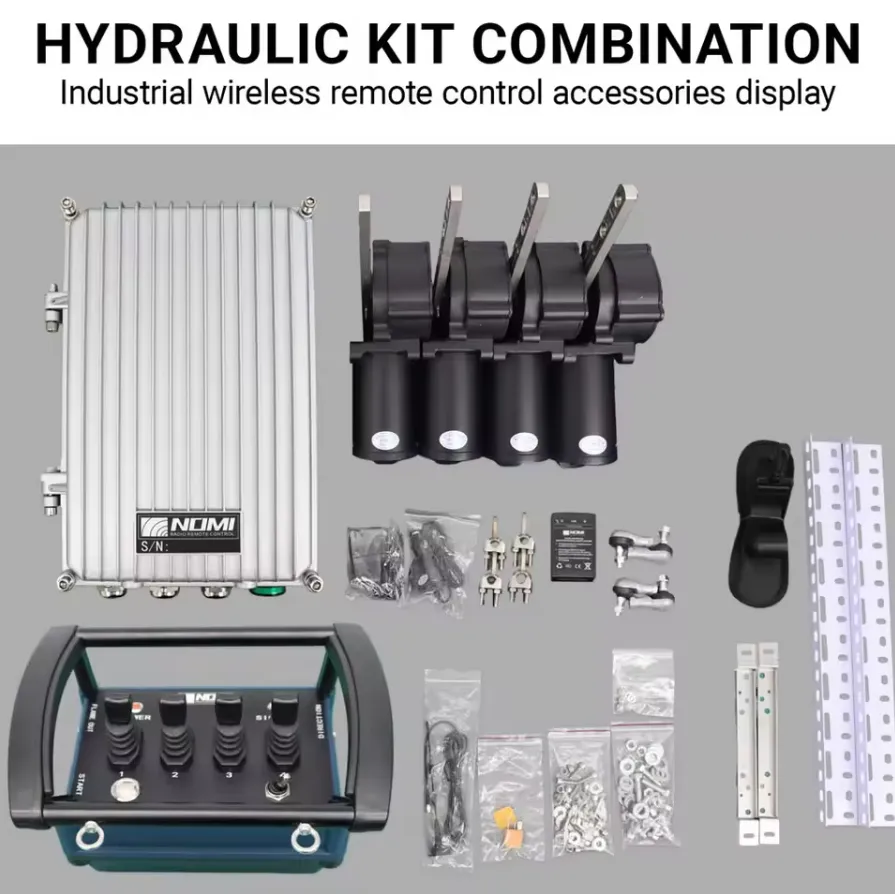
Drahtlose Fernsteuerungen für Industriekrane mit Ein- und Zweigang-Konfigurationen sind die ideale Lösung für sichere, flexible und produktive Hebevorgänge in den Bereichen Fertigung, Lagerhaltung, Bauwesen und Schwerindustrie. Eine korrekt ausgelegte drahtlose Fernbedienung für Hebezeuge mit einer oder zwei Geschwindigkeitsstufen beseitigt Gefahren durch Kabel, versetzt den Bediener in die optimale Position und bietet eine Befehlsreaktionszeit von unter 100 Millisekunden mit automatischer ausfallsicherer Stoppfunktion. Dieser Leitfaden deckt alle technischen, sicherheitsrelevanten, anwendungsbezogenen und beschaffungstechnischen Aspekte ab, die Sie benötigen, um im Jahr 2026 die richtige Entscheidung zu treffen.
| Verwendung | Kran, Hebezeug – Drahtlose Fernbedienung für Kräne |
| Code | Code korrigiert, Code kopieren (optional) |
| Steuerungsabstand | Bis zu 1000 m (einstellbar) |
| Funktion | Wasserdicht, Datenschutz, Stoßfest, Einmalgebrauch, A |
| Batterie | Wiederaufladbar |
| Material | PA66 + Metall mit Gummibeschichtung |
| eigene Form | Ja |
| Schaltfläche | 4 Joysticks |
| Herkunftsort | Henan, China |
| Modellnummer | NM-045 |
| Kompatible Geräte | Bagger, Kräne, Betonpumpen, Betonmischer, Turmdrehkräne usw. |
| Anzahl der Joysticks | Anpassbar |
| Steuerkanäle | 4/6/8 Kanäle (anpassbar) |
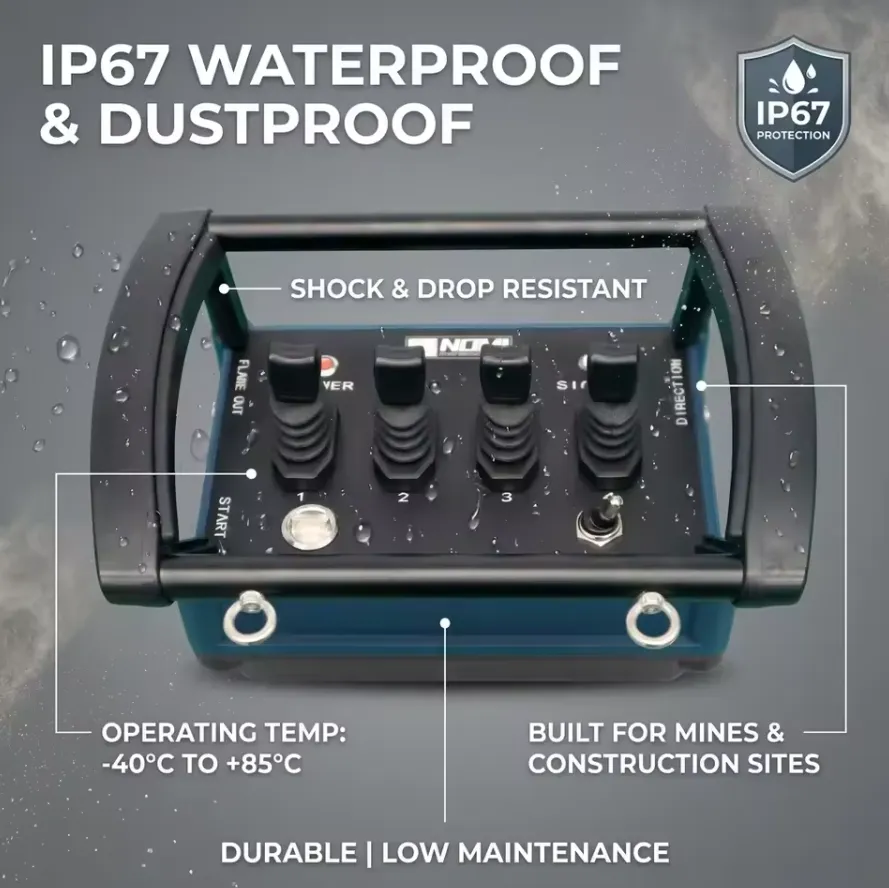
| Schutzklasse | IP65/66/67/68 |
| Akkulaufzeit | 36 Stunden Betriebsdauer / 2 Stunden Schnellladung |
| Betriebsspannung | 12 V–24 V, breiter Spannungsbereich |
| Funkfrequenz | 433 MHz/868 MHz/915 MHz/2,4 GHz |
| Zertifizierung | FCC, CE, RoHS, ISO 9001 |
| Garantie | 1 Jahr offizielle Garantie |
| Signal-Funktion | Störungsschutz, verschlüsseltes Signal, Kopplung mehrerer Geräte |
Was ist eine drahtlose Fernbedienung für einen Industriekran und inwiefern bestimmt die Geschwindigkeitseinstellung ihre Funktion?
Eine drahtlose Fernbedienung für Industriehebezeuge ist ein batteriebetriebener Handsender, der verschlüsselte Funkbefehle an eine am Bedienpult des Hebezeugs oder Krans angebrachte Empfängereinheit sendet, sodass der Bediener Lasten ohne physische Kabelverbindung anheben, absenken und querfahren kann. Die Geschwindigkeitskonfiguration – Einfach- oder Doppelgeschwindigkeit – ist die betrieblich wichtigste Spezifikation des Produkts. Sie bestimmt, wie präzise der Bediener Lasten positionieren kann, wie gleichmäßig der Hebezug beschleunigt und abbremst und ob das System für wiederholte Hebevorgänge mit hoher Zyklusfrequenz oder für präzise Platzierungsarbeiten mit geringer Frequenz geeignet ist.
Drahtlose Fernbedienungen für Hebezeuge mit einer Geschwindigkeit schalten den Motor bei Betätigung einer Richtungstaste mit einer festen Drehzahl ein. Konfigurationen mit zwei Geschwindigkeitsstufen ermöglichen es dem Bediener, beim ersten Tastendruck eine langsame Kriechgeschwindigkeit und beim zweiten Tastendruck oder durch Betätigen einer speziellen Hochgeschwindigkeitstaste die volle Betriebsgeschwindigkeit zu aktivieren. Diese zweistufige Funktion verbessert die praktische Einsatzfähigkeit des Hebezeugs in Anwendungen, bei denen Lasten präzise innerhalb enger Toleranzen positioniert werden müssen.
Wir haben Dutzende von Steuerungssystemen für Hebezeuge in Metallbearbeitungsbetrieben, Betonfertigteilwerken, Montagelinien für Luft- und Raumfahrtkomponenten sowie in Schrottverarbeitungsanlagen evaluiert. In jedem Fall war die Entscheidung zwischen Ein- und Zweistufigbetrieb die wichtigste Wahl, abgesehen von der reinen Hubkraft. Die richtige Entscheidung von Anfang an vermeidet kostspielige Systemaustausche, reduziert Schäden an der Last und verkürzt die Einarbeitungszeit der Bediener messbar.
Was ist der funktionale Unterschied zwischen Funkfernbedienungen für Hebezeuge mit einer Geschwindigkeitsstufe und solchen mit zwei Geschwindigkeitsstufen?
Ein-Gang-Betrieb: So funktioniert es in der Praxis
In a single speed hoist wireless system, pressing the “hoist up” or “hoist down” button on the transmitter activates the motor contactor at the motor’s full rated speed. The motor accelerates to its set operating speed within the contactor’s natural switching characteristics — typically reaching full speed within 0.5 to 1.5 seconds depending on motor size and load weight.
Systeme mit einer Drehzahl nutzen einen einfachen Relaisausgang des Empfängers: Ein Relais steuert die Vorwärtsrichtung (Heben), ein anderes die Rückwärtsrichtung (Senken), und der Motor wird direkt vom Stillstand auf volle Drehzahl geschaltet. Im Stromkreis sind weder eine Zwischenspannungsstufe noch eine Widerstandsbank erforderlich. Diese Einfachheit macht Ein-Drehzahl-Systeme zur kostengünstigsten Option und zur einfachsten Lösung hinsichtlich Installation, Inbetriebnahme und Wartung.
Die betrieblichen Einschränkungen bestehen in der Lastschwingung und den Schwierigkeiten bei der Positionierung. Wenn ein 5-Tonnen-Stahlträger mit voller Geschwindigkeit anläuft und zum Stillstand kommt, setzt sich die Pendelbewegung der hängenden Last auch nach dem Stillstand des Hebezeugs fort. In Präzisionsmontageumgebungen müssen Bediener diese Schwingung berücksichtigen, indem sie den Stopp frühzeitig einleiten, sodass die Last durch den Schwung in die Zielposition gebracht wird. Diese Technik erfordert beträchtliches Geschick und verlängert jeden Hubzyklus.
Betrieb mit doppelter Drehzahl: Die Funktionsweise der zweistufigen Regelung
Ein drahtloses Hebesystem mit zwei Drehzahlstufen umfasst zwei unterschiedliche Motordrehzahlstufen, die in der Regel durch eine von drei elektrischen Methoden erreicht werden:
Methode 1 – Polumschaltmotor (Dahlander-Schaltung): Der Hubmotor verfügt über zwei Wicklungssätze. Wird die Wicklung mit geringer Polzahl mit Strom versorgt, ergibt sich eine höhere Synchrondrehzahl; wird die Wicklung mit hoher Polzahl mit Strom versorgt, ergibt sich eine niedrigere Synchrondrehzahl. Ein 4/16-poliger Motor läuft beispielsweise bei einer Netzfrequenz von 50 Hz mit etwa 1.450 U/min an der 4-poligen Wicklung und mit 360 U/min an der 16-poligen Wicklung – ein Drehzahlverhältnis von 4:1. Es sind keine externen Widerstände oder Frequenzumrichter erforderlich.
Methode 2 – Schalten des Serienwiderstands: Für den Betrieb bei niedriger Drehzahl wird eine Widerstandsbank in Reihe mit den Motorwicklungen geschaltet. Wählt der Bediener die hohe Drehzahl, schalten Schütze die Widerstandsbank außer Betrieb. Diese Methode ist einfacher und kostengünstiger als die Polumschaltung, erzeugt jedoch Wärme in der Widerstandsbank und ist weniger energieeffizient.
Methode 3 – Voreingestellte Drehzahlen bei Frequenzumrichtern (VFD): A VFD controls the motor and is programmed with two or more speed presets. The wireless receiver’s relay outputs switch between preset speed references on the VFD. This method provides the smoothest acceleration profiles and the most precise speed control, but requires a VFD in the circuit, increasing system cost.
Geschwindigkeitsverhältnis und Präzision: Was die Zahlen bedeuten
| Geschwindigkeitskonfiguration | Typisches Geschwindigkeitsverhältnis | Beispiel für niedrige Drehzahl | Beispiel für hohe Geschwindigkeit | Beste Bewerbung |
|---|---|---|---|---|
| Ein Gang | k. A. (eine Stufe) | k. A. | 8 m/min | Hochzyklisch, wiederholend, nicht präzisionsbezogen |
| Doppelte Geschwindigkeit (2:1) | 2:1 | 4 m/min | 8 m/min | Allgemeiner Einsatz, mäßige Genauigkeit |
| Doppelte Geschwindigkeit (4:1) | 4:1 | 2 m/min | 8 m/min | Präzisionsplatzierung, Chip-Handling |
| Doppelte Geschwindigkeit (8:1) | 8:1 | 1 m/min | 8 m/min | Hochpräzise Turbinenschaufeln aus Glas |
| VFD Proportional | Kontinuierlich 0–100% | 0 m/min | 8 m/min | Ultrapräzision, Kerntechnik, Luft- und Raumfahrt |
Das Geschwindigkeitsverhältnis bestimmt, wie viel Kontrolle der Bediener bei der endgültigen Positionierung der Last hat. Ein Verhältnis von 4:1 wird für allgemeine industrielle Präzisionsarbeiten am häufigsten vorgeschrieben, da es eine angemessen langsame Kriechgeschwindigkeit bietet und gleichzeitig effiziente Transportbewegungen bei voller Geschwindigkeit ermöglicht.
Auswirkungen der Geschwindigkeitskonfiguration auf die Schlüsselanzahl
Der Betrieb mit doppelter Geschwindigkeit erfordert im Vergleich zum Betrieb mit einfacher Geschwindigkeit zusätzliche Tasten am Sender. Eine Fernbedienung für einen Ein-Geschwindigkeits-Hebezeug mit Brückenfahrt und Laufkatzenfahrt benötigt mindestens 6 Tasten. Eine Doppelgeschwindigkeits-Version desselben Krans benötigt 8 bis 10 Tasten, um die Tasten für die Hochgeschwindigkeitsaktivierung für jede Bewegungsachse unterzubringen. Dieser Unterschied in der Tastenanzahl wirkt sich auf die Größe des Handsenders, die Ergonomie und die Anforderungen an die Bedienerschulung aus.
| Steuerachsen | Benötigte Single-Speed-Schlüssel | Doppelte Geschwindigkeits-Tasten erforderlich |
|---|---|---|
| Nur Heben (auf/ab) | 2 + Not-Aus | 4 + Not-Aus |
| Hub + Brückenfahrt | 4 + Not-Aus | 8 + Not-Aus |
| Hebezeug + Brücke + Laufkatze | 6 + Not-Aus | 12 + Not-Aus |
| Oben + Hupe | 7 + Not-Aus | 13 + Not-Aus |
Was sind die wichtigsten Hardwarekomponenten eines drahtlosen Fernbedienungssystems für Hebezeuge?
Sender: Entwicklung der Bedienerschnittstelle
Der Geber ist die Komponente, die im täglichen industriellen Einsatz den größten physischen Belastungen ausgesetzt ist. Er fällt zu Boden, wird Hitze, Fett, Metallstaub und Spritzwasser ausgesetzt und wird pro Schicht hunderte oder tausende Male betätigt. Hochwertige Industriegeber tragen diesen Gegebenheiten durch gezielte Konstruktionsentscheidungen Rechnung:
Material und Bauweise des Gehäuses: Schalen aus schlagfestem ABS oder glasfaserverstärktem Polycarbonat mit aufgespritzten Überzügen aus thermoplastischem Kautschuk (TPR) an den Aufprallzonen. Der Kautschuküberzug dämpft Stöße bei Stürzen und sorgt für eine rutschfeste Griffoberfläche, selbst mit Handschuhen.
Tastaturtechnologie: Membran-Tastaturen in Industriequalität mit geprägter taktiler Rückmeldung und einer Nennlebensdauer von 2 bis 5 Millionen Betätigungszyklen pro Taste. Einige Hersteller verwenden anstelle einer Membrankonstruktion einzelne Gummi-Dome-Tasten, wodurch einzelne Tasten ausgetauscht werden können, anstatt die gesamte Tastaturbaugruppe zu ersetzen – ein erheblicher Unterschied bei den Wartungskosten über eine Lebensdauer von 5 Jahren.
Mikrocontroller: Ein Mikrocontroller in Automobil- oder Industriequalität, der für Umgebungstemperaturen von -40 °C bis +85 °C ausgelegt ist. Der Mikrocontroller übernimmt das Abtasten der Tastenmatrix, die Befehlscodierung, die Verwaltung des Funkprotokolls, die Batterieüberwachung und die Steuerung des Ruhemodus.
HF-Modul: Ein Sub-GHz-Transceiver-Chip, der Modulator, Demodulator und Frequenzsynthesizer integriert. In FHSS-Systemen führt das HF-Modul die Frequenzsprungsequenz mit Raten zwischen 50 und 200 Sprüngen pro Sekunde aus.
Batteriesystem: Die meisten industriellen Sender werden mit 4 × AA-Alkalibatterien (Betriebsdauer pro Satz je nach Auslastung zwischen 40 und 120 Stunden) oder einem herausnehmbaren/wiederaufladbaren Lithium-Ionen-Akku betrieben. Lithium-Akkus bieten eine längere Laufzeit pro Ladung, eine bessere Leistung bei kalten Temperaturen und machen die Nachbestellung von AA-Batterien überflüssig. Der Nachteil ist ein etwas längerer Austauschzyklus, falls der Akku beschädigt wird oder ausfällt.
Antenne: Interne Leiterbahn oder Peitschenantenne. Peitschenantennen bieten eine bessere Rundstrahlreichweite, sind jedoch anfällig für Beschädigungen. Interne Antennen bieten zwar eine etwas geringere Reichweite, schließen jedoch das Risiko von Beschädigungen bei rauer Handhabung aus.
Empfänger: Das Gehirn des Steuerungssystems
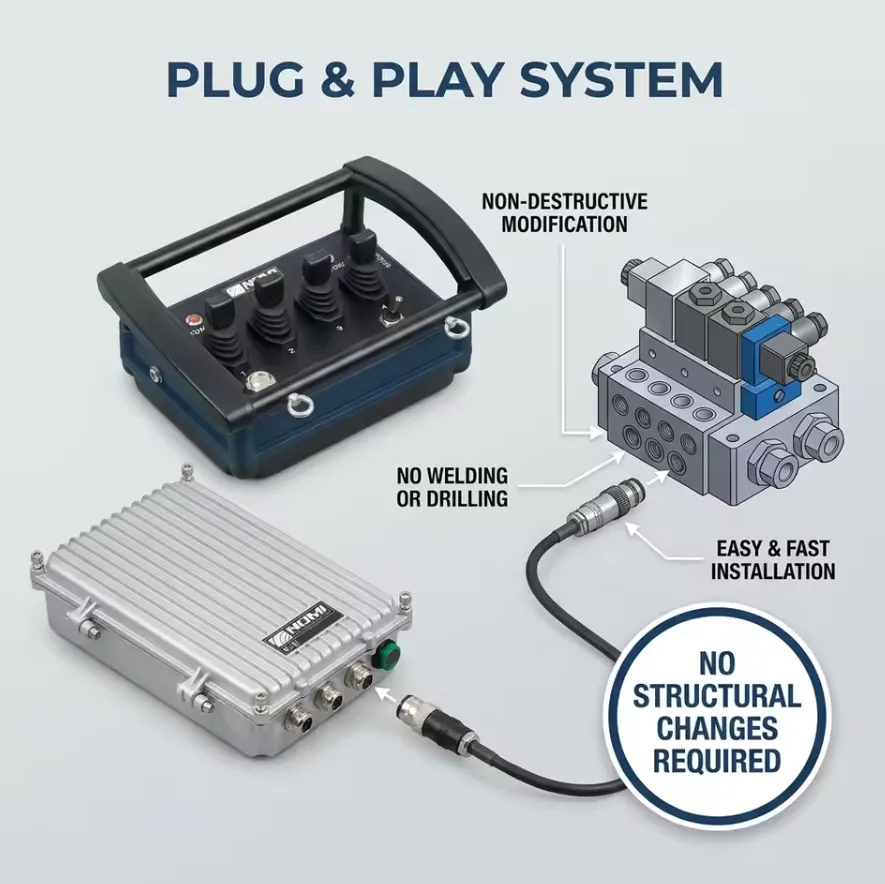
The receiver unit translates incoming RF signals into physical relay outputs that switch the hoist’s motor contactors. Its placement, protection, and wiring quality directly determine system reliability.
| Spezifikation des Empfängers | Einstiegsstufe | Professionelle Qualität | Industriequalität |
|---|---|---|---|
| HF-Empfindlichkeit | -100 dBm | -110 dBm | -115 bis -120 dBm |
| Ausgangsrelaisstrom | 5 A bei 250 VAC | 10 A bei 250 VAC | 16 A bei 250 V Wechselstrom |
| Eingangsspannung | 24 VAC oder 110 VAC | 24 V AC/DC auf 220 V AC | Universal 24–240 V AC/DC |
| Anzahl der Ausgangskanäle | 4-6 | 8-12 | 16-24+ |
| Watchdog-Timeout | Auf 1 Sekunde festgelegt | Einstellbar von 0,5 bis 2 s | Einstellbar von 0,1 bis 5 s |
| Betriebstemperatur | -10 °C bis +55 °C | -25 °C bis +70 °C | -40 °C bis +85 °C |
| Schutzart | IP54 | IP65 | IP65–IP67 |
| Gespeicherte Sender-IDs | 1 | 2-4 | 4-8 |
| Statusanzeige | LED-Anzeigen | LED + LCD | LED + LCD + Modbus-Ausgang |
Schützschnittstelle und Motorsteuerungsschaltung
The relay outputs from the receiver connect to the coil circuits of the hoist motor’s forward and reverse contactors. In a double speed system, additional contactors switch between the motor’s speed winding configurations or bypass the speed reduction resistor bank.
Ein korrekt verdrahteter Schaltkreis für einen Hubantrieb mit zwei Drehzahlen muss eine elektrische Verriegelung zwischen den Vorwärts-/Rückwärts-Schützen (zur Vermeidung von Phasen-zu-Phasen-Kurzschlüssen) sowie zwischen den Schützen für niedrige und hohe Drehzahl (zur Vermeidung des gleichzeitigen Einschaltens beider Drehzahlstufen) umfassen. Die meisten professionellen Steuerungskonzepte für Hubwerke nutzen eine Kombination aus mechanischer und elektrischer Verriegelung – mechanisch durch die physische Verbindung der Hilfskontakte der Schütze und elektrisch über die Verdrahtung des Steuerkreises –, um diesen Schutz zu gewährleisten.
Welche Funktechnologie sorgt für eine zuverlässige Fernsteuerung von Hebezeugen?
ISM-Frequenzzuweisung und regionale Einhaltung der Vorschriften
Die für industrielle Funkfernbedienungen für Hebezeuge verfügbaren Funkfrequenzbänder fallen in die international festgelegten ISM-Bänder (Industrial, Scientific, and Medical). Die konkret zulässigen Frequenzen variieren je nach Land und werden von den nationalen Telekommunikationsbehörden geregelt:
| Region | Optionen für lizenzierte Frequenzen | Aufsichtsbehörde | Erforderliche Zertifizierung |
|---|---|---|---|
| Vereinigte Staaten | 902–928 MHz | FCC | FCC Teil 15 |
| Kanada | 902–928 MHz | ISED | RSS-210 |
| Europäische Union | 433 MHz, 868 MHz | ETSI / nationale Telekommunikationsbehörden | CE-Richtlinie 2014/53/EU |
| Vereinigtes Königreich (nach dem Brexit) | 433 MHz, 868 MHz | Ofcom | UKCA |
| Australien | 915–928 MHz | ACMA | RCM |
| Japan | 426 MHz, 429 MHz | MIC | TELEC |
| China | 433 MHz, 470–510 MHz | MIIT | SRRC |
| Brasilien | 902–907,5 MHz, 915–928 MHz | Anatel | Anatel |
Deploying a transmitter on an uncertified frequency in any jurisdiction carries legal liability for the facility operator, not just the equipment supplier. We strongly recommend verifying the product’s certification documentation matches the deployment country before purchase.
Frequenzsprung-Spreizspektrum-Systeme im Vergleich zu Systemen mit fester Frequenz
Der technologische Unterschied zwischen Funk-Systemen mit fester Frequenz und FHSS-Systemen ist so groß, dass wir ihn als Unterscheidung zwischen verschiedenen Kategorien betrachten und nicht lediglich als Unterschied in den Funktionen:
Systeme mit fester Frequenz: Die Übertragung erfolgt auf einem voreingestellten Kanal innerhalb des ISM-Bands. Die Elektronik ist einfacher und kostengünstiger, jedoch anfällig für Störungen durch andere Geräte auf demselben Kanal. In einer Anlage mit Dutzenden von drahtlosen Sensoren, WLAN-Zugangspunkten und anderen industriellen Fernbedienungen kann es bei einer Fernbedienung für Hebezeuge mit fester Frequenz zu zeitweiligen Signalausfällen oder verzögerter Befehlsausführung kommen.
FHSS-Systeme: The transmitter and receiver synchronize to a pseudo-random frequency hopping pattern, changing channels up to 200 times per second. Even if a specific channel is occupied by another transmitter at the moment of a hop, the next hop occurs within milliseconds to a clear channel. From the operator’s perspective, FHSS systems appear to have no interference sensitivity in typical industrial environments.
Für Anwendungen mit Laufkränen, bei denen ein Signalausfall dazu führen könnte, dass eine hängende Last mitten in der Luft in einem Personenbereich zum Stillstand kommt, ist FHSS die einzig technisch geeignete Wahl. Die aus Kostengründen getroffene Entscheidung für ein Festfrequenzsystem, um $50 bis $100 pro Einheit einzusparen, ist angesichts der betrieblichen und sicherheitsrelevanten Folgen eines Interferenzereignisses eine falsche Sparmaßnahme.
Befehlsreaktionszeit: Was die Latenzwerte in der Praxis bedeuten
Bei Präzisionshubvorgängen beeinflusst die Verzögerung zwischen dem Drücken einer Taste und dem Beginn der Hakenbewegung, wie stark der Bediener das Überschwingen ausgleichen muss. Ein System mit einer Latenz von 200 ms erfordert vom Bediener deutlich mehr Vorausschau als eines mit einer Latenz von 50 ms, insbesondere beim schrittweisen Anfahren einer schweren Last an eine präzise Zielposition.
Aufschlüsselung der Latenz in einem typischen professionellen FHSS-System:
- HF-Übertragungszeit: 5–15 ms
- Dekodierungs- und Verarbeitungszeit des Empfängers: 5–10 ms
- Relais-Ansprechzeit: 10–20 ms
- Mechanische Schließzeit des Motorschützes: 15–30 ms
- Motorbeschleunigung bis zur Kriechgeschwindigkeit: 200–800 ms (lastabhängig)
Total electronic latency is therefore 35 to 75 ms in a well-designed system. The motor acceleration time dominates the operator’s perception of “response,” which is why a smooth low-speed start from a double speed system feels more responsive than a fast-latency single speed system that lurches to full speed.
Welche Sicherheitsnormen und Zertifizierungen gelten für drahtlose Fernbedienungssysteme für Hebezeuge?
Das vollständige Normen-Rahmenwerk
Die Sicherheitszertifizierung für drahtlose Fernbedienungen für Industriehebezeuge umfasst gleichzeitig drei Bereiche: Vorschriften für Funkgeräte, Sicherheitsanforderungen für Maschinen sowie kran- und hebezeugspezifische technische Normen.
Primäre internationale Norm:
ISO 23853:2021 (Krane: Funkfernsteuerungssysteme) ist die spezielle Norm für drahtlose Fernsteuerungen von Hebezeugen. Sie legt Folgendes fest:
- Anforderungen an das Sicherheitsniveau bis PLd (Kategorie 3) gemäß ISO 13849-1
- Minimale Bitfehlerrate (BER) unter 10⁻⁶ für eine zuverlässige Übertragung
- Watchdog-Timeout von höchstens 1 Sekunde für einen sicheren Stopp bei Signalverlust
- Anforderungen an die Störfestigkeit (FHSS oder gleichwertige Technologie)
- Umweltprüfprotokolle (gemäß der Normenreihe IEC 60068)
- Anforderungen an die Dokumentation und Kennzeichnung.
US-spezifische Normen:
- OSHA 29 CFR 1910.179: Laufkrane und Portalkrane (allgemeine Industrie)
- OSHA 29 CFR 1926.1416: Kräne und Derrickkräne im Bauwesen
- ASME B30.16: Hängende und ortsfeste Hebezeuge
- ASME B30.2: Laufkrane und Portalkrane
- Sicherheitsnormen der P-Serie des HMI (Hoist Manufacturers Institute).
Europäische Normen:
- EN 14492-2: Cranes – Power Driven Hoists.
- EN 13557: Cranes – Controls and Control Stations.
- EN 60204-32: Safety of Machinery – Electrical Equipment of Machines (Cranes)
Checkliste zur Einhaltung von Sicherheitsvorschriften
Jedes an eine Anlage gelieferte Funksteuerungssystem für Hebezeuge sollte vor der Inbetriebnahme anhand dieser Checkliste zur funktionalen Sicherheit überprüft werden:
| Sicherheitsfunktion | Anforderung | Standardreferenz |
|---|---|---|
| Not-Aus-Taste | Spezielle Taste, pilzförmig, muss manuell zurückgesetzt werden | ASME B30.16, EN 13557 |
| Hold-to-run (dead man’s) control | Die Bewegung stoppt sofort, sobald die Taste losgelassen wird | OSHA 1910.179, ISO 23853 |
| Watchdog-Sicherheitsstopp | Der Aufzug hält innerhalb von 1 Sekunde nach Signalausfall an | ISO 23853, EN 14492-2 |
| Alarm bei niedrigem Batteriestand | Akustische und optische Warnung vor dem Abschalten | ISO 23853 |
| Anlaufschutz | Nach einem Not-Aus oder einer Stromunterbrechung ist ein Reset erforderlich | EN 13557, ASME B30.16 |
| Eindeutige Sender-ID | Verhindert eine gegenseitige Steuerung mit benachbarten Hebezeugen | ISO 23853 |
| Übersteuerung der oberen Hubbegrenzung | Betrieb ausschließlich bei niedriger Drehzahl nahe der Obergrenze | EN 14492-2 |
| Integration des Lastbegrenzers | Not-Aus durch Überlastsignal des Hebezeugs ausgelöst | ASME B30.16 |
| Gehäuse mit IP-Schutzklasse | Der Umgebung angemessener Staub- und Feuchtigkeitsschutz | IEC 60529 |
Leistungsbewertung für Hebezeuganwendungen
Gemäß ISO 13849-1 hängt das erforderliche Performance Level (PL) für Sicherheitsfunktionen von Hebezeugen von der Schwere des potenziellen Schadens und der Häufigkeit der Gefährdung des Personals ab:
- PLc (Kategorie 2): Geeignet für Lagerhebezeuge in Bereichen mit seltenem Personaleinsatz und leichten Lasten unter 1.000 kg
- PLd (Kategorie 3): Vorgeschrieben für Produktionsaufzüge, bei denen sich Personal regelmäßig in oder in der Nähe der Lastbahn aufhält, bei Lasten über 1.000 kg
- PLe (Kategorie 4): Erforderlich für Hebezeuge, die mit geschmolzenem Metall, Kernmaterialien oder Sprengstoffen umgehen, sowie für alle Anwendungen, bei denen ein Herabfallen der Last mehreren Personen irreversiblen Schaden zufügen würde
Die meisten professionellen drahtlosen Systeme für Industriehebezeuge sind so ausgelegt, dass sie die Anforderungsstufe PLd erfüllen. Systeme, die die Anforderungsstufe PLe erfüllen, sind deutlich teurer und erfordern redundante Kommunikationskanäle, eine Zweikanal-Empfängerarchitektur sowie eine Zertifizierung durch eine benannte Stelle.
Wie entscheiden Sie sich bei Ihrer Hebeanwendung zwischen einer Ein- und einer Zweigangausführung?
Das Entscheidungsmodell: Acht Fragen, die zuerst zu klären sind
Die Wahl zwischen einer einstufigen und einer zweistufigen Funksteuerung für Hebezeuge ist eine fundierte technische Entscheidung und keine Frage der persönlichen Vorliebe. Bevor wir eine Empfehlung aussprechen, gehen wir mit jedem Kunden die folgenden acht Fragen durch:
Frage 1: Wie groß ist die maximal zulässige Toleranz bei der Lastpositionierung?
Wenn Lasten innerhalb von ±50 mm einer Zielposition platziert werden müssen, erfordert die Steuerung mit einer einzigen Geschwindigkeit bei typischen Hubgeschwindigkeiten (6–10 m/min) ein sehr hohes Maß an Fachkenntnis des Bedieners. Eine doppelte Geschwindigkeit mit einem Übersetzungsverhältnis von 4:1 und einer Kriechgeschwindigkeit von 2 m/min ist eine zuverlässigere Lösung. Liegt die Positionierungstoleranz bei ±200 mm oder mehr, ist eine Ein-Geschwindigkeits-Steuerung bei geschulten Bedienern ausreichend.
Frage 2: Wie oft durchläuft der Hubzyklus pro Schicht?
Anwendungen mit hoher Zyklusfrequenz (mehr als 30 Hubvorgänge pro Stunde) profitieren von der Effizienz einer Ein-Geschwindigkeits-Steuerung, da jeder Zyklus kurz ist und die Fahrzeit den größten Anteil ausmacht. Präzisionsanwendungen mit geringer Zyklusfrequenz (weniger als 10 Hubvorgänge pro Stunde) rechtfertigen die zusätzlichen Kosten und den Schulungsaufwand für eine Zwei-Geschwindigkeits-Steuerung.
Frage 3: In welchem Bereich liegt das Ladegewicht?
Schwerere Lasten erzeugen mehr kinetische Energie und führen nach dem Anhalten zu stärkeren Pendelschwankungen. Bei Lasten über 5 Tonnen reduziert die doppelte Geschwindigkeitsregelung die durch Schwankungen verursachten Positionierungsfehler erheblich.
Frage 4: Befinden sich regelmäßig Personen im oder in der Nähe des Lastwegs?
Falls ja, verringert der doppelte Kriechgang die kinetische Energie der Last während der gefährlichsten Phase – der Annäherung und der Absetzung – und mindert so die Schwere der Verletzungen, falls es zu einer Kollision kommt.
Frage 5: Welche Investitionen können Sie in die Qualifikation und Schulung Ihrer Mitarbeiter tätigen?
Der Betrieb bei einfacher Geschwindigkeit mit präziser Positionierung erfordert erfahrene Bediener und kontinuierliche Schulungen. Der Betrieb bei doppelter Geschwindigkeit ermöglicht es weniger erfahrenen Bedienern, durch die Kriechfunktion bei niedriger Geschwindigkeit eine ausreichende Präzision zu erreichen, wodurch sich der Pool an verfügbaren Bedienern erweitert.
Frage 6: Unterstützt der Hubmotor den Zweigangbetrieb?
Some existing hoist motors are single-speed wound and cannot be operated at two speeds without motor replacement. Confirm the hoist motor’s nameplate data before specifying a double speed wireless remote for a retrofit application.
Frage 7: Wie hoch ist das Gesamtbudget für die Installationskosten?
Drahtlose Systeme mit doppelter Drehzahl kosten auf Sender-Empfänger-Ebene 15% bis 40% mehr als vergleichbare Systeme mit einfacher Drehzahl. Berücksichtigt man bei Nachrüstungen das Neuwickeln von Motoren oder zusätzliche Schützhardware, kann der Aufpreis gegenüber Systemen mit einer Drehzahl 60% bis 100% betragen. Diese Kosten müssen durch Produktivitäts- oder Sicherheitsgewinne gerechtfertigt sein.
Frage 8: Welche zukünftige Expansion wird erwartet?
Falls die Anlage plant, innerhalb von drei Jahren eine Laufkatzen-Querachse oder einen zweiten Hubmotor hinzuzufügen, lässt sich durch die Festlegung eines 10-12-Key-Systems mit doppelter Geschwindigkeit bereits jetzt ein späterer vollständiger Systemaustausch vermeiden.
Matrix mit Anwendungsempfehlungen
| Anwendungstyp | Ladungsgewicht | Positionierungsbedarf | Empfohlene Konfiguration |
|---|---|---|---|
| Allgemeines Stapeln von Lagergut | Irgendein | Niedrig (±300 mm) | Ein Gang, 6–8 Tasten |
| Zuführung von Bauteilen am Fließband | 500–5.000 kg | Mittel (±100 mm) | Doppelte Geschwindigkeit 2:1, 8–10 Tasten |
| Handhabung von Werkzeugen und Formen | 2.000–30.000 kg | Hoch (±20 mm) | Doppelte Geschwindigkeit 4:1, 10–12 Tasten |
| Handhabung von Coils und Rollen | 1.000–20.000 kg | Mittel bis hoch (±50 mm) | Doppelte Geschwindigkeit 4:1, 10 Tasten |
| Gießpfanne und geschmolzenes Metall | Irgendein | Hoch (±30 mm) | Doppelte Drehzahl 4:1 oder Frequenzumrichter, 12 Tasten |
| Heben von Schiffbaublöcken | 10.000–500.000 kg | Niedrig bis mittel (±200 mm) | Einstufig oder zweistufig 2:1 |
| Wartung und Reparatur | Irgendein | Variable | Ein Gang, 6–8 Tasten |
| Handhabung von Kernkomponenten | Irgendein | Sehr hoch (±5 mm) | Proportionaler Frequenzumrichter, PLe-System |
| Schrottmagnet-Betriebe | Irgendein | Niedrig (±500 mm) | Ein Geschwindigkeitsbereich, 8 Tasten + Magnet-AUX |
Wie wird ein drahtloses Fernsteuerungssystem an einen vorhandenen Hebezug und Kran angeschlossen?
Elektrische Begutachtung vor der Installation
Before ordering a wireless system for an existing hoist, collect the following data from the hoist’s nameplate and electrical documentation:
- Spannung und Phase des Hubmotors (einphasig 230 V, dreiphasig 400 V usw.)
- Steuerspannung (typischerweise 24 VAC, 48 VAC, 110 VAC oder 220 VAC)
- Spannung der Schützspule (muss mit der Nennleistung des Relaisausgangs des Empfängers übereinstimmen)
- Nennstrom des Motors (zur Bestätigung der Schützauslegung)
- Bestehende Verfahren zur Drehzahlregelung (Festdrehzahl, Polumschaltung, Widerstand, Frequenzumrichter)
- Verfügbarer Platz auf der Schalttafel für die Montage des Empfängers.
- Kabelverlauf vom Empfänger zum Bedienfeld und zur Antennenposition.
Verdrahtungsarchitektur für Single-Speed-Systeme
Die Fernbedienung für einen drahtlosen Ein-Gang-Hebezeug wird über zwei Relaisausgänge des Empfängers an den Steuerkreis des Hebezeugs angeschlossen:
- Relais 1 (UP/LIFT): Wired to the coil circuit of the “raise” contactor (K1)
- Relais 2 (AB/ABWÄRTS): Wired to the coil circuit of the “lower” contactor (K2)
- Not-Aus-Relais (Öffnerkontakt): Wired in series with the control circuit’s main safety relay or emergency stop chain
The receiver’s power supply input connects to the crane panel’s control voltage source. The antenna is routed to a position with clear line of sight to the operating floor — typically through a conduit knockout in the panel bottom plate and secured to the underside of the crane bridge beam.
Verdrahtungsarchitektur für Systeme mit doppelter Geschwindigkeit
Ein drahtloses System mit doppelter Geschwindigkeit verfügt über Relaisausgänge für die Hochgeschwindigkeitsschütze:
- Relais 1 (UP LOW): Aktiviert das Anzugsschütz in der Konfiguration für niedrige Drehzahl.
- Relais 2 (DOWN LOW): Aktiviert das untere Schütz in der Konfiguration für niedrige Drehzahl.
- Relais 3 (UP HIGH): Aktiviert das Ansteuerschütz in der Hochgeschwindigkeitskonfiguration (umgeht die Drehzahlreduzierung).
- Relais 4 (DOWN HIGH): Aktiviert das untere Schütz in der Hochgeschwindigkeitskonfiguration.
The transmitter’s double speed activation sequence must match the receiver’s relay output timing. In a standard sequence, pressing the UP button once activates Relay 1 (low speed). Pressing UP a second time (or pressing a dedicated HIGH key) activates Relay 3 while maintaining Relay 1. The low-speed condition is thus maintained as a prerequisite for high-speed operation, ensuring the motor always passes through the low-speed stage when starting.
Antennenplatzierung für maximale Reichweite
Antenna positioning is the most frequently overlooked installation factor. We routinely encounter installations where receiver antennas are mounted inside metal enclosures, reducing effective range by 70% or more compared to the system’s rated specification.
Leitlinien für die optimale Platzierung von Antennen:
- Mount the antenna in a location with unobstructed line of sight to the operator’s working area.
- Halten Sie die Antenne mindestens 150 mm von jeglicher Metalloberfläche entfernt.
- Richten Sie die Antenne senkrecht aus (für eine Rundstrahlabdeckung in der horizontalen Ebene).
- Verwenden Sie das mitgelieferte Antennenverlängerungskabel, wenn der Empfänger tief im Schaltkasten montiert werden muss.
- Bei langen Kranbrücken (über 50 Meter) sollte eine zweite Antenne mit einem Signalkombinator in der Mitte des Brückenträgers in Betracht gezogen werden.
Welche Umweltbewertungen und Standards zur physikalischen Haltbarkeit sollten Sie verlangen?
Erläuterung der IP-Schutzklassen für Fernbedienungsanwendungen bei Hebezeugen
Das in der Norm IEC 60529 definierte Schutzart-Klassifizierungssystem (IP) verwendet zwei Ziffern zur Einstufung des Schutzes gegen feste Fremdkörper und Flüssigkeiten. Für Fernbedienungen von Industriehebezeugen gelten folgende Schutzarten:
| IP-Schutzklasse | Staubschutz | Schutz vor Flüssigkeiten | Geeignete Umgebung |
|---|---|---|---|
| IP54 | Staubgeschützt | Wasser spritzt aus allen Richtungen | Leichte Nutzung in Innenräumen, klimatisiert |
| IP55 | Staubgeschützt | Niederdruck-Wasserstrahlen | Allgemeine Fertigung, leichte Außenanwendungen |
| IP65 | Staubdicht (vollständig) | Niederdruck-Wasserstrahlen | Schwerindustrie, Bereiche, die mit Wasser gereinigt werden |
| IP66 | Staubdicht | Hochdruckwasserstrahlen | Lebensmittelverarbeitung, Papierfabriken |
| IP67 | Staubdicht | Vorübergehendes Eintauchen bis zu 1 m / 30 Min. | Küstengebiete, Außenbereiche, hochwassergefährdete Gebiete |
| IP68 | Staubdicht | Dauerhaftes Eintauchen in einer Tiefe von mehr als 1 m | Unterwassereinsätze, Tauchfahrzeuge |
Für die meisten industriellen Hebeanwendungen in der Stahlverarbeitung, der Automobilindustrie und der allgemeinen Fertigung ist die Schutzart IP65 am Sender die angemessene Mindestanforderung. In Papierfabriken, der Lebensmittelverarbeitung und in Küstengebieten ist die Schutzart IP66 oder IP67 erforderlich. Wir beobachten regelmäßig, dass in Betrieben Geräte der Schutzart IP54 in Umgebungen eingesetzt werden, in denen mindestens IP65 erforderlich wäre, was zu vorzeitigen Ausfällen der Sender innerhalb von 6 bis 12 Monaten nach der Inbetriebnahme führt.
Falltests und mechanische Beständigkeit
Beyond IP rating, the transmitter’s mechanical durability against impact is critical in lifting applications where the remote is constantly handled, set down on machine surfaces, and occasionally dropped. The relevant test standard is IEC 60068-2-27 (shock testing) and IEC 60068-2-32 (free-fall drop testing).
Professional industrial transmitters are typically tested to withstand a 1.5-meter concrete drop without functional failure. Some premium units target 2-meter drop resistance. When comparing products, request the specific drop test height and surface type used in the manufacturer’s testing rather than accepting general durability claims.
Überlegungen zum Betriebstemperaturbereich
Der Betriebstemperaturbereich einer Funkfernbedienung ist wichtiger, als den meisten Käufern bewusst ist. Ein Sender, der für eine Mindesttemperatur von -10 °C ausgelegt ist, fällt in unbeheizten Räumlichkeiten im Winter in nördlichen Klimazonen aus oder funktioniert unzuverlässig. Die Batteriekapazität sinkt bei Alkali-Batterien unter -10 °C stark ab, bei handelsüblichen Lithium-Primärbatterien unter -20 °C.
| Batteriechemie | Nutzbarer Entladungsbereich | Empfohlen für |
|---|---|---|
| Alkaline-AA-Batterie | -10 °C bis +55 °C | Kontrollierte Raumklimata |
| NiMH-Akku | -20 °C bis +60 °C | Allgemeine Industrie |
| Lithium-Primärbatterie (LiFeS₂) | -40 °C bis +60 °C | Kühlhaus, Winter im Freien |
| Wiederaufladbarer Lithium-Ionen-Akku | -20 °C bis +60 °C | Bevorzugt werden wiederaufladbare Akkus mit hoher Zyklenfestigkeit |
| LiFePO4-Akku | -30 °C bis +70 °C | Extreme Temperaturen, hohe Sicherheit |
Wie schneiden drahtlose Fernbedienungen für Hebezeuge im Vergleich zu Hängeschaltern und Drucktastensteuerungen ab?
Objektiver Leistungsvergleich
| Leistungsmerkmal | Funkfernbedienung | Festverdrahtete Pendelleuchte | Fest installierte Drucktastenstation |
|---|---|---|---|
| Mobilität der Bediener | Uneingeschränkt (vollständige Kranabdeckung) | Durch die Kabellänge begrenzt | Nur feste Position |
| Befehlsreaktionszeit | 50–150 ms | Elektronische Verzögerung nahe Null | Elektronische Verzögerung nahe Null |
| Ladungssichtbarkeit | Ausgezeichnet (Bedienerpositionen optimal) | Gut (verläuft entlang des Kabels) | Fester Blickwinkel |
| Gefahr durch Kabelverwicklungen | Null | Mäßig bis hoch | Keine (behoben) |
| Stolper- und Sturzgefahr | Null | Erheblich (Kabel auf dem Boden) | Keine |
| Fehlerarten | Funkstörungen, Akku, Senderausfall | Kabelbruch, Korrosion am Stecker | Verschleiß der Tasten, Eindringen von Feuchtigkeit |
| Installationskosten | Mäßig | Niedrig | Sehr niedrig |
| Komplexität der Nachrüstung | Mäßig (Anschluss der Empfänger) | Niedrig (Kabelverlängerung) | Sehr niedrig |
| Steuerung mehrerer Kräne | Möglich (Frequenzmanagement) | Unpraktisch | Nicht zutreffend |
| Ermüdung des Bedieners | Niedrig (leicht, ergonomisch) | Mäßig (Seilgewicht, Armhaltung) | Niedrig (stationär) |
| Einhaltung der OSHA-Vorschriften zum Lastpfad | Ausgezeichnet (Bedienerpositionen frei) | Mäßig (das Seil hält den Bediener in der Nähe der Last) | Behoben (befindet sich möglicherweise im Lastpfad) |
Warum drahtlose Systeme bei Hebevorgängen mit hohen Lasten besser abschneiden als Hängesteuerungen
Das überzeugendste Argument für die drahtlose Steuerung gegenüber der Hängesteuerung bei Präzisionshubarbeiten ist nicht die Technologie, sondern der Faktor Mensch. Ein Bediener mit Handbedienung ist durch das Kabel – in der Regel 5 bis 10 Meter lang – physisch eingeschränkt, was ihn zwingt, während des gesamten Hubzyklus in der Nähe der Last zu stehen. Diese Nähe verbessert zwar die Sichtverhältnisse (er befindet sich nahe am Haken), erhöht aber auch das Verletzungsrisiko (er befindet sich nahe an der hängenden Last).
Ein Funksteuerer kann sich für jede Phase des Hebevorgangs an der optimalen Position aufhalten: zunächst am Aufnahmepunkt, um das Einhaken zu überwachen, und anschließend am Abstellpunkt, um die Ablage zu überwachen, ohne die gesamte Kranstrecke zurücklegen zu müssen, während er ein herabhängendes Seil im Auge behalten muss. In Hallen mit zahlreichen Maschinen, die den Boden blockieren, rechtfertigt allein diese Bewegungsfreiheit bereits den Aufpreis für Funksysteme gegenüber Hängesteuerungen.
Welche Branchen und Einsatzszenarien profitieren am meisten von der drahtlosen Hubwerkssteuerung?
Anwendungsanalyse nach Sektoren
Stahl- und Metallverarbeitung:
Zu den wichtigsten Anwendungsbereichen zählen der Umschlag von Drahtcoils, das Heben von Blechstapeln und der Transport von Profilstücken. Eine zweistufige Geschwindigkeitsregelung ist Standard, da Stahllasten ein erhebliches Trägheitsmoment erzeugen und der Umschlag von Coils eine präzise Platzierung auf Dornen oder in Lagerregalen mit engen Abständen erfordert.
Automobilbau:
Sowohl die Karosserieteile-Montage als auch der Motorblock-Transfer und der Werkzeugwechsel in Presswerken profitieren von der drahtlosen Steuerung mit doppelter Geschwindigkeit. Der Werkzeugwechsel stellt eine besondere Herausforderung dar: Ein 10-Tonnen-Werkzeug muss aus dem Pressenbett herausgezogen, zu einem Werkzeugwagen transportiert und mit millimetergenauer Präzision abgesenkt werden. Systeme mit einem Übersetzungsverhältnis von 4:1 und doppelter Drehzahl sind der Industriestandard für diesen Anwendungsfall.
Bauwesen und Betonfertigteile:
Fertigteil-Wandplatten, Trägersegmente und Säulenabschnitte sind schwer, unhandlich und müssen präzise auf die Befestigungsvorrichtungen gesetzt werden. Bei Baustellenkränen sind drahtlose Fernbedienungen mit einer Stufe und ausreichender Seillänge die Norm, während in Fertigteilwerken zunehmend Zweistufen-Systeme für die präzise Platzierung der Formen zum Einsatz kommen.
Schiffbau:
Bei der Montage von Rumpfblöcken müssen Blöcke mit einem Gewicht von 50 bis über 500 Tonnen angehoben und zur Vorbereitung des Schweißvorgangs mit einer Genauigkeit von 5 mm positioniert werden. Für Hebevorgänge dieser Größenordnung kommen Spezialsysteme zum Einsatz, die weit über die Reichweite von Funkgeräten für den Endverbraucher hinausgehen, doch das Prinzip der ein- bzw. zweistufigen Geschwindigkeit gilt auch bei dieser Tragkraft: langsame Annäherung der Blöcke zur Positionierung, schneller Transport zur Steigerung der Effizienz.
Gießerei und Druckguss:
Der Umgang mit Gießpfannen für geschmolzenes Metall gehört zu den Hebeanwendungen mit den schwerwiegendsten Folgen. Eine Gießpfanne mit 2 Tonnen geschmolzenem Stahl bei 1.600 °C muss angehoben, zum Ofen oder zur Gussform transportiert und mit absoluter Präzision gekippt werden. Funkgesteuerte Systeme mit doppelter Geschwindigkeit und der Sicherheitsklasse PLd sind der Mindeststandard; viele Gießereien schreiben für die Endphase die Sicherheitsklasse PLe mit proportionaler Frequenzumrichtersteuerung vor.
Lagerhaltung und Vertrieb:
In Hochregallagern, Kühlhäusern und Verteilzentren kommen in der Regel drahtlose Fernbedienungen mit einer einzigen Geschwindigkeitsstufe zum Einsatz, da hier die Zyklusgeschwindigkeit und das Durchsatzvolumen im Vordergrund stehen und die Anforderungen an die Präzision moderat sind. Für Kühlhausumgebungen, in denen Kondensation und Temperaturschocks eine Rolle spielen, wird die Schutzart IP67 vorgeschrieben.
Was sind die wichtigsten Wartungsmaßnahmen für eine langfristige Systemzuverlässigkeit?
Strukturiertes Wartungsprogramm nach Intervallen
| Wartungsintervall | Aufgabe | Verantwortliche Person |
|---|---|---|
| Täglich vor Schichtbeginn | Alle Funktionen des Hebezeugs prüfen; die Funktion des Not-Aus-Schalters überprüfen; die Batterieanzeige des Senders kontrollieren | Kranführer |
| Wöchentlich | Das Sendergehäuse auf Risse, Verschleiß der Tasten und den Zustand der Dichtungen überprüfen; die Tastatur reinigen | Bediener oder Wartungstechniker |
| Monatlich | Die Relaisausgänge des Empfängers durch einen Lasttest überprüfen; den Zustand der Antenne prüfen; das Anzugsmoment der Klemmenleiste überprüfen | Wartungstechniker |
| Vierteljährlich | Reichweitentest bei maximaler Entfernung; Überprüfung der Watchdog-Timeout-Funktion; Überprüfung der Unversehrtheit des Empfängergehäuses | Qualifizierter Wartungstechniker |
| Halbjährlich | Überprüfen Sie die internen Batteriekontakte; überprüfen Sie die Kopplung zwischen Sender und Empfänger; aktualisieren Sie die Firmware, falls verfügbar | Kranwart |
| Jährlich | Umfassende Prüfung gemäß ASME B30.16 / OSHA 1910.179; Belastungsprüfung bei Nennlast; gegebenenfalls erneute Zertifizierung | Qualifizierte Person (gemäß ASME B30.16) |
| Nach einem Schadensfall | Umfassende Überprüfung vor der Wiederinbetriebnahme; Funktionsprüfung im Leerlauf und unter Nennlast | Qualifizierter Wartungstechniker |
Anforderungen an die Dokumentation
Sowohl OSHA 29 CFR 1910.179 als auch ASME B30.16 schreiben vor, dass Inspektionsaufzeichnungen geführt und auf Anfrage zur Verfügung gestellt werden müssen. Bei drahtlosen Hebeanlagen sollten im Wartungsprotokoll insbesondere folgende Angaben festgehalten werden:
- Datum und Ergebnis jeder Inspektion vor Schichtbeginn.
- Termine für den Batteriewechsel sowie Marke und Typ.
- Alle Auslösungen des Not-Aus-Schalters und die damit verbundenen Umstände.
- Datum der Sender-Empfänger-Kopplung und eindeutige ID-Codes für jedes gekoppelte Set.
- Alle auf den Sender oder Empfänger angewendeten Firmware-Updates.
- Ergebnisse der jährlichen Belastungsprüfungen.
- Alle ausgetauschten Komponenten mit Teilenummern und Daten.
Fehlerbehebung bei häufigen Störungen von Funkfernbedienungen
| Symptom | Wahrscheinlichste Ursache | Diagnoseschritt | Beschluss |
|---|---|---|---|
| Keine Reaktion auf irgendeine Taste | Leere Batterie | Batteriespannung prüfen (sollte bei 4×AA über 4,5 V liegen) | Batterien austauschen |
| Unregelmäßige Reaktion | Schwacher Akku oder Antennenproblem | Test aus nächster Nähe (2 Meter); Antennenanschluss prüfen | Batterien austauschen; Antenne neu ausrichten |
| Eine Funktion reagiert nicht | Relaisausfall oder Verdrahtungsfehler | Spannung an den Relaisausgangsklemmen während des Tastendrucks messen | Relaismodul des Empfängers austauschen |
| Der Aufzug fährt in die falsche Richtung | Falsche Verdrahtung zwischen Relais und Schütz | Vergleichen Sie die Verkabelung mit dem Schaltplan. | Relaisanschlüsse „UP“ und „DOWN“ vertauschen |
| Der Not-Aus-Schalter kann nicht zurückgesetzt werden | Fehler in der Not-Aus-Schaltung oder Fehler am Geber | NC-Kontakt des Not-Aus-Relais prüfen; Ersatzsender testen | Verkabelung des Not-Aus-Schalters überprüfen; Geber austauschen |
| Der Doppelgang lässt sich nicht einlegen | Fehler am Hochgeschwindigkeitsschütz oder -relais | Die Ausgänge von Relais 3/4 mit einem Multimeter überprüfen | Hochgeschwindigkeits-Schützspule und Verkabelung prüfen |
| Der Empfänger lässt sich nicht einschalten | Störung der Stromversorgung | Eingangsspannung an den Anschlüssen des Empfängers messen | Stromversorgungsmodul des Empfängers austauschen |
Wie entwickelt sich die Technologie für drahtlose Hebezeuge mit einfacher bzw. doppelter Geschwindigkeit bis zum Jahr 2026 weiter?
Aktuelle Entwicklungsschwerpunkte in der Branche
VFD-integrierte proportionale Funksteuerung:
The boundary between two-speed discrete control and fully proportional VFD control is dissolving. Several manufacturers now offer wireless transmitters with proportional joystick modules that output a 4-20mA or 0-10V analog signal from the receiver, directly commanding a VFD speed reference. This transforms “double speed” into “infinite speed” with smooth acceleration ramps, virtually eliminating load swing during stop and start.
Echtzeit-Lastanzeige auf dem Senderbildschirm:
Integration of load cell data from the hoist’s strain gauge into the wireless communication channel allows the transmitter’s LCD or OLED screen to display real-time hook load in kilograms or tonnes. This gives the operator instant overload awareness without looking at a separate panel-mounted load indicator. Facilities processing high-value components report that this feature has reduced load damage incidents by reducing operator uncertainty during pick operations.
Bidirektionale Diagnose und Fernkonfiguration:
Early bidirectional wireless systems transmitted status data from the crane back to the operator’s transmitter. Second-generation systems now extend this concept to allow authorized technicians to adjust receiver parameters — watchdog timeout, speed stage ratios, relay output sequencing — from a tablet interface communicating with the receiver via Bluetooth or the RF backhaul channel, without opening the panel.
Algorithmen für die vorausschauende Instandhaltung:
Empfänger mit integrierter Datenerfassung sammeln Betriebsdaten: Zykluszahlen, Lastvorgänge (sortiert nach Gewichtsbereichen), Häufigkeit der Not-Aus-Aktivierungen sowie Trends beim Motorstromverbrauch. Mit der Cloud verbundene Empfänger laden diese Daten auf die CMMS-Plattformen (Computerized Maintenance Management System) des Betriebs hoch, wo Algorithmen Anomalien erkennen – wie beispielsweise einen plötzlichen Anstieg der Not-Aus-Auslösungen bei geringer Last, der auf einen beginnenden Ausfall eines Relaiskontakts hindeuten könnte –, bevor es zu einem katastrophalen Ausfall kommt.
Leichte Sendergehäuse aus Verbundwerkstoff:
Dank neuer faserverstärkter Polymerverbundwerkstoffe lässt sich das Gewicht des Senders auf unter 300 g (einschließlich Batterien) reduzieren, ohne dass dabei die Fallfestigkeit gemäß IP67 beeinträchtigt wird. Dies ist besonders wichtig bei Anwendungen, bei denen die Bediener die Fernbedienung während einer gesamten 8-Stunden-Schicht bei sich tragen, da die kumulative Ermüdung von Hand und Handgelenk die Präzision und Sicherheit beeinträchtigt.
ATEX-Zone-1-zertifizierte Systeme mit doppelter Drehzahl:
Ein Segment, das bislang auf Einfunktionssysteme mit fester Frequenz beschränkt war, hat sich weiterentwickelt. ATEX-Zone-1-zertifizierte Funkfernbedienungen für Hebezeuge mit zwei Geschwindigkeitsstufen, die den IECEx-Normen entsprechen, sind nun von mehreren Herstellern im Handel erhältlich. Damit wird die drahtlose Steuerung nun auch für Chemieanlagen, Getreidesilos und bestimmte Raffinerieanwendungen möglich, die bisher ausschließlich auf luftgespülte Hängesteuerungen angewiesen waren.
Häufig gestellte Fragen (FAQs)
1: Was ist der Unterschied zwischen „Single Speed“ und „Double Speed“ bei einer Funkfernbedienung für einen Hebezug?
Drahtlose Fernbedienungen für Hebezeuge mit einer Geschwindigkeit aktivieren den Hebemotor bei einer festen Betriebsgeschwindigkeit, sobald eine Richtungstaste gedrückt wird. Fernbedienungen mit zwei Geschwindigkeitsstufen bieten zwei unterschiedliche Geschwindigkeitsstufen: eine langsame Kriechgeschwindigkeit (typischerweise maximal 25%) für die präzise Positionierung der Last und eine volle Betriebsgeschwindigkeit für effiziente Transportbewegungen. Der Bediener wählt zwischen den Geschwindigkeiten entweder durch einmaliges Drücken der Bewegungstaste für „langsam“ und erneutes Drücken für „schnell“ oder über spezielle „Langsam“- und „Schnell“-Tasten. Systeme mit zwei Geschwindigkeitsstufen erfordern zusätzliche Relaisausgänge im Empfänger sowie entweder einen polumschaltbaren Motor, eine Widerstandsumschalt-Schaltung oder einen Frequenzumrichter im Hubantriebssystem. Die Wahl hängt in erster Linie von der für die Anwendung erforderlichen Positioniertoleranz und dem zu handhabenden Lastgewicht ab.
2: Kann eine Funkfernbedienung bei jedem vorhandenen Hebezeug eine fest verdrahtete Hängesteuerung ersetzen?
A wireless remote can be retrofitted onto virtually any electrically controlled hoist regardless of manufacturer or age, provided the installation is performed by a qualified electrician who correctly interfaces the receiver’s relay outputs with the existing hoist contactor circuit. The key compatibility factors are control circuit voltage, contactor coil voltage, and the hoist motor’s speed configuration (single or two-speed). Before proceeding with a retrofit, obtain the hoist’s complete electrical schematic and share it with the wireless system supplier to confirm compatibility. Any retrofit must be documented and approved by a qualified person before the hoist returns to service, per ASME B30.16 requirements.
3: Wie weit entfernt kann ich ein Hebezeug sicher mit einer Funkfernbedienung steuern?
Professional-grade FHSS wireless hoist remotes reliably operate at distances of 100 to 200 meters under typical indoor industrial conditions. However, operating range is not the primary constraint on how far the operator should be from the load. The binding limitation is load visibility: the operator must always have a clear, unobstructed view of the hook, the load, and the load’s destination during the entire lift cycle. Most hoist safety standards, including ASME B30.2 and OSHA 1910.179, require that the operator maintain visual contact with the load throughout the operation. Operating at the limits of visual range, regardless of RF range capability, creates an unacceptable safety condition.
4: Was soll ich tun, wenn meine Fernbedienung für den Funkhebezug während eines Hubvorgangs nicht mehr reagiert?
If the wireless remote stops responding with a suspended load, the hoist motor contactors will have already dropped out due to the dead-man’s control (hold-to-run) feature, leaving the load stationary and held by the electromagnetic brake. Do not attempt to approach the suspended load until you have confirmed the hoist brake is holding securely. First, check the transmitter battery level and replace batteries if low. If the remote still does not respond after battery replacement, use the backup wired controls (if installed) or the wired emergency pendant to lower the load to a safe position before investigating the wireless system fault. Never leave a suspended load unattended while troubleshooting.
5: Wie viele Sender können mit einem Empfänger für einen drahtlosen Hebezug gekoppelt werden?
Die meisten professionellen Funkempfänger für Industriehebezeuge können zwischen 2 und 8 Sender-IDs gleichzeitig speichern, wobei 2 bis 4 die gängigste kommerzielle Spezifikation darstellen. Diese Funktion ermöglicht es einem Betrieb, jedem Empfänger einen Hauptsender und einen oder zwei Ersatzsender zuzuordnen, sodass ein beschädigtes oder verlorenes Hauptgerät sofort durch einen Ersatzsender ersetzt werden kann, ohne dass eine erneute Kopplung erforderlich ist. Einige Systeme der Enterprise-Klasse unterstützen bis zu 16 gekoppelte Sender und ermöglichen so eine poolbasierte Senderverwaltung, bei der jedes autorisierte Gerät aus einem Pool jeden Kran steuern kann, für den es von der Anlage autorisiert wurde. Die Anzahl der gleichzeitig aktiven Sender ist stets auf einen beschränkt – zwei Bediener können nicht gleichzeitig denselben Hebezug steuern.
6: Welche IP-Schutzklasse muss eine Funkfernbedienung für einen Hebezug erfüllen, die in einem Lebensmittelverarbeitungsbetrieb eingesetzt wird?
In der Lebensmittelverarbeitung kommen Hochdruckreinigung, Reinigungschemikalien, Dampf sowie Temperaturwechsel zwischen eiskalten Lagerbereichen und warmen Verarbeitungszonen zum Einsatz. Die Mindest-IP-Schutzart für einen Messumformer, der in Bereichen mit regelmäßiger Hochdruckreinigung eingesetzt wird, ist IP66, was Schutz vor Hochdruckwasserstrahlen aus allen Richtungen bietet. In Bereichen, die gelegentlich untergetaucht oder mit Hochdruckdampf gereinigt werden, sollte die Schutzart IP67 vorgeschrieben sein. Das Gehäusematerial des Messumformers muss zudem gegen die in der Anlage verwendeten Reinigungschemikalien beständig sein – einige chlorhaltige oder ätzende Reinigungsmittel greifen herkömmliche ABS-Kunststoffe an und können Dichtungen mit der Zeit zersetzen. Edelstahlkomponenten am Gehäuse sorgen für zusätzliche Chemikalienbeständigkeit. Klären Sie vor dem Einsatz in Lebensmittel- oder pharmazeutischen Betrieben stets die chemische Verträglichkeit mit dem Hersteller des Messumformers ab.
7: Benötigt eine Funkfernbedienung mit doppelter Geschwindigkeit einen speziellen Hubmotor?
Yes, double speed wireless control requires the hoist motor to support two-speed operation at the electrical level. A standard single-speed motor cannot be operated at two speeds without hardware modification. The three approaches are: a pole-changing (Dahlander-wound) motor with two winding configurations built in, a standard motor with an external resistor bank for speed reduction (less efficient, generates heat), or a standard single-speed motor controlled by a VFD programmed with two speed presets. Before specifying a double speed wireless remote for a retrofit application, check the hoist motor’s nameplate data. If the motor shows two current ratings and two speed values (e.g., 1,450/360 RPM), it is already a two-speed motor. A single-speed motor nameplate showing one RPM value indicates a motor replacement or VFD addition is required.
8: Wie lang ist die Watchdog-Zeitüberschreitung bei einer Fernbedienung für einen drahtlosen Hebezug und warum ist das wichtig?
Die Watchdog-Zeitüberschreitung ist die maximale Zeit, die der Empfänger auf ein gültiges Signal vom Sender wartet, bevor er einen automatischen Sicherheitsstopp auslöst. Die Norm ISO 23853:2021 schreibt vor, dass diese Zeitüberschreitung nicht länger als 1 Sekunde dauern darf. Das bedeutet: Wenn der Bediener den Sender fallen lässt, sich außerhalb der Reichweite bewegt oder die Batterie während des Betriebs leer wird, stoppt der Hubmotor und die Bremse wird innerhalb von 1 Sekunde betätigt, ohne dass sich die Last weiterbewegt. Dies ist nicht nur eine konstruktive Erleichterung, sondern ein vorgeschriebener Sicherheitsmechanismus. Empfänger sollten über eine einstellbare Zeitüberschreitung zwischen 0,3 und 2,0 Sekunden verfügen, um eine an die jeweilige Anlage angepasste Einstellung zu ermöglichen. Eine kürzere Zeitüberschreitung (0,3–0,5 Sekunden) ist für Anwendungen mit hohen Risiken geeignet, wie beispielsweise das Heben im Personalbereich oder den Umgang mit geschmolzenem Metall. Eine längere Zeitüberschreitung (1–2 Sekunden) kann in Anwendungen eingestellt werden, in denen gelegentliche kurze Signalunterbrechungen durch bauliche Hindernisse andernfalls zu unerwünschten Stopps führen könnten.
9: Wie kann ich überprüfen, ob eine Fernbedienung für einen Funkhebezug, die ich in Betracht ziehe, den OSHA-Anforderungen entspricht?
OSHA does not maintain an approved product list for wireless hoist remotes; instead, OSHA specifies performance requirements that control systems must meet. For overhead hoist wireless remotes, the key performance requirements under OSHA 29 CFR 1910.179 include: all motion controls must be of the momentary contact (hold-to-run) type, motion must stop when the operator releases the control, an emergency stop must be provided and must function independently of all other controls, and the control system must protect against inadvertent operation. To verify compliance, request the product’s test reports from an accredited laboratory confirming ISO 23853 conformity, the CE Declaration of Conformity or equivalent FCC authorization documentation, and the product’s safety function risk assessment per ISO 13849-1. A supplier unable to provide these documents should not be considered for industrial hoist applications.
10: Wie hoch ist die erwartete Lebensdauer einer drahtlosen Fernbedienung für Industrie-Hebezeuge, und welche Faktoren verkürzen diese?
A well-maintained industrial wireless hoist remote transmitter has a typical service life of 5 to 8 years under normal production use. Factors that shorten service life include: physical impact from drops onto concrete or steel surfaces, exposure to chemicals that degrade housing seals or keypad materials, battery leakage from alkaline cells left in the unit for extended periods without use, UV exposure in outdoor installations that embrittles ABS housings, and high-cycle applications that exceed the keypad’s rated actuation life. Receiver units typically outlast transmitters by several years because they operate in the protected environment of the crane panel. When transmitter replacement cost approaches 60% of a new system, and when replacement parts availability is declining, full system replacement is generally the more economical path.
Überprüfbare Quellen und Literaturangaben
Die in diesem Artikel dargestellten technischen Daten, Normenverweise und Sicherheitsanforderungen stützen sich auf die folgenden Primärquellen. Diese Dokumente sind bei den jeweiligen Herausgeberorganisationen erhältlich und werden Ingenieuren, Sicherheitsbeauftragten und Beschaffungsfachleuten, die an der Spezifizierung von Steuerungssystemen für Hebezeuge beteiligt sind, zur Lektüre empfohlen:
- ISO 23853:2021 – Krane: Funkfernsteuerungssysteme (Internationale Organisation für Normung) – Wichtigste internationale Norm für die Konstruktion, Sicherheit und Leistungsfähigkeit von drahtlosen Fernbedienungen für Kräne und Hebezeuge.
- ASME B30.16-2022 – Hängende und ortsfeste Hebezeuge (American Society of Mechanical Engineers) – US-amerikanische Norm zu Konstruktion, Installation, Prüfung und Steuerungssystemen von Hebezeugen.
- ASME B30.2-2022 – Laufkrane und Portalkrane (American Society of Mechanical Engineers) – Begleitnorm zu B30.16 für Brückenkrananlagen.
- OSHA 29 CFR 1910.179 – Laufkrane und Portalkrane (US-Behörde für Arbeitssicherheit und Gesundheitsschutz) – Bundesvorschriften zur Sicherheit von Laufkränen und Hebezeugen an Arbeitsplätzen der allgemeinen Industrie in den USA.
- EN 14492-2:2006+A1:2009 – Krane: Kraftbetriebene Hubwerke (Europäisches Komitee für Normung) – Europäische Norm für die Konstruktion, Herstellung und Prüfung von kraftbetriebenen Hebezeugen.
- EN 13557:2003+A2:2008 – Krane: Steuerungen und Steuerstände (Europäisches Komitee für Normung) – Europäische Norm, die Anforderungen an Steuerungssysteme für Kräne und Hebezeuge, einschließlich drahtloser Systeme, festlegt.
- ISO 13849-1:2023 – Sicherheit von Maschinen: Sicherheitsrelevante Teile von Steuerungssystemen (Internationale Organisation für Normung) – Rahmenwerk für die Bewertung des Leistungsniveaus sicherheitskritischer Steuerungsfunktionen.
- EU-Richtlinie 2014/53/EU über Funkanlagen (RED) (Europäisches Parlament und Rat) – Rechtsrahmen für Funkgeräte, die in der EU in Verkehr gebracht werden.
- IEC 60529 – Schutzarten von Gehäusen (IP-Code) (Internationale Elektrotechnische Kommission) – Norm zur Festlegung von Prüfverfahren und Klassifizierungen für die IP-Schutzarten.
- IEC 60068-2-32 – Umweltprüfungen: Freier Fall (Internationale Elektrotechnische Kommission) – Prüfnorm zur Bewertung der Stoßfestigkeit elektronischer Geräte.
- FCC Teil 15 – Hochfrequenzgeräte (US-amerikanische Federal Communications Commission) – US-amerikanische Vorschriften für lizenzfreie Funkgeräte, einschließlich industrieller Fernbedienungen.
- ETSI EN 300 220-2 V3.2.1 (Europäisches Institut für Telekommunikationsnormen) – Technische Norm für drahtlose Geräte mit kurzer Reichweite im Frequenzbereich von 25 MHz bis 1.000 MHz.
- Sicherheitsstandards der HMI P-Serie (Hoist Manufacturers Institute) – Sicherheitsrichtlinien der Branche für die Konstruktion, Installation und den Betrieb von Hebezeugen.
- CMAA-Spezifikation Nr. 70 (Crane Manufacturers Association of America) – Branchenspezifikation für Laufkrane einschließlich Anforderungen an die Steuerung.
Finden Sie mit Nomi die passende Fernbedienung für Ihren kabellosen Hebezug
At Nomi, our technical team partners with plant engineers, crane service companies, and procurement managers to identify the exact single speed or double speed wireless remote control configuration that fits each hoist’s requirements, electrical architecture, and operating environment.
Unser Produktangebot reicht von kompakten 6-Tasten-Einheiten mit einer Drehzahlstufe für einfache Lagerhebezeuge bis hin zu 12-Tasten-FHSS-Systemen mit zwei Drehzahlstufen, IP67-Sendern, Empfängern mit analogem VFD-Ausgang sowie vollständigen CE- und FCC-Zertifizierungspaketen. Jedes System wird mit einer vollständigen Verkabelungsdokumentation und Unterstützung bei der Inbetriebnahme geliefert.
Wenden Sie sich noch heute an unsere Spezialisten für Hebezeugsteuerungen für eine kostenlose Überprüfung Ihrer Spezifikationen oder fordern Sie ein Produktmuster an, um es in Ihrem Betrieb selbst zu testen. Unser Team antwortet innerhalb eines Werktags und stellt Ihnen detaillierte technische Vergleichsberichte zur Verfügung, die Sie bei Ihrer Beschaffungsentscheidung unterstützen.
Laden Sie den Leitfaden zur Auswahl der Fernbedienungen für den Nomi-Funkhebezug herunter oder wenden Sie sich direkt an einen Anwendungsingenieur, um Ihre Spezifikationen vor dem Kauf zu bestätigen.