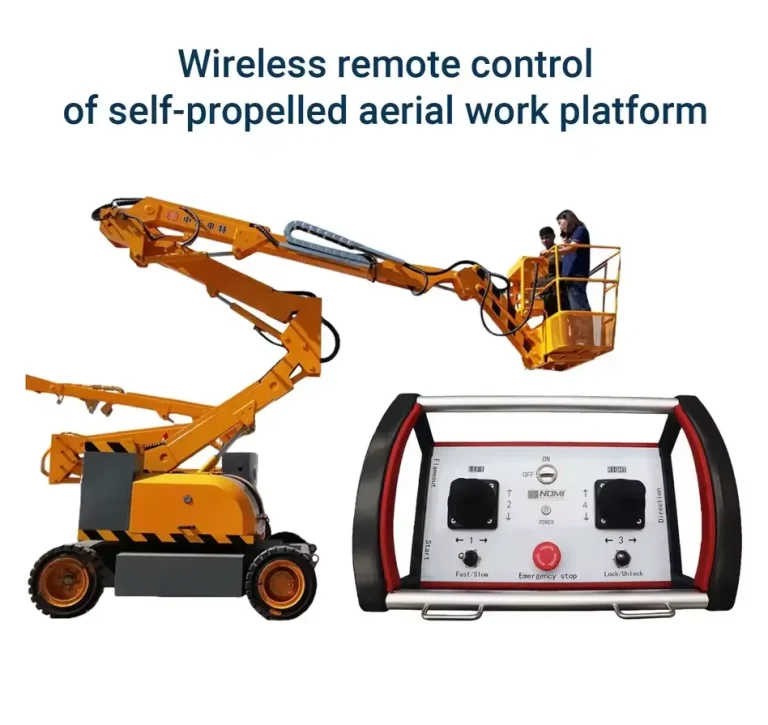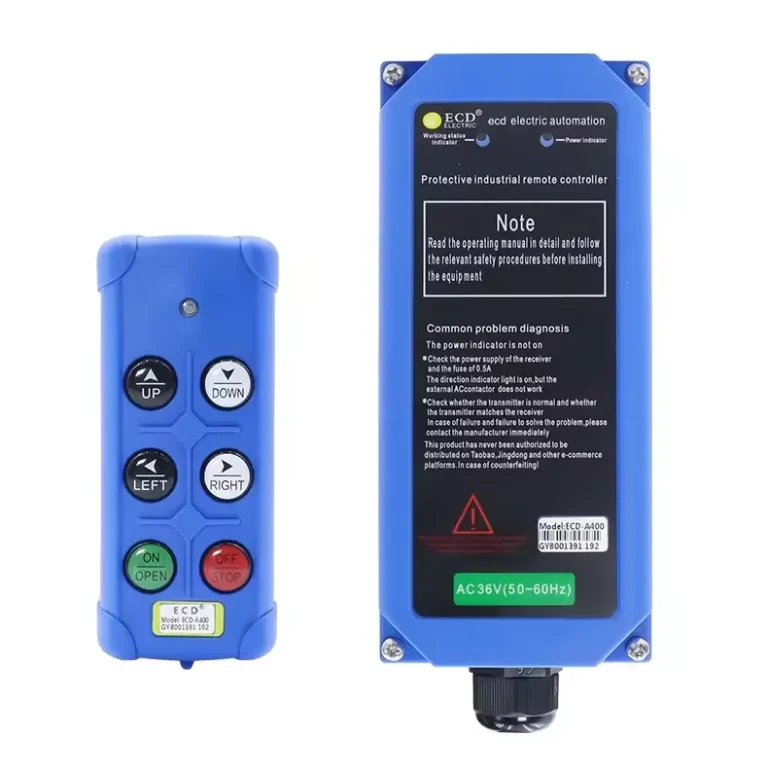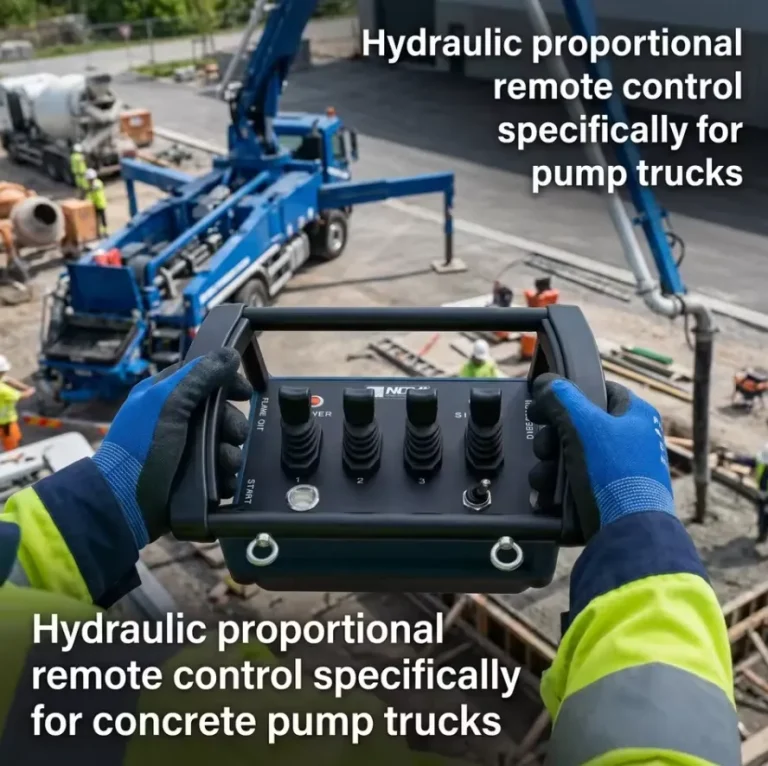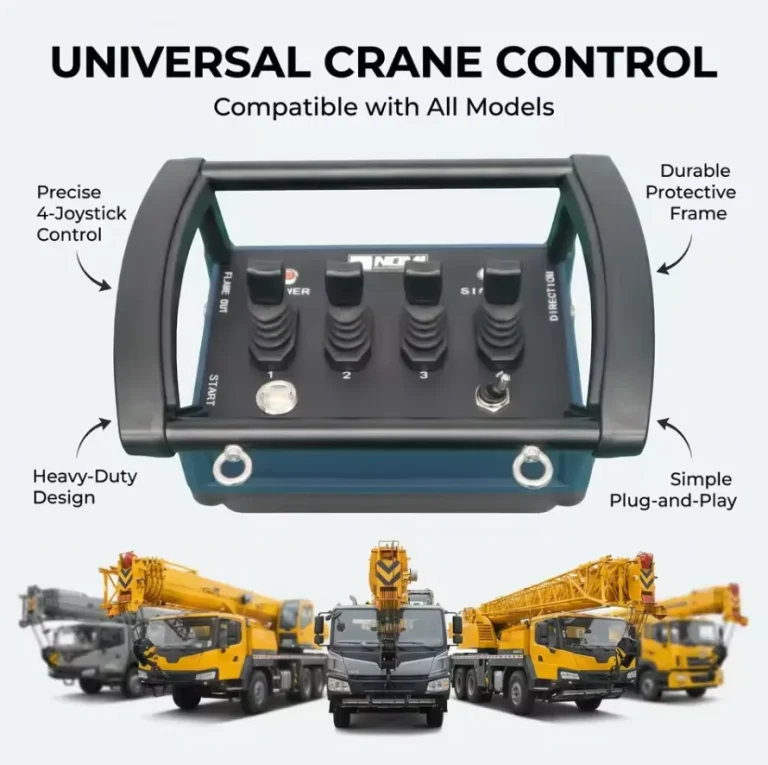

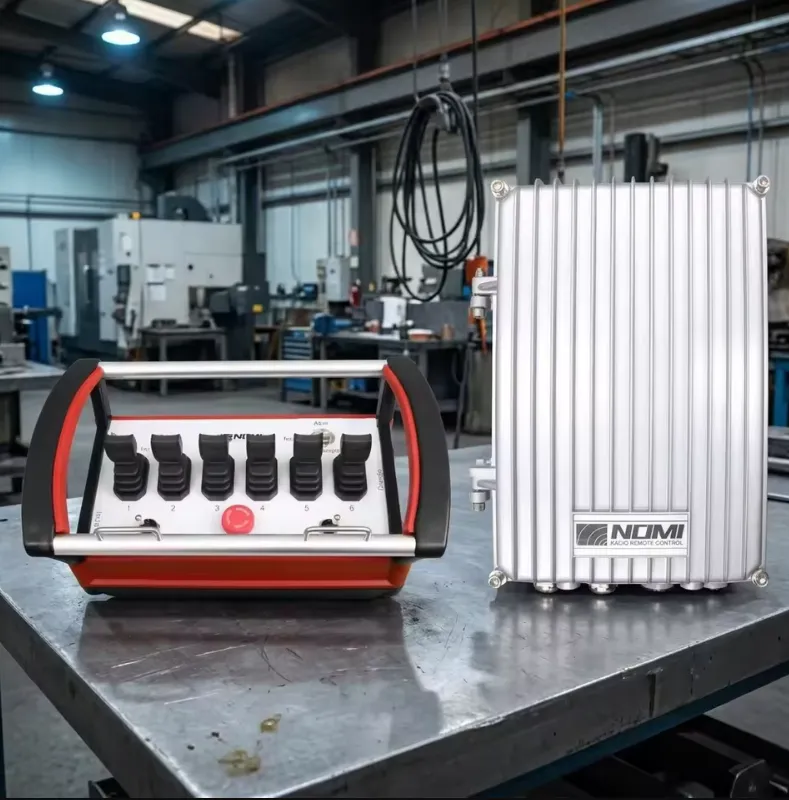
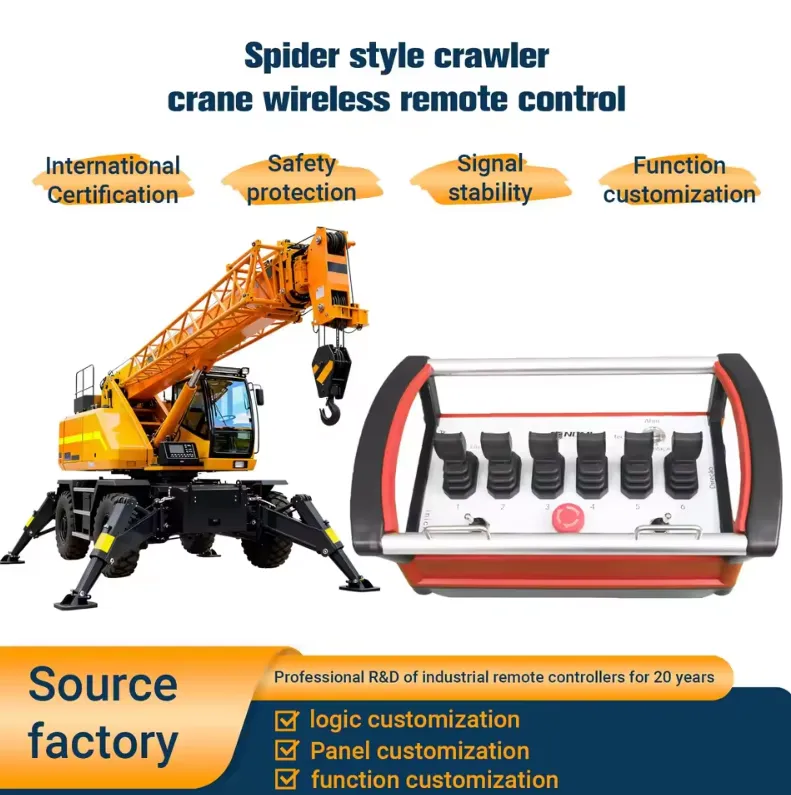
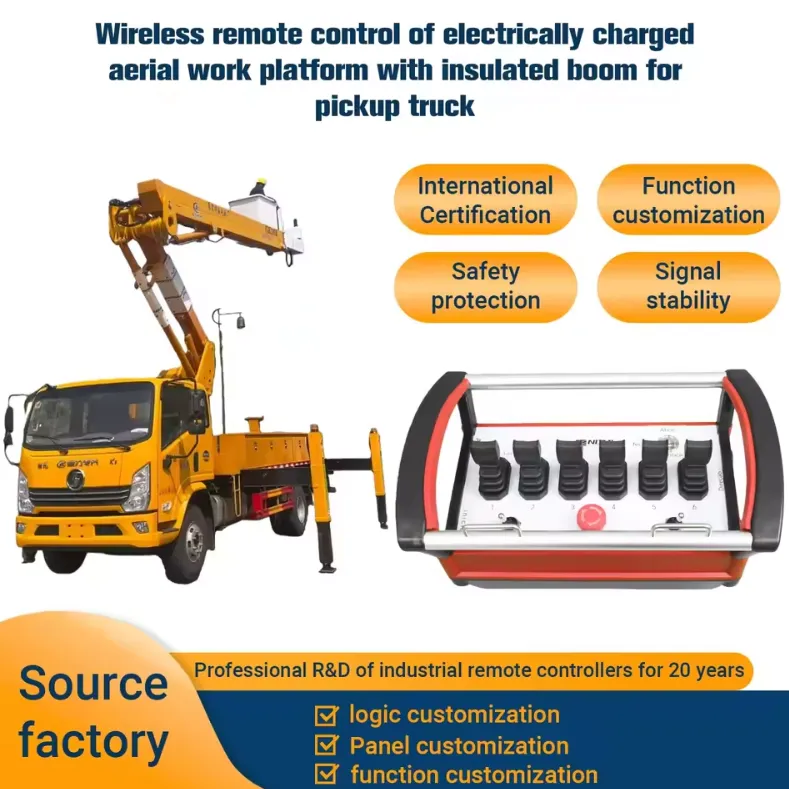
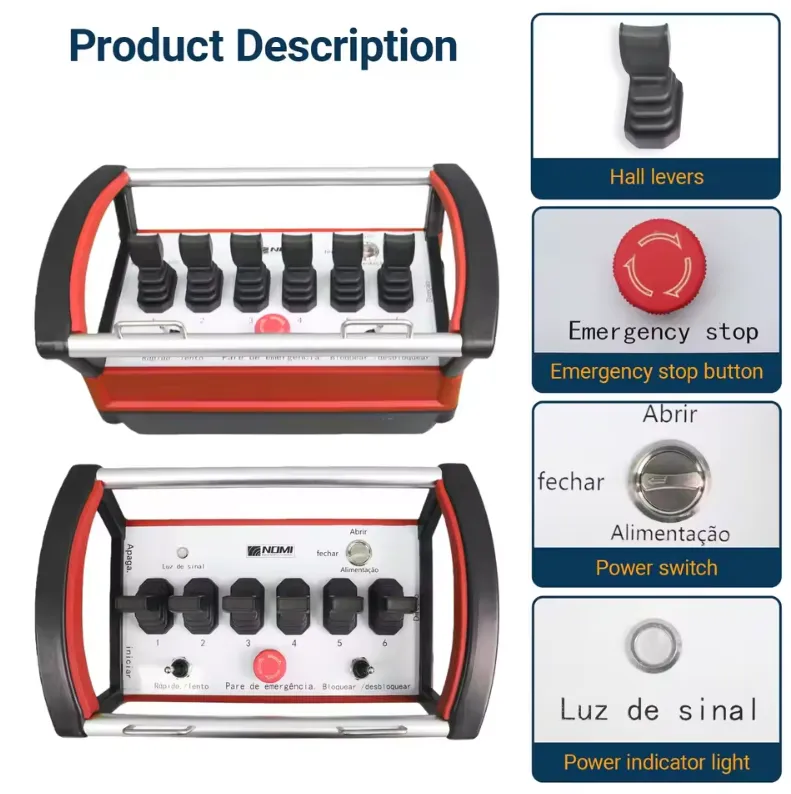
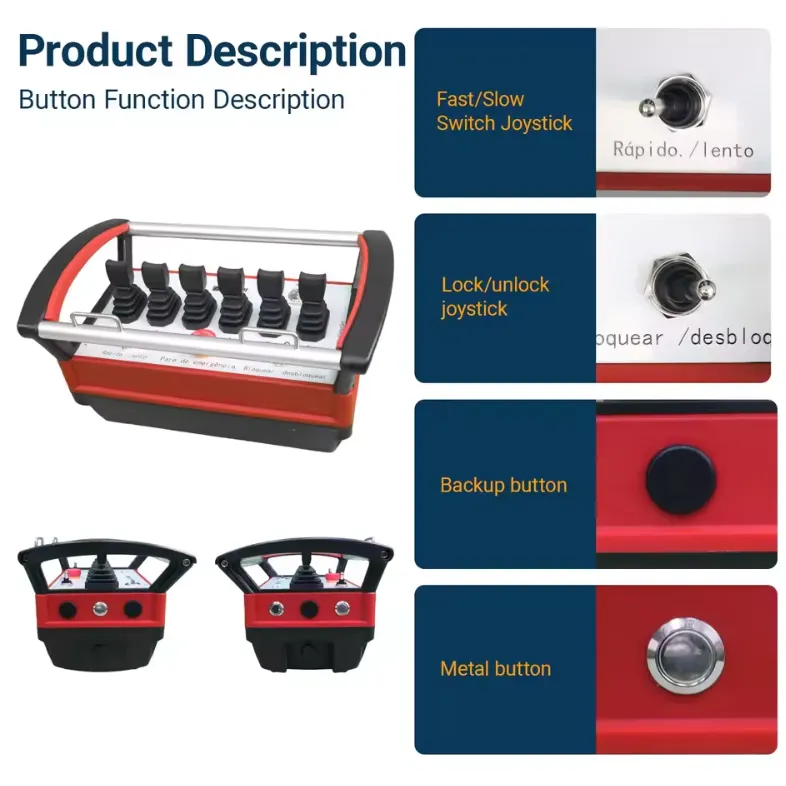
Los sistemas de control remoto hidráulico inalámbrico para grúas representan el avance más significativo en materia de seguridad y precisión operativa de los equipos de elevación en las últimas dos décadas. La tecnología de control proporcional elimina las limitaciones binarias de «encendido/apagado» de los sistemas tradicionales basados en relés, proporcionando comandos de velocidad y fuerza infinitamente variables que reflejan con exactitud las acciones del operador. Los modernos mandos a distancia hidráulicos proporcionales para grúas alcanzan tiempos de respuesta de la señal inferiores a 20 milisegundos, funcionan de forma fiable en las frecuencias de 433 MHz, 868 MHz y 2,4 GHz, y se integran a la perfección con los circuitos hidráulicos con detección de carga. En Nomi, hemos evaluado docenas de sistemas en aplicaciones de grúas industriales, y las conclusiones de este artículo reflejan la experiencia real en su implementación desde el punto de vista de la ingeniería.
| uso | Universal, Crane | código | Código fijo, código opcional |
| función | Resistente al agua, privacidad, a prueba de golpes, de un solo uso, automático, con mando a distancia… | material | Plástico y silicona, metal |
| Ver más | |||
| molde privado | Sí | botón | 6 palancas |
| lugar de origen | Henan, China | número de modelo | NM-009 |
| marca | NOMI | Nivel de protección | IP65 |
| Garantía | 1 año | OEM / ODM | OEM / ODM |
| Temperatura de funcionamiento | De -25 °C a 85 °C | Distancia de control | 225M/Personalizable |
| Solicitud | Equipos industriales | Certificación | CE, FCC, ROHS, ISO 9100 |
| Tensión | CA/CC 12 V/24 V | Frecuencia | 315/433mhz/Customizable |
| Tipo de batería | Batería compatible (batería de litio): una sola batería ≤ 100 WH |
| Unidades vendidas | Artículo individual | Tamaño de un solo paquete | 65 × 45 × 23 cm |
| Peso bruto unitario | 30 000 kg |
¿Qué es un sistema de control remoto hidráulico inalámbrico para grúas?
Un sistema de control remoto hidráulico inalámbrico para grúas es un conjunto electrohidráulico integrado que permite al operador controlar los movimientos de la grúa a distancia sin necesidad de conexiones físicas por cable entre el dispositivo de control y el circuito hidráulico de la grúa. El sistema sustituye o complementa el panel de mandos montado en la cabina por un transmisor portátil que envía señales codificadas de radiofrecuencia a un receptor instalado en la estructura de la grúa. El receptor descodifica dichas señales y las convierte en señales eléctricas proporcionales que accionan válvulas electrohidráulicas, dirigiendo el flujo de aceite hacia los cilindros, los motores y otros actuadores.
La arquitectura fundamental consta de tres subsistemas principales: el transmisor portátil o que se lleva en el cuerpo, el receptor y el módulo de control integrados en la máquina, y la capa de interfaz electrohidráulica. Cada subsistema debe diseñarse para funcionar como un único sistema coherente, ya que cualquier desajuste en la resolución de la señal, la frecuencia de actualización o la capacidad de conducción de corriente degradará la calidad del control de movimiento que experimenta el operador en el frente de trabajo.
Nos encontramos por primera vez con estos sistemas durante la modernización de unas grúas de pórtico en unas instalaciones portuarias, donde los mandos colgantes con cable provocaban fatiga en los operarios y errores de posicionamiento durante el apilamiento de contenedores de precisión. El cambio a un sistema proporcional inalámbrico redujo los errores de posicionamiento de la carga en aproximadamente un 60% durante el primer mes de funcionamiento, un resultado que concuerda con las conclusiones recogidas en la literatura académica y del sector.
La parte hidráulica del sistema suele incluir válvulas de control direccional proporcionales, que son válvulas accionadas por solenoide en las que la posición del carrete es proporcional a la corriente aplicada a la bobina del solenoide. A diferencia de las simples válvulas solenoides de tipo «on/off», que se abren o se cierran por completo de forma brusca, las válvulas proporcionales proporcionan un caudal directamente proporcional a la señal de mando, lo que permite una aceleración suave, un posicionamiento preciso y una desaceleración controlada.
Resumen de los componentes clave del sistema
| Componente | Función | Rango de especificaciones típico |
|---|---|---|
| Transmisor | Codifica los comandos del operador en señales de radiofrecuencia | IP65-IP67, 433/868/2,4 GHz |
| Módulo receptor/de control | Decodifica señales de radiofrecuencia y envía comandos de corriente | 12-24 V CC, montaje en carril DIN o en panel |
| Tarjeta amplificadora proporcional | Convierte una señal digital en corriente analógica | 0-2 A por canal, control PWM |
| Válvula direccional proporcional | Modula el caudal de aceite de forma proporcional a la corriente | Tamaños de bastidor de NG6 a NG32 |
| Módulo de relé de seguridad | Corta la alimentación en caso de pérdida de señal | SIL 2 / Categoría 3 PL d |
| Batería (transmisor) | Fuente de alimentación portátil | Batería de iones de litio, 8-16 horas de autonomía |
| Sistema de antena (receptor) | Mantiene la conexión por radio | Antena de diversidad, alcance de 50 a 500 m |
¿En qué se diferencia un sistema de control proporcional del control por relé de todo o nada?
Esta cuestión es la clave para entender por qué los sistemas inalámbricos proporcionales son más caros, pero ofrecen unos resultados operativos sustancialmente mejores. Comprender la diferencia desde el punto de vista de la ingeniería ayuda tanto a los especialistas en compras a justificar la asignación presupuestaria como a los técnicos a entender qué es lo que realmente están instalando.
En un mando a distancia convencional para grúas, basado en relés de encendido/apagado, el operador pulsa un botón o mueve una palanca de mando más allá de un umbral. El transmisor envía un único comando binario: avanzar o detenerse. El receptor activa un relé, que transmite toda la corriente del solenoide hidráulico a una válvula de control direccional estándar. La válvula se desplaza completamente hasta su posición de apertura nominal, proporcionando el caudal máximo. La pluma de la grúa, el polipasto o el accionamiento de giro aceleran a la velocidad máxima hasta que se suelta el botón, momento en el que todo se detiene bruscamente.
Este comportamiento binario provoca varios problemas bien documentados. Las cargas de choque provocadas por arranques y paradas bruscos aceleran el desgaste de los componentes mecánicos y estructurales. Esto dificulta el posicionamiento de precisión, especialmente en tareas como la colocación de paneles prefabricados de hormigón o el aterrizaje de cargas de grúa sobre pasadores de alineación. Los operadores lo compensan con rápidas pulsaciones sucesivas en el botón de control, lo cual resulta fatigante e impreciso.
Un sistema inalámbrico proporcional cambia esto de forma radical. La palanca de mando o la rueda giratoria del transmisor es un dispositivo de entrada de variación continua, normalmente un sensor de efecto Hall que genera una tensión analógica o un valor digital de alta resolución correspondiente a la distancia a la que se ha desplazado el mando desde el centro. Este valor se codifica en la señal de radio y se transmite al receptor, que envía una corriente proporcional al solenoide de la válvula proporcional. Si se desplaza la palanca de mando 30% de su recorrido, la válvula se abre 30%. Si se desplaza hasta 80%, la válvula se abre 80%. Esta relación se puede configurar mediante ajustes de rampa y curvas de ganancia cargadas en el amplificador proporcional.
Comparación de arquitecturas de control
| Parámetro | Control de relé de encendido/apagado | Control inalámbrico proporcional |
|---|---|---|
| Control de velocidad | Solo a toda velocidad | Regulación continua 0-100% |
| Precisión de posicionamiento | ±50-200 mm (valor típico) | ±5-20 mm (valor típico) |
| Carga de choque | Alto (arranque y parada bruscos) | Bajo (rampas configurables) |
| Fatiga del operador | Alto (golpeteo repetitivo) | Bajo (joystick intuitivo) |
| Índice de desgaste de los componentes | Elevado | Reducido en un 30-50% |
| Complejidad del sistema | Bajo | Medio-alto |
| Coste inicial | Bajo | Medio-alto |
| Coste total de propiedad | Medio-alto | A la baja durante más de 5 años |
| Tipos de grúas compatibles | Elevación en general | Precisión, proceso, puerto |
La función de rampa merece una mención especial. Las tarjetas amplificadoras proporcionales incluyen constantes de tiempo de subida y bajada programables, normalmente ajustables entre 0,1 segundos y 10 segundos. Un técnico puede configurar la rampa de tal forma que, incluso si el operador mueve la palanca de mando hasta el límite de su recorrido de forma instantánea, la apertura de la válvula aumente gradualmente durante el tiempo de rampa programado. Esto protege la carga, la estructura de la grúa y el circuito hidráulico de picos de presión, al tiempo que permite alcanzar la velocidad máxima de forma suave.
Hemos configurado tiempos de aceleración de tan solo 0,3 segundos para una grúa puente de un astillero que realiza elevaciones rápidas y repetitivas, y de hasta 4 segundos para una grúa de pedestal en alta mar que eleva cestas de transporte de personal, en las que la limitación de las sacudidas es un requisito de seguridad. La flexibilidad es uno de los valores fundamentales que ofrecen los sistemas proporcionales y que ningún sistema basado en relés puede igualar.
¿Qué bandas de frecuencia y protocolos de radio se utilizan en los sistemas de control remoto para grúas?
La selección de la frecuencia de radio es un tema que los equipos de compras suelen subestimar, pero que tiene consecuencias directas para la fiabilidad operativa, el cumplimiento normativo y la inmunidad frente a las interferencias. Los mandos a distancia inalámbricos para grúas funcionan en varias bandas de frecuencia reconocidas internacionalmente, y la elección entre ellas implica sopesar diferentes aspectos.
Banda de 433 MHz: Se trata de una de las bandas más utilizadas para el control inalámbrico industrial en Europa y Asia. Ofrece una buena capacidad de penetración de obstáculos, lo que significa que funciona razonablemente bien en entornos con estructuras de acero, paredes de hormigón y maquinaria densa. La longitud de onda es lo suficientemente larga como para difractar alrededor de obstáculos moderados. Sin embargo, la banda ISM de 433 MHz también es utilizada por estaciones meteorológicas, mandos a distancia de coches, sensores de automatización de edificios y una amplia gama de dispositivos de consumo, lo que puede generar interferencias en entornos urbanos o industriales densos.
Banda de 868 MHz (Europa) / Banda de 915 MHz (América del Norte): Estas bandas están menos saturadas que la de 433 MHz y están asignadas específicamente para aplicaciones industriales en sus respectivas regiones. Ofrecen un buen equilibrio entre alcance, penetración de obstáculos y resistencia a las interferencias. Muchos fabricantes europeos de mandos a distancia para grúas de gama alta, entre ellos Hetronic, Autec y HBC-radiomatic, fabrican sistemas en esta banda.
Banda de 2,4 GHz: La misma banda que el Wi-Fi y el Bluetooth. Los sistemas modernos de espectro ensanchado por salto de frecuencia (FHSS) que operan a 2,4 GHz pueden alcanzar una excelente inmunidad a las interferencias al saltar rápidamente de un canal a otro, lo que hace muy difícil que una sola fuente de interferencia interrumpa la conexión de forma continua. Sin embargo, la banda de 2,4 GHz tiene una longitud de onda más corta y se ve atenuada de forma más significativa por los obstáculos y por la lluvia en aplicaciones al aire libre de muy largo alcance.
Grupos con licencia: En aquellas aplicaciones en las que la seguridad de la señal y la inmunidad a las interferencias son fundamentales, algunos sistemas de grúas industriales pesadas utilizan bandas de frecuencia con licencia. Estas requieren un registro ante las autoridades nacionales de telecomunicaciones, pero garantizan el acceso al espectro.
Comparación de bandas de frecuencia para sistemas de control remoto de grúas
| Frecuencia | Alcance (al aire libre) | Penetración de obstáculos | Nivel de congestión | Uso regional |
|---|---|---|---|---|
| 433 MHz | 100-1000 m | Excelente | Alto | Europa, Asia |
| 868 MHz | 100-500 m | Muy bien | Baja-Media | Europa |
| 915 MHz | 100-500 m | Muy bien | Medio | América del Norte |
| FHSS a 2,4 GHz | 50-300 m | Bien | Alto (mitigado por FHSS) | En todo el mundo |
| UHF con licencia | 500 m-5 km | Muy bien | Ninguno | Específico para cada lugar |
La capa de protocolo de radio que se sitúa sobre la banda de frecuencia es igualmente importante. Los mandos a distancia de las grúas industriales utilizan protocolos codificados propios en lugar de estándares abiertos como Bluetooth o Zigbee, precisamente porque los protocolos propios pueden optimizarse para ofrecer baja latencia, alta fiabilidad y resistencia a la ejecución involuntaria de comandos. La codificación suele incluir el identificador único del transmisor, lo que impide que cualquier otro transmisor envíe accidentalmente un comando a un receptor de grúa específico.
La tecnología de espectro ensanchado por salto de frecuencia es el estándar actual para los mandos a distancia de grúas de alta fiabilidad. El transmisor y el receptor sincronizan su patrón de salto de frecuencia, pasando de 40 a 80 canales en una secuencia pseudoaleatoria muchas veces por segundo. Si un canal concreto está ocupado por una fuente de interferencias, el sistema simplemente omite ese salto y se recupera en el siguiente, manteniendo la integridad total de los datos gracias a la corrección de errores hacia adelante.
¿Cómo se integran las válvulas hidráulicas proporcionales con los receptores inalámbricos?
La interfaz eléctrica e hidráulica entre el receptor inalámbrico y la válvula proporcional es donde surgen la mayoría de los retos de integración. Comprender a fondo esta interfaz es fundamental para cualquiera que se encargue de especificar o poner en marcha un sistema inalámbrico proporcional para grúas.
Las válvulas de control direccional proporcionales modernas requieren una corriente continua controlada en sus bobinas de solenoide, normalmente en el rango de 0 a 1,6 amperios o de 0 a 2 amperios, dependiendo del fabricante y del tamaño de la válvula. La relación entre la corriente del solenoide y la posición del carrete no es perfectamente lineal debido a la histéresis, la fricción y las tolerancias de fabricación. Los amplificadores proporcionales compensan estas no linealidades mediante una señal de vibración y, en sistemas más sofisticados, mediante una retroalimentación de posición en bucle cerrado que utiliza un transformador diferencial variable lineal (LVDT) integrado en el carrete de la válvula.
El módulo receptor inalámbrico envía una señal de comando —normalmente una señal de bucle de corriente de 4-20 mA, una tensión analógica de 0-10 V o, cada vez con mayor frecuencia, una señal digital de bus de campo (bus CAN, CANopen o Profibus)— al amplificador proporcional. A continuación, el amplificador genera la salida de alta corriente que se envía al solenoide de la válvula.
Vías de integración de válvulas proporcionales
| Método de interfaz | Tipo de señal | Ventajas | Limitaciones |
|---|---|---|---|
| Analógico 4-20 mA | Bucle de corriente | Resistente al ruido, sencillo | Requiere un DAC en el receptor |
| Analógico 0-10 V | Tensión | Cableado sencillo | Propenso a los bucles de tierra |
| Bus CAN / CANopen | Digital | Alta resolución, diagnóstico | Se requieren conocimientos sobre protocolos |
| Profibus DP | Digital | Estándar del sector | Mayor coste |
| PWM Direct | Modulación por ancho de pulso | Sencillo y eficaz | Sensible al ruido sin filtrado |
| IO-Link | Digital | Diagnóstico inteligente | Más reciente, menos extendido |
En una instalación típica, el receptor inalámbrico emite una señal PWM o una señal de 4-20 mA correspondiente a la posición del joystick del transmisor. Esta señal se envía a la tarjeta amplificadora proporcional, que puede ser una unidad independiente montada en un carril DIN o estar integrada en la carcasa del receptor en los sistemas compactos. El amplificador acciona el solenoide de la válvula proporcional, y el carrete se desplaza proporcionalmente, dirigiendo el aceite hacia el actuador de la grúa.
Un aspecto fundamental en las aplicaciones con grúas es el comportamiento a prueba de fallos de la válvula proporcional cuando se pierde la señal eléctrica. La válvula debe centrarse por resorte en su posición neutra, bloqueando el caudal hacia todos los actuadores y manteniendo la carga inmóvil. Este centrado por resorte es una característica fundamental de seguridad hidráulica. El sistema inalámbrico refuerza esta función mediante la transmisión continua de una señal de mantenimiento de conexión por parte del transmisor, y el receptor activa un relé de seguridad que corta la alimentación de todos los solenoides de las válvulas en un plazo de entre 50 y 200 milisegundos si se pierde dicha señal. Este comportamiento es obligatorio según normas de seguridad como la EN 13849 y la IEC 61508.
Recordamos un caso de puesta en marcha de una grúa móvil portuaria en la que, inicialmente, la ganancia del amplificador proporcional se había ajustado a un valor demasiado alto. Cuando el operador movía ligeramente la palanca de mando, la pluma respondía con una sacudida violenta. Redujimos la ganancia a 60% del máximo y añadimos una rampa de 0,5 segundos. El resultado fue un movimiento suave y predecible con el que el operador se sentía seguro incluso al final de un largo turno. Este proceso de ajuste es algo que los libros de texto describen brevemente, pero que requiere tiempo de práctica sobre el terreno para dominarlo.
¿Qué normas de seguridad rigen los mandos a distancia inalámbricos para grúas?
El cumplimiento de las normas de seguridad no es opcional en los sistemas de control remoto para grúas. Existen marcos normativos a nivel de la Directiva sobre máquinas, de las normas de seguridad funcional y de las normas específicas para grúas. Los equipos de compras deben verificar el cumplimiento antes de la adquisición, y los equipos de ingeniería deben implementar sistemas que realmente cumplan dichas normas, en lugar de limitarse a afirmar que las cumplen.
EN 60068 (IEC 60068): Normas de ensayos ambientales que abarcan la temperatura, la humedad, la vibración y los golpes. Los mandos a distancia inalámbricos para grúas están expuestos a las condiciones del exterior, a la vibración mecánica procedente de la estructura de la grúa y a los impactos derivados de su manipulación. Cualquier sistema que carezca de datos de ensayos según la norma EN 60068 para las categorías de ensayo pertinentes debe considerarse con cautela.
EN 13849-1: Seguridad de la maquinaria, componentes de los sistemas de control relacionados con la seguridad. Esta norma define los niveles de rendimiento (PL de a a e) para las funciones de seguridad. Los mandos inalámbricos para grúas suelen tener que alcanzar el PL d (que corresponde al Nivel de Integridad de Seguridad 2) para la función de parada de emergencia. Esto significa que la función de «parada ante pérdida de señal» debe tener un tiempo medio hasta el fallo peligroso superior a 100 años equivalentes.
IEC 61508: Norma de seguridad funcional para sistemas de seguridad eléctricos, electrónicos y electrónicos programables. Los sistemas que declaren cumplir el nivel SIL 2 deben demostrar que tanto su arquitectura (canales redundantes) como su fiabilidad estadística (tasas de fallo cuantificadas) cumplen el umbral del nivel SIL 2.
EN 12077-2: Norma europea específica sobre grúas. Abarca los requisitos relativos a los dispositivos de limitación e indicación para grúas e incluye disposiciones sobre los sistemas de control a distancia.
ASME B30.2 / B30.22: Normas norteamericanas para grúas aéreas y pórtico. La norma B30.22 se refiere específicamente a los equipos de manipulación de materiales con grúas de pluma articulada, y en las secciones dedicadas a la inspección y al funcionamiento se tratan los mandos a distancia por radio.
FCC, Parte 15 / IC RSS-210 (América del Norte): Normas sobre emisiones de radiofrecuencia e inmunidad que deben cumplir los transmisores y receptores inalámbricos para poder comercializarse legalmente en Estados Unidos y Canadá.
Marcado CE / Directiva de la UE sobre máquinas 2006/42/CE: Requisitos de acceso al mercado europeo. Los sistemas de mando a distancia para grúas que se comercialicen en la UE deben llevar el marcado CE, basado en una evaluación de la conformidad con las normas armonizadas aplicables.
Resumen de las normas de seguridad
| Estándar | Región | Ámbito de aplicación | Nivel de rendimiento exigido |
|---|---|---|---|
| EN 13849-1 | Europa | Componentes de control relacionados con la seguridad | PL d para parada de emergencia |
| IEC 61508 | Internacional | Seguridad funcional | Nivel mínimo SIL 2 |
| EN 12077-2 | Europa | Dispositivos de limitación específicos para grúas | Arquitectura de categoría 3 |
| ASME B30.2 | América del Norte | Grúas puente | Según los requisitos de la edición |
| EN 300 220 | Europa | Espectro radioeléctrico 433/868 MHz | Cumplimiento de la normativa sobre radiofrecuencia |
| Parte 15 de la FCC | América del Norte | Cumplimiento de la normativa sobre radiofrecuencia | Límites de la clase B |
| IP67 (IEC 60529) | Internacional | Protección contra la entrada de elementos | Resistente al polvo, sumergible hasta 1 m |
Un aspecto del cumplimiento de las normas que merece especial atención es el concepto de emparejamiento entre transmisor y receptor. Según la norma EN 13849, el sistema debe garantizar que solo el transmisor específicamente emparejado pueda controlar una grúa concreta. Si dos grúas están funcionando en las proximidades, sus sistemas inalámbricos no deben interferir entre sí ni aceptar órdenes del transmisor equivocado. Esto se consigue mediante un emparejamiento con identificadores únicos y se confirma durante las pruebas de aceptación en fábrica y la puesta en servicio in situ. Siempre insistimos en realizar una prueba de proximidad con varias grúas durante la puesta en servicio para verificar este comportamiento antes de entregar el sistema al cliente.
¿Cómo afectan las condiciones ambientales al rendimiento de los mandos hidráulicos inalámbricos?
Las grúas operan en algunos de los entornos más exigentes a los que se enfrentan los equipos industriales. Las acerías, los astilleros, las obras al aire libre, las explotaciones mineras del Ártico y las instalaciones portuarias tropicales presentan diferentes combinaciones de temperaturas extremas, humedad, polvo, contaminación química e interferencias electromagnéticas. Comprender cómo estas condiciones afectan a los sistemas hidráulicos de control remoto inalámbricos es esencial para la selección de los sistemas y la planificación del mantenimiento preventivo.
Temperatura: Los componentes electrónicos tienen rangos de temperatura de funcionamiento nominales. La mayoría de los dispositivos electrónicos de uso comercial están homologados para funcionar entre 0 °C y 70 °C. Los mandos a distancia inalámbricos para grúas de uso industrial suelen estar homologados para funcionar entre -20 °C y +70 °C, y las versiones con especificaciones árticas llegan hasta los -40 °C. A temperaturas extremas, la capacidad de la batería disminuye significativamente. Las baterías de iones de litio pierden aproximadamente entre un 20 % y un 30 % de su capacidad a -20 °C. Los operadores que trabajan en climas fríos deben tener en cuenta que la autonomía de la batería será menor y es posible que tengan que llevar transmisores de repuesto o utilizar un sistema de almacenamiento con calefacción para los transmisores entre turnos.
Interferencias electromagnéticas: Las acerías con hornos de arco generan intensas interferencias electromagnéticas de banda ancha. Las grúas puente eléctricas con variadores de frecuencia generan interferencias de alta frecuencia en las líneas eléctricas y ruido electromagnético radiado. Los sistemas instalados en estos entornos deben presentar altos índices de inmunidad electromagnética (el fabricante debe facilitar los resultados de los ensayos de la serie IEC 61000-4). Los sistemas de antenas en diversidad, con dos antenas separadas espacialmente y selección automática de la señal más potente, proporcionan una resistencia significativa frente al desvanecimiento por trayectos múltiples, habitual en las estructuras de acero.
Humedad y polvo: El índice IP (Ingress Protection) es la especificación más relevante para entornos hostiles. La mayoría de los mandos a distancia de grúas de calidad cuentan, como mínimo, con la clasificación IP65 (resistentes al polvo y protegidos contra chorros de agua a baja presión). La clasificación IP67 añade la resistencia a la inmersión hasta 1 metro durante 30 minutos. Para entornos en los que se realizan lavados a presión, como las instalaciones de procesamiento de alimentos o las plataformas marítimas, la clasificación IP67 es el mínimo práctico para los mandos a distancia portátiles. El módulo receptor suele montarse dentro de una caja protectora en la grúa, y la propia caja debe tener una clasificación IP adecuada, normalmente IP65 o IP66.
Vibraciones y golpes: Los transmisores portátiles se caen. Esto es algo habitual en el ámbito industrial, no una excepción. Un transmisor diseñado para soportar una caída de 1 metro sobre hormigón tendrá una vida útil que se mide en años, en lugar de en meses. Los módulos receptores instalados en grúas móviles están sometidos a vibraciones continuas procedentes del motor y la transmisión, por lo que el montaje debe incluir un aislamiento antivibratorio para evitar que las uniones soldadas sufran fallos por fatiga con el paso del tiempo.
Guía de clasificación medioambiental para diferentes aplicaciones de grúas
| Entorno de aplicación | IP mínima del transmisor | IP mínima del receptor | Rango de temperatura | Consideraciones sobre la compatibilidad electromagnética (EMC) |
|---|---|---|---|---|
| Almacén cubierto | IP54 | IP54 | De 0 °C a 60 °C | Bajo |
| Construcción al aire libre | IP65 | IP65 | De -20 °C a 70 °C | Medio |
| Astillero / puerto | IP67 | IP66 | De -20 °C a 70 °C | Medio-alto |
| Acería | IP67 | IP66 | De -20 °C a 80 °C | Muy alto |
| Plataforma marítima | IP67, zona 2 de ATEX | IP66, ATEX Zona 2 | De -40 °C a 70 °C | Alto |
| Planta química | IP67, zona 1 de ATEX | IP66, ATEX Zona 1 | De -20 °C a 70 °C | Medio |
| Operación en el Ártico | IP67 | IP65 | De -40 °C a 50 °C | Baja-Media |
La certificación ATEX merece una mención especial en el caso de las aplicaciones en zonas peligrosas. ATEX (del francés «ATmosphères EXplosibles») es el marco normativo europeo para los equipos destinados a su uso en atmósferas potencialmente explosivas. Las grúas en alta mar, las grúas de las refinerías y los equipos de las plantas químicas pueden requerir sistemas de control remoto inalámbricos certificados según la Zona 1 o la Zona 2 de ATEX. Estos sistemas utilizan diseños de carcasas intrínsecamente seguras o a prueba de llama que evitan la ignición de los gases o polvos inflamables del entorno. La certificación ATEX aumenta considerablemente el coste y la complejidad de los sistemas de control remoto inalámbricos y limita las opciones de productos disponibles.
¿Cuáles son las especificaciones clave que los ingenieros deben tener en cuenta antes de realizar una compra?
Cuando nuestro equipo de ingeniería evalúa un mando a distancia proporcional inalámbrico para grúas para un cliente, seguimos una lista de comprobación estructurada que abarca el rendimiento de la radio, la resolución de los controles, la interfaz hidráulica, la seguridad, la clasificación de resistencia ambiental y la asistencia posventa. La siguiente matriz de especificaciones es el resultado de años de perfeccionamiento basados en la experiencia adquirida durante la puesta en marcha de múltiples tipos de grúas.
Lista de comprobación de especificaciones técnicas básicas
| Especificaciones | Qué hay que comprobar | Rango aceptable / Requisito |
|---|---|---|
| Frecuencia de funcionamiento | Esquema de bandas y saltos | FHSS, 433/868/915 MHz o 2,4 GHz |
| Rango de funcionamiento | Distancia nominal, condiciones de los obstáculos | 100 m como mínimo; más de 300 m para las grúas portuarias |
| Canales de control | Número de analógicos + digitales | 4-12 proporcional; 8-32 digital |
| Resolución del joystick | Niveles de resolución analógica | 10 bits (1024 pasos) como mínimo; se recomienda 12 bits |
| Frecuencia de actualización | Con qué frecuencia se actualizan los comandos | 20 ms o menos (50 Hz como mínimo) |
| Latencia de la señal | Respuesta al comando de extremo a extremo | Menos de 40 ms |
| Tipo de señal de salida | Interfaz con el amplificador proporcional | 4-20 mA, 0-10 V, CAN, PWM |
| Control de corriente de salida | Capacidad de transmisión directa | 0-2 A por canal |
| Arquitectura de seguridad | Nivel de redundancia | Categoría 3 / PL d |
| Tiempo de respuesta de la parada de emergencia | Tiempo transcurrido desde que se pulsa el botón hasta que se corta la corriente | Menos de 100 ms |
| Respuesta ante la pérdida de señal | Tiempo de espera de seguridad | 50-200 ms, configurable |
| Índice de protección IP del transmisor | Protección contra la entrada de elementos | IP65 como mínimo; se prefiere IP67 |
| Índice de resistencia a las caídas del transmisor | Resistencia mecánica | Prueba de caída desde 1 m como mínimo |
| Duración de la batería | Autonomía por carga | 8 horas como mínimo |
| Tipo de batería | Química y sustituibilidad | Ión-litio, sustituible in situ |
| Temperatura de funcionamiento | Gama completa de prestaciones | De -20 °C a +70 °C como mínimo |
| Certificaciones | Cumplimiento de las normas del mercado | CE, FCC y normas de seguridad pertinentes |
| Seguridad en el emparejamiento | Asignación de un identificador único | Programado de fábrica, reparable in situ |
Más allá de la tabla de especificaciones, hay varios factores cualitativos que influyen de manera significativa en el rendimiento real del sistema y en la aceptación por parte de los usuarios.
Ergonomía: Un operario que utilice un mando a distancia inalámbrico entre 8 y 10 horas al día notará cualquier deficiencia ergonómica. La distribución del peso, el diámetro del mango, la ubicación de los botones, la fuerza de resorte del joystick y la legibilidad de la pantalla son factores que contribuyen a la fatiga del operador y a la tasa de errores. Recomendamos encarecidamente que los operadores evalúen prototipos físicos o unidades de demostración antes de decidirse a comprar, especialmente en el caso de aplicaciones de uso intensivo.
Configurabilidad del software: La posibilidad de ajustar los tiempos de rampa, las curvas de ganancia, los límites de velocidad y la asignación de funciones mediante software, en lugar de mediante potenciómetros físicos, supone una ventaja significativa durante la puesta en marcha y cuando cambian los requisitos operativos. Los fabricantes que ofrecen una herramienta de configuración para PC con capacidad de registro de datos permiten a los técnicos revisar el historial operativo, lo cual resulta muy útil tanto para la planificación del mantenimiento como para la investigación de incidencias.
Disponibilidad de piezas de recambio: Los mandos a distancia inalámbricos para grúas son equipos de larga duración, pero los transmisores pueden sufrir averías. El compromiso del fabricante con la disponibilidad de piezas de recambio durante un periodo de entre 10 y 15 años debe evaluarse con el mismo cuidado que las especificaciones iniciales del producto.
¿Cómo mejora el control proporcional inalámbrico la manipulación de cargas y la productividad?
Los argumentos a favor de la productividad que ofrece el control proporcional inalámbrico de grúas están bien respaldados tanto por análisis de ingeniería como por datos operativos de usuarios de grúas de diversos sectores. Podemos desglosar esta mejora en cuatro mecanismos distintos: precisión de posicionamiento, movilidad del operador, reducción de las cargas de impacto y coordinación entre varias grúas.
Precisión de posicionamiento: Los sistemas de control binario generan un incremento mínimo de movimiento igual a la distancia que recorre la carga durante el tiempo mínimo de pulsación de la palanca de mando a velocidad máxima. Para un polipasto que se desplaza a 10 metros por minuto con un tiempo de entrada de 200 ms, el incremento mínimo de movimiento es de aproximadamente 33 mm. Con el control proporcional ajustado a una velocidad de 5%, la misma entrada de 200 ms desplaza la carga solo 1,7 mm. Para tareas como el ajuste de precisión de paneles prefabricados, esta diferencia supone la diferencia entre una tarea que lleva cinco minutos y otra que lleva quince segundos.
Movilidad de los operadores: Los mandos colgantes fijos limitan al operario a la longitud del cable, normalmente de entre 5 y 10 metros, y le obligan a situarse en una posición determinada por el recorrido del cable, en lugar de en el punto de observación óptimo. Los sistemas inalámbricos permiten al operario situarse donde mejor pueda ver la carga, la zona de aterrizaje y cualquier obstáculo. Esta movilidad reduce el riesgo de accidentes y mejora la calidad de la colocación de la carga sin requerir tiempo adicional.
Reducción de las cargas de choque: La aceleración y la desaceleración controladas mediante funciones de rampa proporcionales prolongan la vida útil de los cables metálicos, las poleas, los tambores, los ganchos y las uniones estructurales. Los datos del sector indican que eliminar los arranques y paradas bruscos puede prolongar la vida útil de los cables entre un 30 y un 50% en aplicaciones de alto número de ciclos. Esto supone una reducción de los costes de mantenimiento con un retorno de la inversión cuantificable.
Funcionamiento simultáneo multifuncional: Los sistemas inalámbricos proporcionales suelen permitir el funcionamiento simultáneo de varias funciones de la grúa. Un operador con experiencia puede elevar el gancho mientras gira la grúa y desplaza el carro al mismo tiempo, trazando una trayectoria en arco suave para que la carga llegue a la zona de descarga sin paradas intermedias. Esto reduce drásticamente el tiempo de ciclo en las operaciones de elevación repetitivas.
Indicadores de productividad: antes y después de la implantación del control proporcional inalámbrico
| Indicador de rendimiento | Control de encendido y apagado del relé | Proporcional inalámbrico | Mejora |
|---|---|---|---|
| Precisión media en el posicionamiento de la carga | ±80 mm | ±15 mm | 5,3 veces más preciso |
| Tiempo de ciclo (elevación repetitiva de 5 m) | 85 segundos | 62 segundos | 27% más rápido |
| Intervalo de sustitución de la cuerda | 6 meses | 9-10 meses | 50-65% más largo |
| Bajas por enfermedad de los operarios (trastornos musculoesqueléticos) | Valor de referencia | -18% de media | Menor fatiga |
| Incidentes que casi provocan un accidente | Valor de referencia | -35% de media | Funcionamiento más seguro |
| Tiempo de formación de los operadores | 3-5 días | 5-7 días | Un poco más largos, pero con mejores resultados |
Los datos sobre la mejora de la productividad que figuran en la tabla anterior coinciden con los resultados publicados en revistas especializadas del sector de la elevación y con los estudios de casos de los principales fabricantes de grúas, como Liebherr, Manitowoc y Terex, aunque cada instalación concreta variará en función de las características específicas de su aplicación.
¿Cuáles son los modos de fallo más habituales y los requisitos de mantenimiento?
Los sistemas de control remoto inalámbricos para grúas hidráulicas suelen ser fiables, pero, al igual que cualquier equipo electrónico industrial que funcione en entornos adversos, presentan modos de fallo conocidos que deben tenerse en cuenta en los programas de mantenimiento predictivo. Comprender estos patrones de fallo ayuda a los equipos de mantenimiento a evitar paradas imprevistas.
Degradación de la batería: Las baterías de iones de litio pierden capacidad progresivamente con los ciclos de carga y descarga. Tras 500-800 ciclos, lo que puede suponer entre 2 y 3 años de uso diario, la capacidad de la batería puede haber descendido hasta el 70-80% de su capacidad original. El transmisor seguirá funcionando, pero la autonomía se verá reducida. La sustitución de la batería es la tarea de mantenimiento más habitual en los mandos a distancia inalámbricos para grúas. Recomendamos llevar un control de la autonomía de la batería y programar su sustitución cuando esta caiga por debajo del 70 % de la capacidad nominal.
Corrosión del conector de la antena: El conector coaxial de la antena de los módulos receptores está expuesto a vibraciones y, a menudo, a la condensación en aplicaciones al aire libre. La corrosión del conector aumenta la atenuación de la señal y reduce el alcance efectivo. Se recomienda realizar una inspección trimestral de los conectores de antena y aplicar un lubricante adecuado para los contactos.
Desgaste del sensor del joystick: Los sensores de joystick de efecto Hall son sin contacto y muy fiables. Sin embargo, el resorte mecánico y el mecanismo de pivote pueden desgastarse con el tiempo, sobre todo en los transmisores utilizados en operaciones de elevación repetitivas y de alta frecuencia. Un joystick con deriva que no vuelva con precisión al centro provocará que la grúa se desplace lentamente al soltar el mando. La mayoría de los sistemas incluyen una banda muerta configurable alrededor del centro para compensar pequeñas desviaciones del sensor, pero, con el tiempo, es necesario sustituir los componentes mecánicos.
Contaminación de las válvulas proporcionales: Técnicamente, se trata de un fallo del sistema hidráulico más que del sistema inalámbrico, pero afecta directamente al rendimiento del control proporcional. La contaminación del aceite hidráulico provoca que los carretes de las válvulas proporcionales se atasquen, lo que da lugar a un movimiento no proporcional o a tirones, incluso cuando el sistema inalámbrico funciona perfectamente. Mantener la limpieza del aceite según el código de limpieza ISO 4406 16/14/11 o superior es esencial para la longevidad de las válvulas proporcionales.
Corrupción del firmware: En los sistemas con firmware actualizable, los daños provocados por cortes de corriente durante la actualización pueden provocar el bloqueo del sistema. Utiliza siempre las herramientas de actualización de firmware proporcionadas por el fabricante y mantén una copia de seguridad de la última versión de firmware que se sepa que funciona correctamente.
Recomendación sobre el programa de mantenimiento
| Componente | Intervalo de inspección | Acción | Gatillo de recambio |
|---|---|---|---|
| Batería del transmisor | Mensual | Consulta el registro de ejecución | Por debajo de la capacidad nominal del 70% |
| Conexiones de antena | Trimestral | Revisar, limpiar, lubricar | Corrosión visible o reducción del alcance |
| Juntas de estanqueidad de la carcasa del transmisor | Dos veces al año | Revisar las juntas | Grietas, deformaciones |
| Resorte/pivote del joystick | Anualmente | Comprueba el retorno al centro | La deriva supera el límite de la banda muerta |
| Montaje del módulo receptor | Trimestral | Comprobar los amortiguadores de vibraciones | Desgastado o comprimido |
| Válvulas proporcionales | Según los intervalos del fabricante | Cambiar el aceite del filtro, comprobar el funcionamiento | Respuesta no lineal o persistente |
| Circuito de parada de emergencia | Mensual | Prueba de funcionamiento | Cualquier fallo en el corte de suministro eléctrico |
| Contactos de la batería | Mensual | Limpiar y comprobar la tensión del muelle | Alta resistencia de contacto |
¿Cómo elegir el mando a distancia hidráulico inalámbrico adecuado para tu tipo de grúa?
El tipo de grúa es el criterio de selección principal, ya que las diferentes configuraciones de grúa presentan requisitos de control, arquitecturas de circuitos hidráulicos y entornos de funcionamiento fundamentalmente distintos. Adaptar el sistema proporcional inalámbrico al tipo de grúa permite evitar costosos errores de especificación.
Grúas puente (grúas EOT): Se trata de grúas de gran rendimiento y alto número de ciclos utilizadas en plantas de fabricación. El sistema proporcional requiere una alta frecuencia de actualización para garantizar un posicionamiento suave del elevador; por lo general, cuenta con 4 canales proporcionales (desplazamiento longitudinal, desplazamiento transversal, subida del elevador y bajada del elevador), una buena inmunidad a las interferencias electromagnéticas (EMC) para entornos con variadores de frecuencia (VFD) y una ergonomía del transmisor adecuada para un uso diario prolongado. En muchas aplicaciones de grúas puente se optan por transmisores con empuñadura tipo pistola o con un arnés compacto que se lleva sobre el pecho, para garantizar la comodidad del operario durante todo el día.
Grúas hidráulicas móviles (todoterreno, para terrenos difíciles): Estas grúas ya cuentan con sistemas hidráulicos con detección de carga y mandos electrónicos tipo joystick en la cabina. Añadir la capacidad de control proporcional inalámbrico implica conectar el receptor inalámbrico a la unidad de control electrónico (ECU) existente a través de un bus CAN o de entradas analógicas. El sistema inalámbrico debe ser compatible con la arquitectura de software existente del fabricante de la grúa. Los requisitos de alcance son moderados (normalmente entre 100 y 300 metros), y el transmisor debe resistir la radiación UV en exteriores, los cambios de temperatura y los impactos mecánicos.
Grúas sobre orugas y grúas de pluma en celosía: Las grandes grúas sobre orugas utilizadas en obras de ingeniería civil pesada y en trabajos de instalación industrial se benefician enormemente del control proporcional inalámbrico durante las operaciones de elevación complejas, en las que el operador debe situarse en el punto de descarga de la carga, en lugar de en la cabina de la grúa. Estas aplicaciones suelen requerir largos alcances de funcionamiento (entre 300 y 500 metros) y pueden necesitar una segunda antena receptora para superar los obstáculos que impiden la línea de visión en torno a grandes estructuras.
Grúas marítimas y offshore: Se trata de los entornos de aplicación más exigentes. La corrosión por niebla salina, el movimiento inducido por las olas, los requisitos ATEX (en algunas zonas) y los requisitos críticos de seguridad se combinan para exigir sistemas inalámbricos de las más altas especificaciones. Los mandos a distancia para grúas en alta mar deben cumplir normas específicas para este entorno, además de las normas generales de seguridad para grúas, y sus requisitos de MTBF suelen ser definidos por el cliente en función de los horarios operativos del buque.
Grúas torre: Las aplicaciones de las grúas torre son interesantes porque el operador suele encontrarse en la cabina situada en lo alto del mástil, pero durante el montaje, la subida y la inspección, resulta muy útil el control inalámbrico desde el suelo. Los mandos a distancia inalámbricos para grúas torre necesitan un alcance muy largo (más de 500 metros para grúas altas), unas características de propagación de la señal de radio con cielo despejado y, por lo general, menos canales proporcionales que las grúas móviles o las grúas puente.
Grúas articuladas (HMK): Estas grúas montadas en camiones o en buques son habituales en los sectores de servicios públicos, telecomunicaciones y transporte marítimo de mercancías. Los mandos a distancia proporcionales inalámbricos para estas grúas suelen incluir un transmisor de petaca que lleva puesto el operador, el cual puede estar trabajando en una cesta situada junto a la pluma, en la cubierta de un buque o en una posición difícil en tierra. El control suele abarcar la elevación de la pluma, la extensión, el giro y las funciones auxiliares, con un número habitual de entre 4 y 8 canales proporcionales.
Matriz de selección de tipos de grúas
| Tipo de grúa | Canales proporcionales | Formulario de transmisor preferido | Necesidades de alcance | Factor medioambiental crítico |
|---|---|---|---|---|
| Grúa puente / EOT | 4-6 | Empuñadura de pistola / teclado | 50-150 m | EMC, ciclo elevado |
| Todo terreno móvil | 6-12 | Consola con joystick | 100-300 m | Temperatura, rayos UV |
| Pluma en celosía sobre orugas | 8-16 | Consola con joystick / transmisor de peto | 300-500 m | Polvo, barro, campo de tiro |
| Grúa para plataformas marinas | 6-10 | Cinturón ATEX | 200-400 m | Sal, ATEX, seguridad |
| Grúa de torre | 4-8 | Consola / lámpara colgante | 300-1000 m | RF urbana de largo alcance |
| Pluma articulada | 4-8 | Bolsa de cinturón / colgante | 100-200 m | Movilidad, tamaño compacto |
| Pórtico portuario (RTG/STS) | 8-16 | Consola | 200-500 m | EMC, servicio 24 horas al día, 7 días a la semana |
Preguntas frecuentes: Mando a distancia hidráulico inalámbrico para grúas
1: ¿Cuál es el alcance máximo de funcionamiento seguro de un mando a distancia inalámbrico para grúas?
El alcance máximo de funcionamiento seguro depende de la frecuencia, la ganancia de la antena y el entorno radioeléctrico, y no solo del alcance nominal que figura en la ficha técnica. La mayoría de los sistemas inalámbricos proporcionales para grúas tienen un alcance nominal de entre 100 y 500 metros en condiciones de línea de visión directa en aire libre. En aplicaciones reales con grúas, en las que existen obstáculos de acero estructural, interferencias activas de radiofrecuencia procedentes de otros equipos y reflexiones multitrayecto, el alcance práctico y fiable suele ser del 50-70% de la cifra nominal. Un sistema con un alcance nominal de 300 metros puede ofrecer entre 180 y 210 metros de funcionamiento fiable en un entorno portuario rodeado de contenedores de acero. Para aplicaciones en las que la seguridad es fundamental, recomendamos seleccionar un sistema con un alcance nominal de al menos el doble de la distancia de funcionamiento real necesaria y realizar siempre una prueba de alcance en todas las posiciones de trabajo previstas durante la puesta en servicio. Los sistemas de antenas en diversidad, que utilizan dos antenas receptoras separadas espacialmente y seleccionan automáticamente la señal más potente, pueden ampliar el alcance práctico entre un 20 y un 40% en entornos de radiofrecuencia difíciles. La norma EN 13849 exige que el sistema entre en modo de seguridad ante la pérdida de señal en un plazo definido, por lo que la ampliación del alcance no debe comprometerse a costa del comportamiento de seguridad ante la pérdida de señal.
2: ¿Funcionan los mandos a distancia proporcionales inalámbricos para grúas en zonas con fuertes interferencias electromagnéticas procedentes de equipos de soldadura?
Los mandos a distancia inalámbricos para grúas pueden funcionar cerca de equipos de soldadura, pero a la hora de elegirlos hay que tener especialmente en cuenta la inmunidad a las interferencias electromagnéticas (EMC), y la banda de frecuencia es un factor muy importante. La soldadura por arco eléctrico genera interferencias de radiofrecuencia de banda ancha que pueden afectar a los sistemas inalámbricos que operan en la misma gama de frecuencias. Los sistemas FHSS modernos a 2,4 GHz, dotados de una sólida corrección de errores hacia adelante, suelen ser más resistentes a las interferencias de banda estrecha procedentes de la soldadura que los sistemas de frecuencia fija a 433 MHz. La especificación clave que hay que verificar son los resultados de las pruebas de la norma IEC 61000-4 del sistema, concretamente la norma IEC 61000-4-3 para la inmunidad radiada y la norma IEC 61000-4-6 para la inmunidad conducida. La ubicación de la antena receptora también es fundamental: situar la antena receptora lejos de los cables de soldadura y de las máquinas de soldadura, y tender los cables de la antena alejándolos de las vías de retorno de corriente de soldadura, reduce significativamente el acoplamiento de interferencias. En instalaciones con operaciones de soldadura continuas, recomendamos solicitar una prueba de interferencias específica para el emplazamiento antes de decidirse por un sistema, ya que las condiciones varían mucho de una instalación a otra. Algunos fabricantes de gama alta ofrecen servicios de estudio in situ con este fin.
3: ¿Cuánto tiempo se tarda en poner en marcha un sistema hidráulico proporcional inalámbrico en una grúa?
Una instalación sencilla en una sola grúa con un receptor preconfigurado lleva entre 1 y 3 días; las grúas multifuncionales complejas con programación personalizada pueden requerir entre 5 y 10 días. El proceso de puesta en servicio abarca la instalación mecánica del módulo receptor y las antenas, el cableado entre el receptor y el amplificador proporcional, el cableado desde el amplificador hasta las válvulas proporcionales, el encendido inicial del sistema y la verificación del emparejamiento entre el transmisor y el receptor, las pruebas función por función a baja velocidad, el ajuste del amplificador proporcional (ganancia, rampa, banda muerta), pruebas funcionales a plena velocidad con cargas, pruebas de parada de emergencia y de seguridad ante pérdida de señal según las normas de seguridad, y la documentación. La fase que más tiempo requiere suele ser el ajuste del amplificador proporcional, sobre todo si la grúa cuenta con múltiples funciones con distintos requisitos de respuesta. Los fabricantes que suministran sus amplificadores proporcionales con parámetros iniciales preconfigurados de fábrica para tipos de válvulas conocidos pueden reducir significativamente el tiempo de ajuste. Hemos puesto en servicio sistemas sencillos de 4 canales en un solo día y sistemas complejos de grúas marítimas de 16 canales en dos semanas completas, incluidas las pruebas de aceptación en fábrica.
4: ¿Qué ocurre si se agota la batería del transmisor durante una elevación con grúa?
Cuando se pierde la señal del transmisor por cualquier motivo, incluido un fallo de la batería, el receptor activa inmediatamente la respuesta de seguridad y corta la alimentación de todos los solenoides de las válvulas hidráulicas dentro del intervalo de tiempo configurado, que suele oscilar entre 50 y 200 milisegundos. Las válvulas de control direccionales proporcionales cuentan con centrado por resorte, lo que significa que, al quedar sin alimentación, vuelven a su posición neutra de bloqueo, bloqueando hidráulicamente todos los actuadores y deteniendo todo el movimiento de la grúa, al tiempo que mantienen la carga suspendida en su posición. Este comportamiento es un requisito de seguridad fundamental exigido por la norma EN 13849 y se verifica durante la puesta en servicio. Los transmisores modernos incluyen una alarma de batería baja que emite tanto una señal acústica como un indicador visual, que suele activarse entre 20 y 30 minutos antes de que la batería se agote. Muchos sistemas también transmiten el nivel de la batería al receptor y lo muestran en cualquier pantalla de carga integrada o panel HMI de la grúa. Los operadores deben comenzar siempre su turno con un transmisor completamente cargado y llevar consigo una batería de repuesto cargada o un segundo transmisor para los turnos largos. Las organizaciones con operaciones continuas críticas deben implementar un protocolo documentado de gestión de baterías.
5: ¿Son los mandos a distancia inalámbricos para grúas más vulnerables al pirateo o al uso no autorizado que los sistemas con cable?
Los mandos a distancia inalámbricos modernos para grúas industriales utilizan protocolos de radio encriptados y patentados, con un emparejamiento único entre transmisor y receptor que hace que su uso no autorizado resulte extremadamente difícil, lo que los hace mucho más seguros de lo que mucha gente cree. Los dispositivos inalámbricos de consumo, como los routers Wi-Fi, utilizan protocolos abiertos que pueden analizarse con herramientas de software de fácil acceso. Los mandos a distancia de las grúas industriales utilizan pilas de protocolos propietarios desarrolladas específicamente con fines de seguridad, en las que el formato de los mensajes de radio, la codificación y las secuencias de establecimiento de conexión no están documentados públicamente. Cada transmisor cuenta con un identificador de hardware único programado en fábrica, y el receptor está configurado para aceptar comandos únicamente de su transmisor o transmisores emparejados (algunos sistemas admiten grupos de transmisores emparejados para el control de acceso por turnos). El espectro ensanchado por salto de frecuencia dificulta la interceptación de señales y los ataques de repetición, ya que la secuencia de frecuencias es pseudoaleatoria y está sincronizada entre el par legítimo. El riesgo de seguridad más realista en entornos industriales no es la piratería informática, sino el error del operador, como que el operador de una segunda grúa utilice inadvertidamente un transmisor que se encuentre muy cerca. Esto se soluciona mediante el emparejamiento único, y los sistemas deben someterse a pruebas de rechazo de interferencias cruzadas durante la puesta en servicio cuando varias grúas operen en las proximidades.
6: ¿Cuál es la diferencia entre SIL 2 y la categoría 3, nivel de rendimiento (PL) d, y cuál de ellas se aplica a los mandos a distancia inalámbricos para grúas?
El nivel SIL 2 (según la norma IEC 61508) y la categoría 3, nivel de rendimiento d (según la norma EN 13849) son marcos de evaluación de la seguridad distintos, aunque relacionados entre sí; ambos se citan habitualmente en relación con las funciones de seguridad de los mandos a distancia inalámbricos para grúas, y la función de «parada ante pérdida de señal» debe cumplir con ambos. La norma IEC 61508 es un marco probabilístico que cuantifica la probabilidad media de fallo peligroso por hora (PFH). El nivel SIL 2 exige una PFH comprendida entre 10⁻⁶ y 10⁻⁷. La norma EN 13849 utiliza una combinación de categoría de arquitectura (de la categoría 1 a la 4) y fiabilidad estadística para asignar un nivel de rendimiento (PL de a a e). El PL d se corresponde aproximadamente con el SIL 2. La categoría 3 exige dos canales en los que un único fallo no provoque la pérdida de la función de seguridad, lo que significa que debe existir cierta redundancia en la ruta de la señal para que el fallo de un solo componente no impida que la grúa se detenga. En el caso de los mandos a distancia inalámbricos para grúas, esto significa que el receptor debe incluir una supervisión redundante de la salida de seguridad, normalmente mediante dos microcontroladores independientes que deben coincidir antes de permitir que el relé de seguridad permanezca activado. Al adquirir un mando a distancia inalámbrico para grúas, solicite el expediente técnico del fabricante en el que figure la documentación de evaluación de SIL 2 / PL d. Cualquier afirmación que no vaya acompañada de la documentación justificativa deberá considerarse no verificada.
7: ¿Se puede adaptar un mando a distancia proporcional inalámbrico para grúas a una grúa hidráulica más antigua que utilice válvulas solenoides de todo o nada?
Sí, es posible adaptar un mando a distancia inalámbrico proporcional a grúas más antiguas, pero para aprovechar al máximo las ventajas del control proporcional es necesario sustituir las válvulas solenoides de todo/nada por válvulas proporcionales, lo que implica una modificación hidráulica que va más allá de la mera incorporación de componentes electrónicos. Existen dos niveles de adaptación. El primer nivel sustituye únicamente el mando de control por un transmisor y receptor proporcionales inalámbricos, pero conserva las válvulas hidráulicas de encendido/apagado existentes. Esto proporciona al operador movilidad inalámbrica y puede permitir la selección de la velocidad mediante un circuito de conmutación por pasos, pero no ofrece un verdadero control proporcional del caudal. El segundo nivel, más ventajoso, sustituye las válvulas direccionales de encendido/apagado por válvulas direccionales proporcionales del mismo tamaño de bastidor hidráulico y la misma configuración de puertos, añade una electrónica amplificadora proporcional e instala el receptor proporcional inalámbrico. Por lo general, esto no requiere ninguna modificación en las tuberías hidráulicas ni en la estructura de la grúa. El colector hidráulico suele conservar sus conexiones de tubería, ya que la mayoría de las válvulas proporcionales están diseñadas como recambios directos de las válvulas direccionales estándar con patrones de montaje según la norma ISO 4401 (NG6, NG10, etc.). Hay que presupuestar la sustitución de las válvulas, la electrónica del amplificador, el cableado, la puesta en servicio y la formación de los operadores como parte del proyecto de modernización.
8: ¿Cuántas funciones de la grúa puede controlar simultáneamente un único mando a distancia proporcional inalámbrico?
La mayoría de los sistemas comerciales de control remoto inalámbrico proporcional para grúas admiten entre 4 y 16 canales de control proporcional simultáneos, aunque algunos sistemas avanzados admiten hasta 32 canales cuando se multiplexan a través de una interfaz de bus CAN. Cada canal proporcional corresponde a una función hidráulica controlada de forma independiente, por ejemplo, subida/bajada del polipasto, giro a la izquierda/derecha, subida/bajada de la pluma o extensión/retracción. Una grúa puente sencilla necesita entre 3 y 4 canales. Una gran grúa móvil todoterreno con pluma principal, pluma auxiliar, polipasto principal, polipasto auxiliar, giro, extensión de los estabilizadores y nivelación de los estabilizadores puede necesitar entre 10 y 16 canales. El número de canales que el transmisor puede gestionar físicamente viene determinado, en parte, por el número de joysticks y botones, y, en parte, por el ancho de banda de la radio y la frecuencia de actualización. Los sistemas que concentran muchos canales en un enlace de radio de ancho de banda reducido pueden sacrificar la frecuencia de actualización o la resolución por canal. Los sistemas más potentes mantienen una resolución de 12 bits y una frecuencia de actualización de 50 Hz en todos los canales simultáneamente. Al especificar los requisitos para grúas con muchas funciones, compruebe tanto el número total de canales como la resolución y la frecuencia de actualización por canal con todos los canales en uso, y no solo en pruebas con un solo canal.
9: ¿Cuál es la función de la tarjeta amplificadora de la válvula proporcional? ¿Incluyen siempre los receptores inalámbricos una?
La tarjeta amplificadora de la válvula proporcional convierte la señal de comando digital o analógica procedente del receptor inalámbrico en la corriente continua variable y precisa necesaria para controlar el solenoide de la válvula proporcional; aunque algunos receptores inalámbricos incorporan esta función de serie, muchos requieren una tarjeta amplificadora independiente. Un receptor inalámbrico emite una señal de comando que representa la posición deseada de la válvula, normalmente un bucle de corriente de 4-20 mA o una tensión de 0-10 V. Esta señal no puede accionar directamente el solenoide de una válvula proporcional, ya que este requiere corrientes de hasta 2 amperios con un control preciso. El amplificador proporcional lee la señal de comando, aplica ganancia, rampa, banda muerta y dither programables, y acciona la bobina del solenoide con la corriente adecuada. Algunos fabricantes integran los circuitos del amplificador en la carcasa del módulo receptor, lo que simplifica la instalación pero limita la flexibilidad. Las tarjetas amplificadoras independientes de empresas como Bosch Rexroth, Parker Hannifin o Sun Hydraulics ofrecen más opciones de ajuste y son más fáciles de sustituir por separado en caso de avería. A la hora de seleccionar un sistema, compruebe si el amplificador está incluido o debe adquirirse por separado, y si es compatible con la marca específica de válvulas que utilice, especialmente en el caso de válvulas que requieran retroalimentación LVDT de bucle cerrado.
10: ¿Cómo gestiona un mando a distancia proporcional inalámbrico para grúas la presencia de varios operadores o los cambios de turno?
Los mandos a distancia proporcionales inalámbricos para grúas gestionan a varios operadores mediante la gestión del emparejamiento de transmisores, bloqueos físicos de teclas, sistemas de códigos PIN y, en implementaciones avanzadas, la identificación de operadores mediante RFID, de modo que la transferencia del control de un operador a otro requiere un protocolo de traspaso explícito. Una grúa solo debe responder a un transmisor activo a la vez, por lo que el funcionamiento con varios transmisores requiere una secuencia de traspaso definida. El método más básico consiste en que el nuevo operador encienda su transmisor, este se identifique ante el receptor y el receptor cambie al nuevo transmisor solo después de que el transmisor actual se haya apagado o haya cedido explícitamente el control. Los sistemas más sofisticados utilizan códigos PIN para autenticar el transmisor ante el receptor, lo que además proporciona un registro de auditoría que indica quién ha manejado cada grúa durante un turno. Los sistemas basados en RFID exigen que el operador presente su tarjeta de identificación ante el transmisor antes de que este se active, lo que garantiza que solo el personal formado y autorizado pueda manejar la grúa. En el caso de operaciones con varios turnos, el proceso de traspaso de turno debe quedar documentado en el procedimiento de funcionamiento de las grúas de la obra, incluyendo el cambio de batería, la prueba de funcionamiento y cualquier reconfirmación del límite de carga que sea necesaria al inicio de cada turno.
Fuentes contrastadas y lecturas recomendadas
El contenido técnico de este artículo se basa en normas de ingeniería reconocidas, documentación técnica de los fabricantes e investigaciones publicadas del sector. Las siguientes fuentes proporcionan información de referencia fiable para los lectores que deseen verificar o ampliar la información aquí presentada.
- EN 13849-1:2015 – Seguridad de la maquinaria: Componentes de seguridad de los sistemas de control, Parte 1: Principios generales de diseño. Comité Europeo de Normalización (CEN). Esta norma define el marco para la evaluación del nivel de rendimiento aplicable a las funciones de seguridad del control inalámbrico de grúas.
- IEC 61508-1:2010 – Seguridad funcional de los sistemas eléctricos, electrónicos y electrónicos programables relacionados con la seguridad. Comisión Electrotécnica Internacional. Documento de referencia para la metodología de evaluación del nivel de seguridad (SIL) al que se hace referencia a lo largo de este artículo.
- ISO 4406:2021 – Energía hidráulica: Fluidos – Método para codificar el nivel de contaminación por partículas sólidas. Organización Internacional de Normalización. Citada en la sección sobre la contaminación y el mantenimiento de las válvulas proporcionales.
- EN 12077-2:2011 – Seguridad de las grúas: Requisitos de salud y seguridad, Parte 2: Dispositivos de limitación e indicación. Comité Europeo de Normalización. Requisitos específicos de aplicación para grúas en relación con las funciones de limitación del mando a distancia.
- ASME B30.2-2022 – Grúas aéreas y de pórtico. Sociedad Americana de Ingenieros Mecánicos. Referencia norteamericana sobre seguridad en grúas y requisitos para el control remoto por radio.
- Bosch Rexroth AG. (2023). Tecnología de válvulas proporcionales: fundamentos y aplicaciones. Boletín técnico RE 29 002. Disponible a través del portal de documentación de productos de Bosch Rexroth. Ofrece instrucciones detalladas sobre la configuración de la tarjeta amplificadora a las que se hace referencia en la sección de integración.
- HBC-radiomatic GmbH. (2024). Competencia en mandos a distancia inalámbricos: visión general de la tecnología. Publicación técnica que aborda la arquitectura FHSS, la arquitectura de seguridad y la ingeniería de aplicaciones para mandos a distancia de grúas industriales.
- Parker Hannifin Corporation. (2023). Tecnología de válvulas proporcionales y servoválvulas. Manual técnico de la División Hidráulica de Parker, HY11-3500/UK. Se consulta para conocer las especificaciones de la interfaz de la válvula proporcional.
- Hetronic International. (2024). Seguridad y tecnología de radio en los mandos a distancia industriales. Documento técnico sobre la aplicación de la norma EN 13849 en sistemas de control remoto de grúas, con especial atención a la arquitectura de categoría 3.
- Equipo de Ingeniería Técnica de Nomi. (2025). Análisis del rendimiento sobre el terreno: adaptación del control proporcional inalámbrico en grúas móviles portuarias. Informe técnico interno. Base para los casos prácticos de puesta en servicio a los que se hace referencia a lo largo de este artículo.
- ETSI EN 300 220-1 V3.1.1 (2017) – Dispositivos de corto alcance (SRD) que funcionan en la banda de frecuencias de 25 MHz a 1 000 MHz. Instituto Europeo de Normas de Telecomunicaciones. Referencia normativa para el control remoto inalámbrico de grúas en las bandas de 433 MHz y 868 MHz en Europa.
- Parte 15 de la FCC: dispositivos de radiofrecuencia. Comisión Federal de Comunicaciones, Código de Reglamentos Federales, Título 47. Referencia sobre el cumplimiento de la normativa radiofónica norteamericana para transmisores y receptores remotos de grúas.
¿Estás listo para elegir las especificaciones o actualizar el sistema de control inalámbrico de tu grúa?
En Nomi, colaboramos directamente con fabricantes de grúas, especialistas en modernización e ingenieros de plantas industriales para definir, suministrar y poner en marcha sistemas de control remoto hidráulico proporcional inalámbrico adaptados a su aplicación concreta. Tanto si está construyendo una grúa nueva, modernizando una grúa puente ya existente o buscando un sistema que cumpla con la normativa para una aplicación en alta mar, nuestro equipo de ingeniería puede guiarle a través de los criterios de selección, proporcionarle un análisis comparativo de los sistemas y ayudarle con sus necesidades de documentación técnica.
Póngase en contacto hoy mismo con nuestro equipo de ingeniería y facilítenos las especificaciones de su grúa y los detalles sobre su entorno de funcionamiento. Le proporcionaremos una recomendación documentada sobre el sistema, con un análisis de conformidad con las normas de seguridad aplicables, normalmente en un plazo de 5 días laborables.
Para los equipos de compras, disponemos de existencias de sistemas de control remoto inalámbricos proporcionales para grúas de las principales marcas y podemos proporcionar paquetes de documentación certificada para la presentación de licitaciones, paquetes de declaraciones CE y registros de homologación de la instalación.
Envía las especificaciones de tu grúa a través de nuestra página de contacto o solicita nuestra guía de selección de mandos a distancia inalámbricos para grúas en formato PDF descargable, para que puedas utilizarla en tu proceso de revisión técnica.