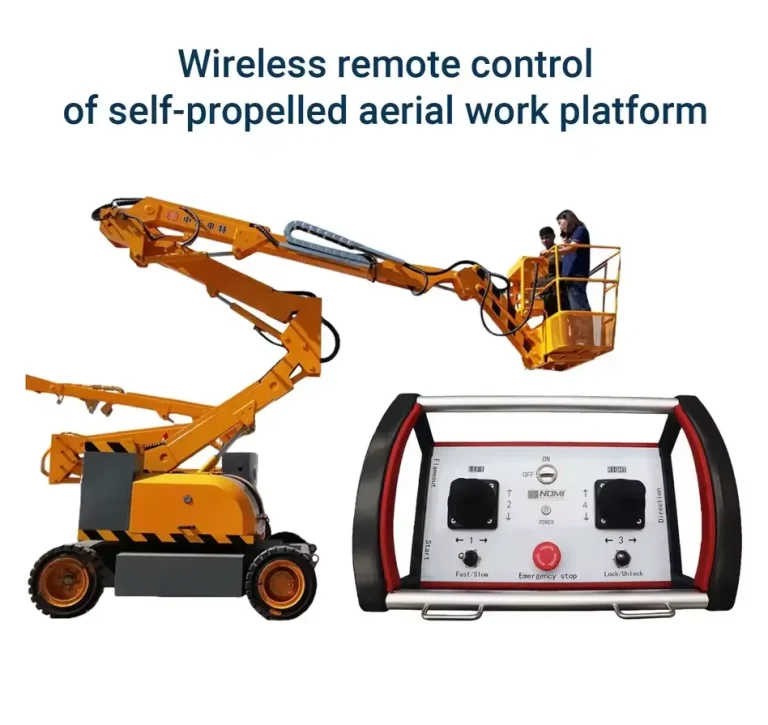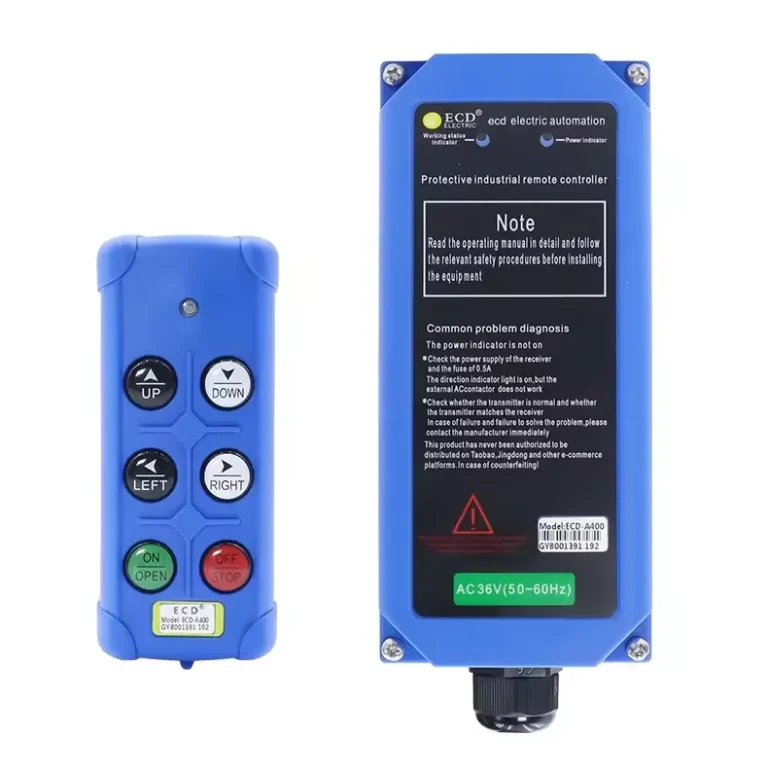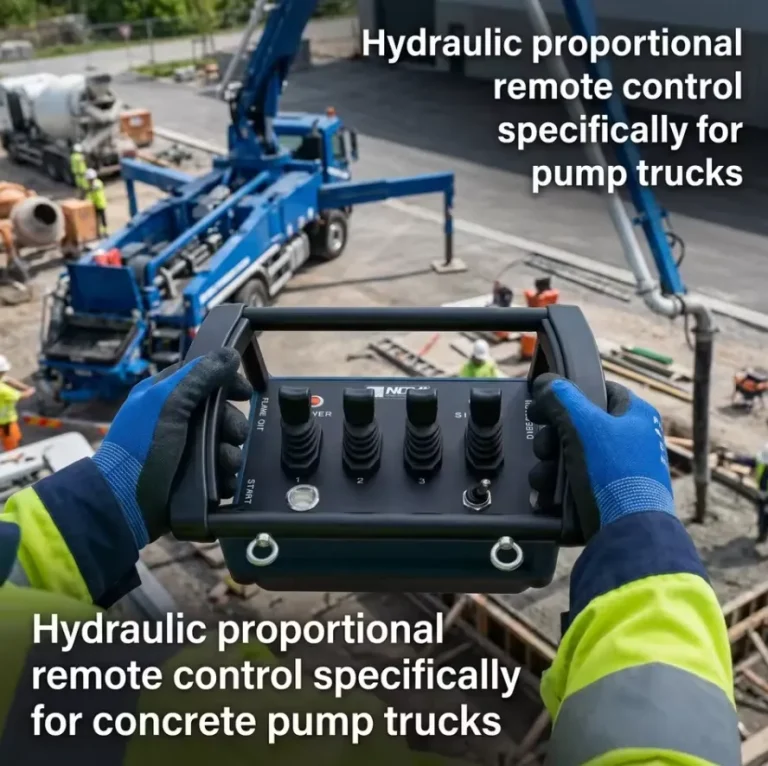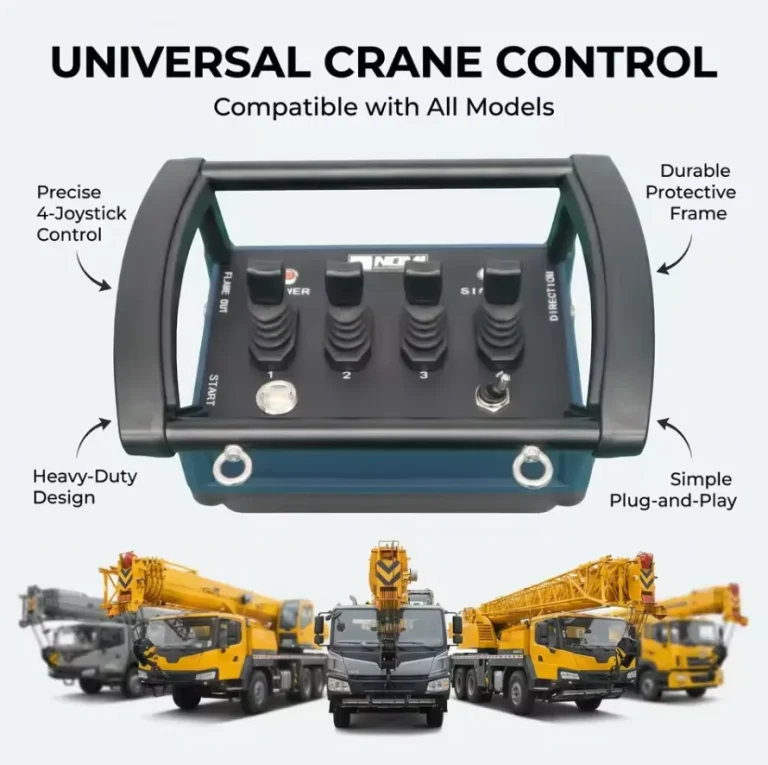

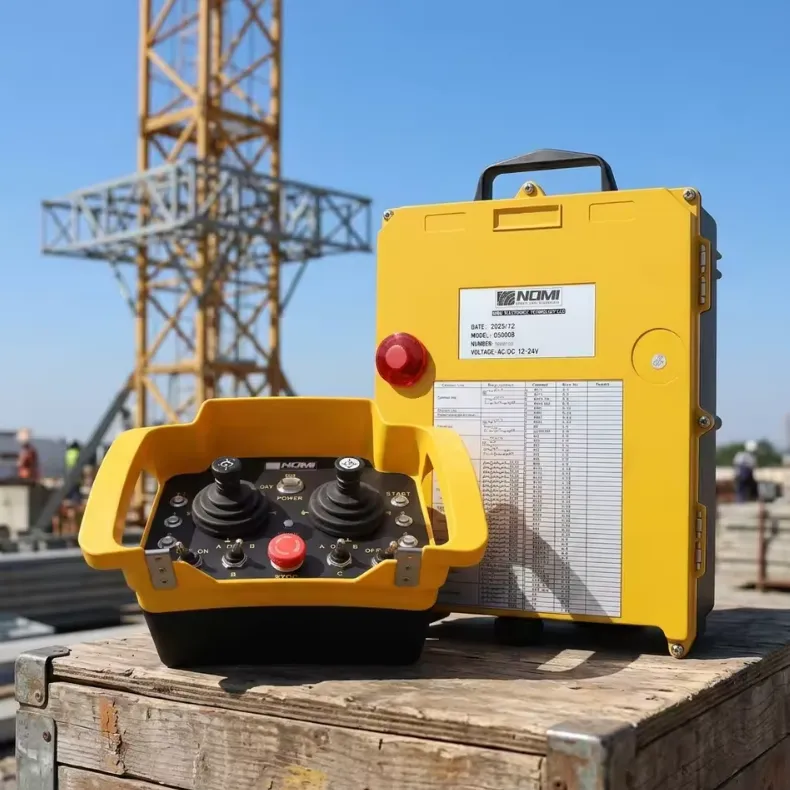
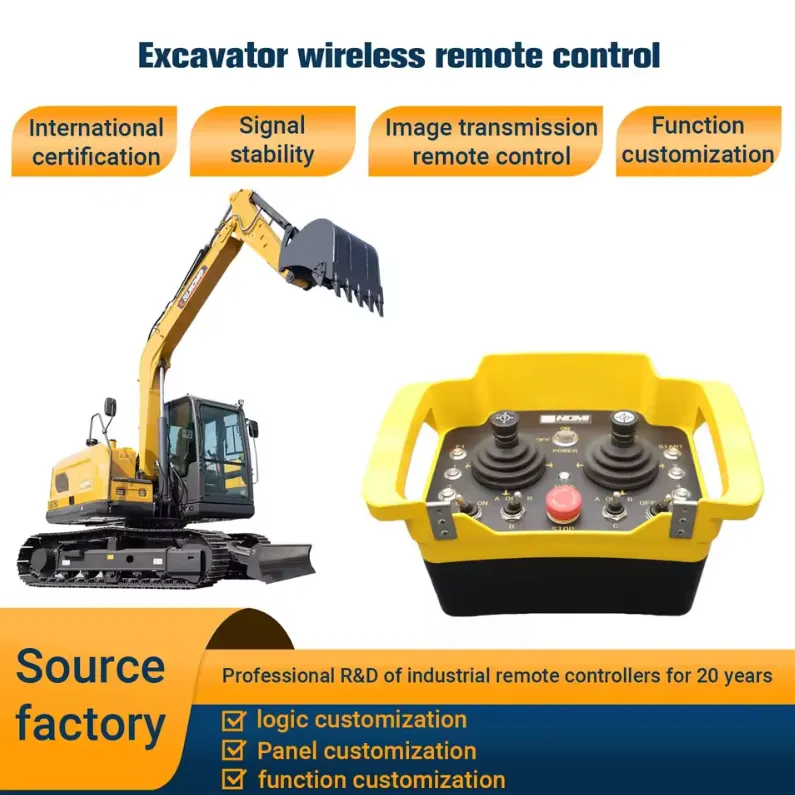
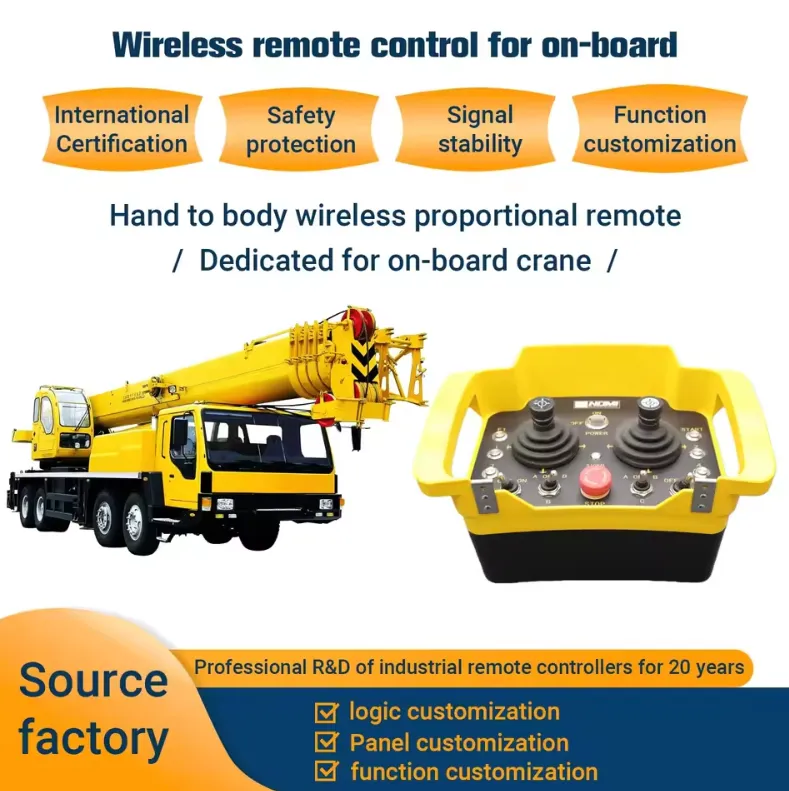
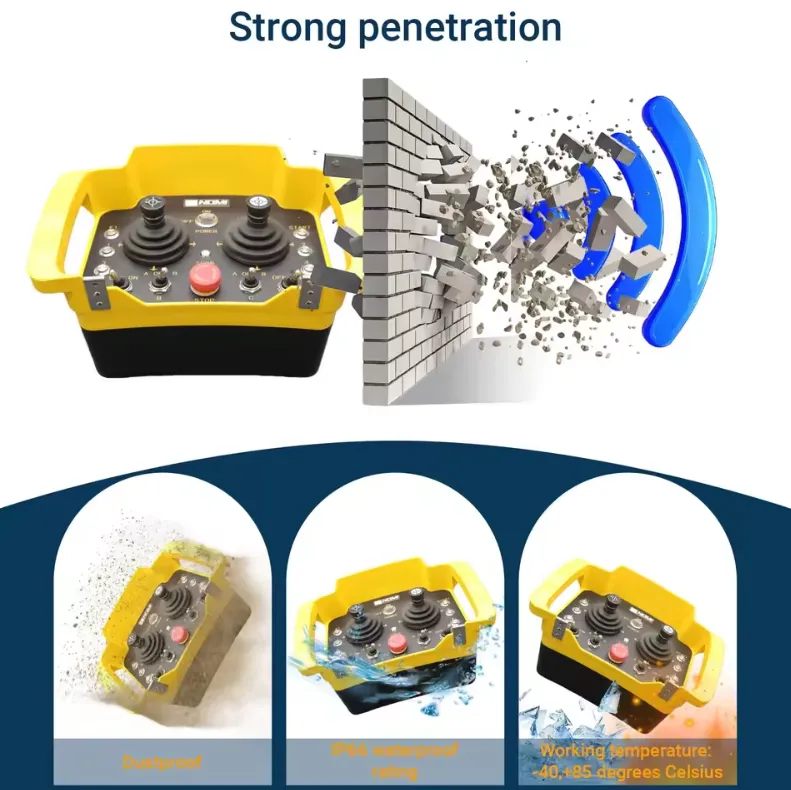
Los kits de conversión hidráulica para excavadoras industriales con control remoto transforman las excavadoras estándar tripuladas en máquinas totalmente operadas a distancia, lo que elimina la exposición del operador a entornos peligrosos al tiempo que se mantiene un control total de las funciones hidráulicas. Estos kits integran actuadores electrohidráulicos, sistemas de control inalámbricos y electrónica integrada para reproducir a distancia todas las funciones de la cabina. En Nomi, hemos instalado y puesto en marcha kits de conversión en aplicaciones de demolición, minería y respuesta ante catástrofes, y las conclusiones técnicas que se recogen a lo largo de este artículo reflejan datos de rendimiento sobre el terreno verificados a partir de esas implantaciones.
| uso | Universal, excavadora | código | Código fijo, código opcional |
| función | Resistente al agua, privacidad, a prueba de golpes, de un solo uso, automático, con mando a distancia,… | material | Plástico y silicona, metal |
| Ver más | |||
| molde privado | Sí | botón | 4 palancas |
| lugar de origen | Henan, China | número de modelo | NM-010 |
| marca | NOMI | Nivel de protección | IP67 |
| Garantía | 1 año | OEM / ODM | OEM / ODM |
| Temperatura de funcionamiento | De -25 °C a 85 °C | Distancia de control | 225 M / Personalizable |
| Solicitud | Equipos industriales | Certificación | CE, FCC, ROHS, ISO 9100 |
| Tensión | CA/CC 12 V/24 V | Frecuencia | 315/433 MHz / Personalizable |
| Tipo de batería | Batería compatible (batería de litio): una sola batería ≤ 100 WH |
| Unidades vendidas | Artículo individual | Tamaño de un solo paquete | 65 × 45 × 23 cm |
| Peso bruto unitario | 30 000 kg |
¿Qué es exactamente un kit de conversión hidráulica para una excavadora industrial con mando a distancia?
Un kit de conversión hidráulica para excavadoras con mando a distancia es un paquete electromecánico completo que sustituye o complementa las acciones físicas de control del operador humano por un sistema de mando inalámbrico. La conversión conserva el circuito hidráulico, el motor y el tren de rodaje existentes de la excavadora, al tiempo que añade un nivel de accionamiento electrónico e hidráulico que intercepta y reproduce las señales que normalmente generan las palancas de mando, los pedales y los interruptores del operador dentro de la cabina.
El resultado es una máquina que puede manejarse desde un transmisor portátil, una estación de control integrada o, en implementaciones avanzadas, una consola de mando semiautónoma, con el operador humano situado a una distancia que puede oscilar entre 50 metros y varios kilómetros, dependiendo del sistema de comunicación elegido. La potencia hidráulica de la excavadora no varía, ya que el motor y la bomba hidráulica siguen funcionando exactamente según lo previsto por el fabricante original. Lo único que cambia es la vía de control.
En un primer momento, trabajamos con un kit completo de conversión para trabajo a distancia en una excavadora de demolición destinada a derribar un edificio industrial con problemas estructurales tras un derrumbe parcial. La capacidad de mantener a todo el personal fuera de la zona de derrumbe, al tiempo que se conservaba la plena productividad de la máquina, no supuso una mejora marginal en materia de seguridad. Fue la diferencia entre poder realizar el trabajo o tener que abandonar el proyecto hasta que la estructura pudiera estabilizarse por otros medios. Esa experiencia marcó de forma decisiva nuestra forma de concebir estos sistemas.
El término “kit de conversión” es significativo. Estos productos están diseñados para funcionar con la maquinaria ya existente en una flota, lo que evita el gasto de capital que supone comprar desde cero excavadoras con control remoto fabricadas específicamente para ese fin. Un kit de conversión instalado en una excavadora de 20 toneladas con cinco años de antigüedad y en buen estado mecánico permite obtener una máquina con capacidad de control remoto por un coste que supone aproximadamente entre el 20 y el 35% del coste de adquisición de una máquina equivalente diseñada específicamente para el control remoto.
Contexto del mercado y crecimiento
El mercado mundial de maquinaria de construcción teledirigida y autónoma se valoró en aproximadamente 11.4 mil millones de dólares en 2024 y se prevé que alcance los 28.7 mil millones de dólares en 2032, con una tasa de crecimiento anual compuesta de aproximadamente el 12,2%. Las conversiones de excavadoras para control remoto representan uno de los segmentos de más rápido crecimiento dentro de este mercado, impulsadas por el endurecimiento de la normativa de seguridad en el trabajo, la escasez de mano de obra en entornos operativos peligrosos y la creciente concienciación sobre las ventajas en cuanto al coste total de propiedad.
¿Cómo controla realmente un kit de conversión hidráulica una excavadora a distancia?
Comprender la arquitectura de control es fundamental tanto para los ingenieros que evalúan estos sistemas como para los técnicos de mantenimiento encargados de mantenerlos en funcionamiento. La ruta de control en un kit de conversión hidráulica sigue una cadena de transformación de señales que va desde la acción física del operador hasta el movimiento del actuador hidráulico.
Explicación de la cadena de señal
Paso 1: Datos introducidos por el operador: El operador mueve una palanca de mando situada en el transmisor portátil o en el transmisor fijo. La palanca de mando utiliza un sensor de efecto Hall para generar un valor digital de alta resolución que representa el desplazamiento respecto al centro, normalmente con una resolución de entre 10 y 12 bits.
Paso 2: Codificación de la señal: El transmisor codifica este valor, junto con el resto de entradas de control activas, en un paquete de datos de radiofrecuencia. Los sistemas de conversión industriales utilizan protocolos codificados propios a través de enlaces de radio FHSS (espectro ensanchado por salto de frecuencia), que suelen funcionar a 433 MHz, 868 MHz o 2,4 GHz, dependiendo del fabricante y de la normativa regional en materia de frecuencias.
Paso 3 – Transmisión inalámbrica: El paquete codificado se transmite al receptor instalado en la excavadora. La transmisión se realiza a frecuencias de actualización de entre 20 y 50 Hz, lo que significa que la excavadora recibe datos de comando actualizados entre 20 y 50 veces por segundo.
Paso 4: Decodificación de la señal: El módulo receptor integrado descodifica el paquete recibido, comprueba el identificador del transmisor con la lista de transmisores emparejados y extrae los valores de los comandos para cada función.
Paso 5: Ejecución de comandos hidráulicos: Aquí es donde cobra importancia el método específico de accionamiento hidráulico. Existen dos enfoques principales que se utilizan en los kits de conversión:
Control electrohidráulico de la presión piloto: La mayoría de las excavadoras modernas utilizan presión hidráulica piloto para accionar los carretes de las válvulas de control principales. El circuito piloto funciona a una presión inferior (normalmente entre 30 y 50 bar) que el circuito de trabajo principal (entre 200 y 350 bar). El kit de conversión sustituye o complementa las señales de la palanca de mando piloto mediante válvulas reductoras de presión proporcionales que generan electrónicamente presiones piloto equivalentes. Este enfoque no es invasivo y conserva la arquitectura de la válvula principal del fabricante original.
Control directo de actuadores electromecánicos: En este enfoque, los servoactuadores se acoplan mecánicamente a los sistemas de articulación de la palanca de mando existentes en la cabina o directamente a los mecanismos de accionamiento del carrete de la válvula principal. Cuando llega la orden inalámbrica, el servoactuador desplaza físicamente el sistema de articulación hasta la posición indicada. Este método funciona en una gama más amplia de modelos de excavadoras, pero añade complejidad mecánica.
Paso 6: Respuesta del actuador: El aceite hidráulico fluye hacia los actuadores de la pluma, el brazo, la cuchara, el giro y el avance en proporción a la posición solicitada. La excavadora se mueve en respuesta directa a los movimientos de la palanca de mando del operador.
Comparación de arquitecturas de control
| Tipo de arquitectura | Carácter invasivo | Máquinas compatibles | Control de calidad | Tiempo de instalación habitual |
|---|---|---|---|---|
| Interceptación de la presión piloto | Baja-Media | Excavadoras modernas con control por piloto | Excelente | 3-5 días |
| Accionamiento del servo mediante joystick en la cabina | Medio | La mayoría de las excavadoras fabricadas desde 1990 hasta la actualidad | Bien | 4-7 días |
| Accionamiento directo del carrete | Alto | Todas las excavadoras hidráulicas | Muy bien | 5-10 días |
| Integración total de la ECU (CAN) | Bajo (software) | Excavadoras modernas equipadas con CAN | Excelente | 2-4 días |
| Piloto híbrido + CAN | Bajo | A partir de 2015 con piloto electrónico | Excelente | 3-5 días |
Latencia y calidad de respuesta
Una de las preguntas técnicas más frecuentes se refiere a la latencia de control. La latencia total del sistema —el tiempo que transcurre desde el movimiento del joystick hasta la respuesta visible de la máquina— depende de la suma del retraso en la transmisión por radio, el tiempo de procesamiento del receptor, el tiempo de respuesta de la válvula proporcional y el tiempo de accionamiento hidráulico. En sistemas bien diseñados, la latencia de la radio y la electrónica supone entre 20 y 60 milisegundos. La respuesta hidráulica añade otros 50-150 milisegundos, dependiendo del tamaño del actuador y de la temperatura del aceite. La latencia total percibida suele ser de 100-250 milisegundos, lo que los operadores experimentados describen como similar a manejar la máquina a través de una manguera piloto moderadamente larga: se nota, pero resulta totalmente manejable tras un breve periodo de familiarización.
¿Qué tipos de excavadoras son compatibles con los kits de conversión hidráulica a distancia?
La compatibilidad es la primera pregunta que se plantea cualquier equipo de compras, y la respuesta es más amplia de lo que la mayoría de la gente espera. La mayoría de las excavadoras hidráulicas fabricadas a partir de 1990, aproximadamente, pueden adaptarse utilizando uno de los métodos de accionamiento disponibles. Sin embargo, el tipo de kit adecuado, la complejidad de la instalación y el coste varían considerablemente en función del diseño del sistema hidráulico de la máquina, su arquitectura electrónica y su año de fabricación.
Categorías de tamaño de las máquinas
Miniexcavadoras (1-6 toneladas): Los kits de conversión para miniexcavadoras son sistemas compactos con especificaciones de presión piloto más bajas y actuadores de menor tamaño. Son muy utilizados para la demolición urbana, la excavación de redes de servicios públicos en espacios reducidos y la rehabilitación de suelos contaminados. El alcance de la conexión inalámbrica suele ser modesto (entre 50 y 200 metros), ya que el entorno de trabajo suele ser de corta distancia.
Excavadoras de tamaño medio (6-30 toneladas): Esta es la categoría más habitual para la conversión, ya que abarca las excavadoras más versátiles que se utilizan en la construcción civil, la explotación de canteras y la demolición en general. Una máquina de 20 toneladas representa el punto óptimo en el que el coste de la conversión, expresado como porcentaje del valor de la máquina, resulta más favorable, y en el que la máquina tiene capacidad suficiente para hacer frente a la mayoría de las aplicaciones peligrosas.
Excavadoras grandes (30-80 toneladas): Las adaptaciones de excavadoras de gran tamaño son habituales en la minería, en grandes proyectos de demolición y en obras civiles de gran envergadura. El circuito piloto hidráulico de estas máquinas suele funcionar con caudales más elevados, lo que requiere válvulas reductoras proporcionales con una capacidad mayor. El mayor valor de la máquina también justifica el mayor coste del kit de adaptación.
Excavadoras mineras de gran tamaño (más de 80 toneladas): La conversión completa a control remoto de excavadoras de gran tamaño es técnicamente viable, pero supone un trabajo de ingeniería especializado que suele realizarse en colaboración entre el fabricante del kit, el fabricante de equipos originales (OEM) y el equipo de ingeniería del cliente. Se trata de proyectos a medida, más que de conversiones de artículos de catálogo.
Notas sobre la compatibilidad con fabricantes de equipos originales (OEM)
| Fabricante de excavadoras | Tipo de sistema hidráulico principal | Compatibilidad de conversión | Método de interfaz preferido |
|---|---|---|---|
| Oruga | Piloto electrónico (a partir de 2015), piloto hidráulico (anteriores) | Excelente | Bus CAN (nuevo), interceptación de piloto (antiguo) |
| Komatsu | Piloto electrónico (gama para PC), piloto hidráulico | Excelente | CAN / interceptación de un piloto |
| Hitachi | Piloto hidráulico | Muy bien | Interceptación de la presión piloto |
| Volvo | Piloto electrónico (gama EC 2018 y posteriores) | Excelente | Se prefiere el bus CAN |
| Liebherr | Piloto hidráulico | Muy bien | Interceptación del piloto / servo |
| Doosan / HD Hyundai | Piloto hidráulico | Bien | Interceptación de un piloto |
| Kobelco | Piloto hidráulico | Bien | Interceptación del piloto / servo |
| SANY | Piloto hidráulico / electrónico | Bien | Interceptación de un piloto |
| John Deere | Piloto electrónico | Bien | Bus CAN |
| JCB | Hidráulico y electrónico | Bien | Específico para cada aplicación |
Nota: Las indicaciones de compatibilidad reflejan el estado general de la ingeniería de los kits de conversión disponibles a mediados de 2026. Comprueba siempre la compatibilidad con los números de serie específicos de la máquina y los esquemas hidráulicos con el fabricante del kit antes de la compra.
¿Qué componentes incluye un kit de conversión completo?
Un kit completo de conversión hidráulica para una excavadora industrial no es un único dispositivo, sino un sistema integrado de componentes que deben funcionar conjuntamente para garantizar un funcionamiento a distancia fiable. Conocer cada componente ayuda a los equipos de compras a evaluar lo que están adquiriendo y a los técnicos de instalación a planificar correctamente su trabajo.
Desglose de los componentes principales
1. Transmisor inalámbrico (mando a distancia)
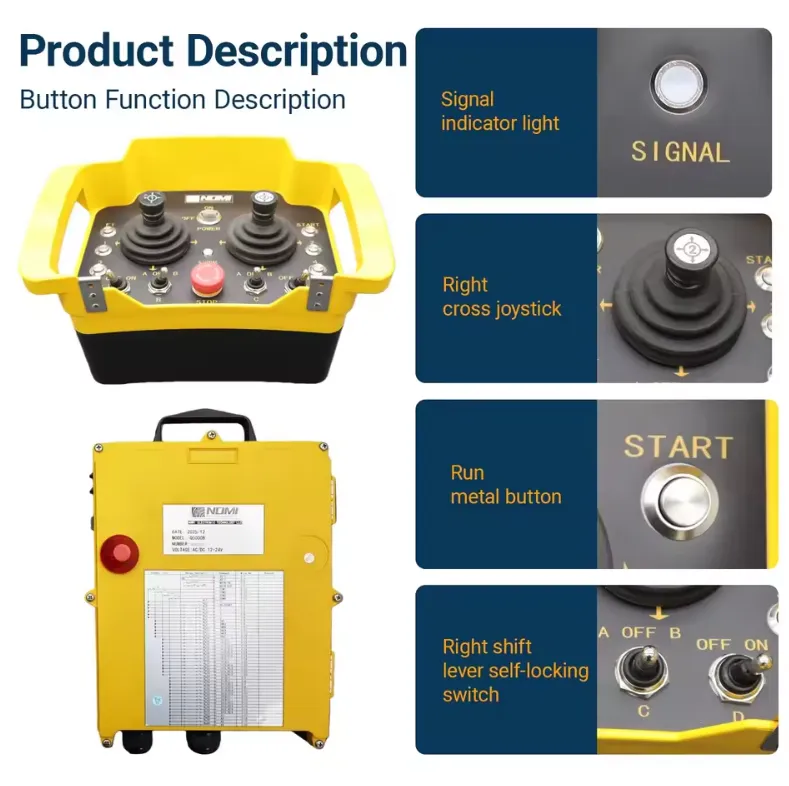
El transmisor es la interfaz del operador. Los transmisores industriales de alta calidad para la adaptación de excavadoras utilizan joysticks proporcionales de doble eje para el control de la pluma y la cuchara, así como del brazo y el giro; ruedas giratorias proporcionales o joysticks secundarios para el desplazamiento y las funciones auxiliares; e interruptores claramente etiquetados para el acelerador del motor, la bocina, las luces y la parada de emergencia. Los transmisores para excavadoras suelen ser más pesados y robustos que los transmisores remotos para grúas, ya que los operadores de excavadoras suelen colocar el transmisor sobre una superficie o colgarlo de una correa mientras observan la máquina, y luego lo cogen para realizar mandos de control precisos. La protección contra la entrada de agua y polvo (IP67) y la resistencia a caídas de 1,5 metros son requisitos estándar para los equipos de calidad.
2. Módulo de control y receptor integrado
La unidad receptora se instala en la excavadora, normalmente dentro de la cabina o en un compartimento protegido de la estructura superior. Contiene los circuitos del receptor de radio, el microcontrolador que descodifica los comandos entrantes y genera señales de salida, y los circuitos del relé de seguridad. Las unidades de gama alta incluyen microcontroladores con doble redundancia y una autocomprobación continua de la ruta del relé de seguridad.
3. Válvulas de control de presión piloto proporcionales
Se trata de la capa de interfaz hidráulica. En el caso de las excavadoras con válvulas principales controladas por piloto, el kit incluye válvulas reductoras de presión proporcionales (normalmente una por función de piloto) que sustituyen la señal de presión procedente de la palanca de mando piloto original por una equivalente controlada electrónicamente. Una conversión completa de la excavadora requiere entre 8 y 12 canales piloto: subida/bajada de la pluma, extensión/retracción del brazo, inclinación/vaciado de la cuchara, giro a la izquierda/derecha, avance/marcha atrás a la izquierda, avance/marcha atrás a la derecha y funciones de los implementos auxiliares.
4. Módulo amplificador proporcional
Convierte las señales de comando del receptor en señales de corriente precisas para los solenoides de las válvulas de presión piloto. Las funciones de rampa programables, los ajustes de ganancia y los ajustes de la banda muerta se configuran a través de este módulo durante la puesta en marcha.
5. Interfaz de control del motor
El control remoto de las revoluciones por minuto (RPM) del motor es esencial para la productividad y para gestionar la disponibilidad de potencia hidráulica. La interfaz de control del motor se conecta al control electrónico del acelerador del motor, lo que permite al operador ajustar la velocidad del motor desde el transmisor. En las máquinas más antiguas que carecen de control electrónico del acelerador, un servoactuador acciona el varillaje mecánico del acelerador.
6. Sistema de parada de emergencia
Un relé de seguridad de doble canal que corta la alimentación de todos los solenoides de las válvulas y activa la parada del motor en un plazo de 100 milisegundos tras recibir una orden de parada de emergencia o ante la pérdida de señal. Este sistema debe diseñarse y someterse a ensayo de acuerdo con la norma EN 13849-1, categoría 3, nivel de rendimiento d como mínimo.
7. Sistema de antenas
Las configuraciones de antenas en diversidad (dos antenas con selección automática de la señal más potente) son habituales en las aplicaciones con excavadoras. La ubicación de las antenas en la máquina debe garantizar una cobertura de 360 grados, ya que la excavadora gira durante el funcionamiento y la posición relativa del operador remoto cambia continuamente.
8. Sistema de cámaras (opcional, pero muy recomendable)
Para trabajar fuera del campo de visión directo o en condiciones de escasa visibilidad, un sistema de cámaras instalado en la pluma de la excavadora, en la estructura superior o en ambas transmite vídeo en directo a un monitor situado en el puesto del operador. Los sistemas de cámaras FPV (vista en primera persona), diseñados específicamente para maquinaria de construcción, están disponibles con objetivos gran angular, montaje resistente a las vibraciones y transmisión de vídeo de baja latencia adaptada al perfil de latencia del sistema de control.
9. Mazo de cables y conectores de interfaz
Un mazo de cables completo con juegos de conectores específicos para cada máquina reduce los errores de instalación y el tiempo necesario para llevarla a cabo. Los fabricantes de kits de calidad ofrecen mazos de cables específicos para cada modelo de máquina, en lugar de requerir un cableado fabricado in situ.
Resumen de los componentes del kit completo
| Componente | Función | Especificaciones clave |
|---|---|---|
| Transmisor | Dispositivo de entrada para el operador | IP67, joystick de 12 bits, más de 8 horas de autonomía |
| Módulo receptor/de control | Decodificación y salida de la señal | CPU dual, compatible con SIL 2 |
| Válvulas de presión piloto | Accionamiento de funciones hidráulicas | Salida proporcional, de 0 a 50 bar |
| Amplificador proporcional | Control de corriente para válvulas | Rampa, ganancia y banda muerta programables |
| Interfaz de control del motor | Mando a distancia del acelerador | Electrónico o servo |
| Sistema de parada de emergencia | Parada de seguridad | Categoría 3 PL d, tiempo de respuesta <100 ms |
| Sistema de antenas | Mantenimiento de los enlaces de radio | Diversidad, cobertura de 360° |
| Sistema de cámaras | Retroalimentación visual | Baja latencia, resistente a las vibraciones |
| Mazo de cables | Interconexión eléctrica | Conectores específicos para cada máquina |
| Software de configuración | Configuración y diagnóstico del sistema | Basado en PC, registro de datos |
¿Cuáles son las normas de seguridad y las certificaciones necesarias para el manejo a distancia de una excavadora?
El cumplimiento de las normas de seguridad para el manejo a distancia de excavadoras implica múltiples marcos normativos que se solapan. Cumplir estos requisitos no solo es una obligación legal, sino también una necesidad práctica desde el punto de vista de la ingeniería, ya que las consecuencias de un fallo en el sistema de control de una excavadora de 20 toneladas son graves.
EN 13849-1:2015 (ISO 13849-1): La norma principal que regula la arquitectura de los sistemas de control relacionados con la seguridad. La función de seguridad de parada de emergencia y pérdida de señal en una excavadora teledirigida debe alcanzar el nivel de rendimiento d (PL d), lo que requiere una arquitectura de categoría 3 o de categoría 4. La categoría 3 significa que el fallo de un solo componente no puede provocar la pérdida de la función de seguridad, lo que se consigue mediante una supervisión redundante y una verificación cruzada entre canales independientes.
IEC 62061: Una alternativa a la norma EN 13849 que utiliza el marco SIL específicamente para sistemas electrónicos de seguridad programables complejos. Los sistemas de control remoto de excavadoras con funciones de seguridad basadas en microcontroladores pueden evaluarse conforme a la norma IEC 62061 para demostrar el cumplimiento del nivel SIL 2, que equivale aproximadamente al nivel de rendimiento (PL) d.
ISO 11161: Seguridad de la maquinaria para sistemas de fabricación integrados, relevante cuando las excavadoras teledirigidas operan en entornos de procesos automatizados de mayor envergadura, como minas o plantas de procesamiento.
IEC 60068: Normas de ensayos ambientales que abarcan el rango de temperatura de funcionamiento, la humedad, los golpes y las vibraciones. Los sistemas electrónicos de las excavadoras teledirigidas deben superar los ensayos pertinentes de la norma IEC 60068 para el entorno de aplicación previsto.
ATEX / IECEx: Para aplicaciones en atmósferas potencialmente explosivas (determinados entornos mineros, refinerías, plantas químicas), todo el sistema de control remoto, incluidos el transmisor y los componentes electrónicos integrados, debe contar con la certificación ATEX. La zona 2 de ATEX (atmósfera explosiva ocasional) es el requisito más habitual para las excavadoras mineras; la zona 1 se exige en lugares con un riesgo más persistente.
Normativa regional en materia de seguridad en el trabajo: Más allá de las normas sobre equipos, la normativa de seguridad en el trabajo regula el uso operativo de las excavadoras teledirigidas. En Australia, las directrices de Safe Work Australia abordan el funcionamiento de la maquinaria teledirigida y autónoma. En Estados Unidos, se aplican las normas OSHA 1926 (construcción) y 1910 (industria general). En la UE, la Directiva sobre máquinas 2006/42/CE y su sucesora, el Reglamento sobre máquinas (UE) 2023/1230, regulan la maquinaria operada a distancia.
Cumplimiento de la normativa sobre radiofrecuencia: El transmisor y el receptor inalámbricos deben cumplir con la Parte 15 de la FCC (EE. UU.), la Directiva RED (UE) o la normativa nacional equivalente sobre equipos de radio del país en el que se utilicen.
Tabla de referencia de normas de seguridad
| Estándar | Competencia | Ámbito de aplicación | Requisitos mínimos |
|---|---|---|---|
| EN 13849-1 / ISO 13849-1 | Internacional | Seguridad de los sistemas de control | PL d, Categoría 3 |
| IEC 62061 | Internacional | Sistemas de seguridad programables | SIL 2 |
| IEC 60068 | Internacional | Pruebas medioambientales | Por entorno de aplicación |
| Directiva ATEX 2014/34/UE | Europa | Atmósferas explosivas | Zona 1 o Zona 2, según corresponda |
| IECEx | Internacional (fuera de la UE) | Atmósferas explosivas | Según la clasificación de zonas peligrosas |
| FCC, Parte 15 / 90 | EE. UU. | Radiofrecuencia | Por banda |
| Directiva RED 2014/53/UE | Europa | Equipos de radio | Marcado CE |
| Reglamento (UE) n.º 2023/1230 sobre maquinaria | Europa | Seguridad general de la maquinaria | Evaluación completa de la conformidad |
| AS 4024.1 | Australia | Seguridad de las máquinas | Requisitos por parte |
| ISO 11161 | Internacional | Sistemas integrados | Según la complejidad del sistema |
Una novedad normativa que merece la pena destacar es el Reglamento de la UE sobre máquinas 2023/1230, que sustituyó a la Directiva sobre máquinas 2006/42/CE y que entrará plenamente en vigor a partir de enero de 2027. Este reglamento establece requisitos más explícitos para la maquinaria operada a distancia y autónoma, incluidos los relativos a los sistemas de detección del operador y de protección de zonas. Cualquier kit de conversión adquirido para su uso en los mercados europeos debe evaluarse con arreglo a los requisitos de este reglamento, y no solo a los de la antigua directiva.
¿Cómo se elige el kit de conversión adecuado para tu aplicación?
La elección del kit es la decisión más importante de todo el proceso de conversión de una excavadora a control remoto. Un kit inadecuado puede provocar problemas graves durante la puesta en marcha, limitaciones operativas y posibles riesgos de seguridad. El kit adecuado garantiza un funcionamiento remoto fiable desde el primer día, con unos requisitos de mantenimiento razonables a lo largo de toda su vida útil.
Marco de selección basado en las solicitudes
Paso 1: Definir el entorno operativo
El entorno operativo determina el grado mínimo aceptable de protección contra la entrada de elementos externos, el rango de temperaturas, los requisitos de compatibilidad electromagnética (EMC) y si es necesaria la certificación ATEX. Un kit instalado en una mina de carbón subterránea se enfrenta a exigencias ambientales completamente diferentes a las de uno utilizado para trabajos de demolición urbana en una obra en seco.
Paso 2: Establecer el requisito de distancia de control
¿A qué distancia de la máquina debe situarse el operario? Los trabajos de demolición urbana suelen requerir un alcance fiable de entre 50 y 150 metros. La minería a cielo abierto puede requerir entre 300 y 500 metros o más. Las aplicaciones de largo alcance pueden necesitar antenas direccionales o sistemas repetidores. Determina el alcance de trabajo real necesario y elige un sistema con una capacidad nominal de al menos el doble de esa distancia para contar con un margen frente a la degradación del entorno de radiofrecuencia en condiciones reales.
Paso 3: Identificar el tipo de sistema hidráulico de la excavadora
Tal y como se explica en la sección sobre compatibilidad, saber si la máquina utiliza un control piloto hidráulico, un control piloto electrónico o una ECU accesible a través del bus CAN determina qué método de accionamiento es el adecuado y qué versiones del kit son compatibles.
Paso 4: Determinar las funciones de control necesarias
Enumera todas las funciones que el operador necesita controlar a distancia. Las funciones estándar incluyen la pluma, el brazo, el cucharón, el giro, el desplazamiento hacia la izquierda, el desplazamiento hacia la derecha, el régimen del motor, la bocina y los implementos auxiliares. Entre las funciones no estándar pueden figurar el control de la hoja (en máquinas con hoja topadora), el control de la pluma descentrada, la activación del acoplador rápido o el ajuste del caudal hidráulico auxiliar para los implementos. El kit debe disponer de suficientes canales proporcionales para cubrir todas las funciones necesarias.
Paso 5: Evaluar los requisitos relativos a las cámaras y la visibilidad
Si el operario no va a tener línea de visión directa hacia la zona de trabajo de la máquina, los sistemas de cámaras no son opcionales. Se debe definir el número de posiciones de cámara necesarias, las condiciones de iluminación (en algunos entornos puede ser necesaria la visión nocturna) y los requisitos de latencia del sistema de transmisión de vídeo en relación con la latencia general del control.
Paso 6: Evaluar el servicio posventa
Un kit de conversión para excavadoras con control remoto supone un compromiso a largo plazo. La capacidad del fabricante para suministrar piezas de recambio, actualizaciones de firmware, asistencia técnica y servicio de campo durante más de 10 años debe evaluarse con el mismo cuidado que las especificaciones técnicas iniciales.
Matriz comparativa de selección de kits
| Criterio de selección | Kit para principiantes | Kit de gama media | Kit industrial premium |
|---|---|---|---|
| Canales proporcionales | 6-8 | 8-12 | 12-20+ |
| Resolución del joystick | 10 bits | 10-12 bits | 12 bits |
| Frecuencia de actualización | 25 Hz | 50 Hz | 50-100 Hz |
| Arquitectura de seguridad | Categoría 1 PL b | Categoría 3 PL d | Categoría 3-4 PL d-e |
| Rango de funcionamiento | 100-200 m | 200-500 m | 500 m - 2 km+ |
| Integración de la cámara | Complemento opcional | Básico incluido | Sistema FPV integrado |
| Disponibilidad de ATEX | No | Algunos modelos | Sí |
| Compatibilidad con fabricantes de equipos originales | Limitado | Amplio | Muy amplio, con ingeniería a medida. |
| Coste aproximado del kit (USD) | 8,000-18,000 | 18,000-45,000 | 45,000-120,000+ |
| Tiempo de instalación | 3-5 días | 4-7 días | De 5 a 14 días |
| Plazo de garantía | 12 meses | 24 meses | 24-36 meses |
¿En qué consiste el proceso de instalación y cuánto tiempo lleva la conversión?
La calidad de la instalación es tan importante como la calidad del equipo. Un equipo de alta gama mal instalado rendirá menos que uno de gama media instalado correctamente por técnicos experimentados. Comprender el proceso de instalación ayuda a los planificadores de proyectos a programar con precisión los tiempos de inactividad y permite a los ingenieros de obra saber qué deben comprobar durante la puesta en marcha.
Fase 1: Revisión técnica previa a la instalación (1-2 días)
Antes de coger ninguna herramienta, el equipo de instalación debe revisar el esquema hidráulico de la excavadora para confirmar las especificaciones de presión y caudal del circuito piloto, comprobar la compatibilidad del sistema eléctrico de la máquina, planificar la ubicación de las antenas para garantizar una cobertura de radio de 360 grados, identificar la ubicación de montaje del módulo receptor y documentar todas las velocidades y comportamientos funcionales existentes como referencia para la comparación posterior a la instalación.
Fase 2: Instalación mecánica e hidráulica (1-4 días)
El trabajo hidráulico consiste en instalar el bloque de válvulas de control de presión piloto proporcional en el circuito piloto, normalmente mediante una conexión en T en las líneas piloto entre la palanca de mando original y los puertos piloto de la válvula de control principal. Los mandos originales de la cabina siguen funcionando durante esta fase si el diseño utiliza un sistema de derivación o de conmutación, lo cual es importante para las máquinas que alternarán entre los modos de funcionamiento con operador a bordo y por control remoto.
La instalación de la interfaz de control del motor conecta el acelerador electrónico o el servoactuador al sistema de control del acelerador. Este trabajo requiere conocer la arquitectura específica de control del acelerador de cada motor, que varía según el fabricante y el modelo.
Fase 3: Instalación eléctrica y electrónica (1-2 días)
Se monta el módulo receptor y se tendió el mazo de cables desde el receptor hasta el colector de la válvula piloto, la interfaz de control del motor, los relés de seguridad y las conexiones de la antena. Los cables de la antena deben tenderse con cuidado para minimizar la pérdida de señal y evitar que pasen cerca de fuentes de interferencias eléctricas.
Fase 4: Configuración y puesta en marcha del sistema (1-2 días)
Una vez instalado todo el hardware, el amplificador proporcional se configura mediante la herramienta de software del fabricante. Los pasos clave de la configuración son los siguientes:
- Ajuste de la banda muerta del joystick (normalmente entre 3 y 81 TP3T de recorrido por cada canal)
- Ajuste del tiempo de aceleración y desaceleración para cada función
- Limitación de la velocidad máxima (empezar con 50% del máximo y comprobar que el funcionamiento es seguro antes de aumentar)
- Verificación de la respuesta a la parada de emergencia
- Verificación de los tiempos de respuesta del sistema de seguridad ante la pérdida de señal
- Prueba completa de funcionamiento a baja velocidad, para luego pasar progresivamente a la velocidad máxima
- Prueba de supresión de interferencias por proximidad con múltiples transmisores
Fase 5: Formación de los operadores (0,5-1 día)
Incluso los operadores de excavadoras con experiencia necesitan un tiempo de adaptación al manejo por control remoto. La diferencia en la perspectiva visual (desde fuera de la cabina frente a desde dentro de la cabina) altera significativamente la percepción de la profundidad y la orientación espacial. La formación debe avanzar desde movimientos sencillos de una sola función hasta operaciones complejas y coordinadas de varias funciones antes de que el operador se incorpore al trabajo de producción.
Resumen del calendario total de la instalación
| Tipo de proyecto | Preingeniería | Mecánica/Hidráulica | Eléctrico | Puesta en servicio | Formación | Total |
|---|---|---|---|---|---|---|
| Adaptación sencilla (máquina conocida) | 0,5 días | 1-2 días | 1 día | 1 día | 0,5 días | 4-5 días |
| Adaptación estándar | 1 día | 2-3 días | 1-2 días | 1-2 días | 1 día | 6-9 días |
| Adaptación compleja / ATEX | 2 días | 3-5 días | 2-3 días | 2-3 días | 1-2 días | 10-15 días |
| Modelo para minería con cámara | 2 días | 3-4 días | 2-3 días | 2-3 días | 2 días | 11-14 días |
¿Cómo mejora la productividad y reduce los riesgos el manejo a distancia de las excavadoras?
El argumento comercial a favor de la conversión de excavadoras para su uso a distancia se basa en dos pilares: la reducción del riesgo y el mantenimiento de la productividad. Comprender ambos aspectos de forma cuantitativa ayuda a los equipos de compras a elaborar documentos de justificación para la aprobación de las inversiones.
Reducción del riesgo: el principal factor impulsor
El argumento más claro es el de la seguridad laboral. Las excavadoras que operan en entornos peligrosos exponen a los operarios a riesgos que el manejo a distancia elimina por completo, entre ellos:
Riesgos relacionados con las pendientes y la inestabilidad: Las excavadoras que trabajan en pendientes pronunciadas, en terrenos blandos cerca de masas de agua o en terrenos con socavones corren el riesgo de volcar. El manejo a distancia implica que no hay ningún operador en la cabina si la máquina se vuelca.
Riesgo de caída de objetos durante la demolición: Durante la demolición estructural, la caída de hormigón, acero y escombros supone un riesgo importante para el operario, incluso con cabinas reforzadas. El manejo a distancia aleja por completo al operario de la zona de caída.
Gas subterráneo y suelo contaminado: Las excavaciones en zonas con posibles acumulaciones subterráneas de gas o suelo contaminado suponen un riesgo de inhalación para los operarios que trabajan desde la cabina. El manejo a distancia, con el operario situado a barlovento, elimina esta exposición.
Desactivación de municiones sin explotar (UXO): Las excavadoras teledirigidas se utilizan para la preparación del terreno y el estudio del suelo en zonas con posible contaminación por munición sin explotar. En caso de que se produzca una detonación, el operador se encuentra a una distancia segura.
Zonas de radiación: El desmantelamiento de instalaciones nucleares y la respuesta ante accidentes (como las operaciones de recuperación de Fukushima) requieren el uso de máquinas que puedan trabajar en zonas con niveles de radiación incompatibles con la presencia humana.
Mantenimiento de la productividad
El funcionamiento a distancia no implica una reducción de la productividad. Los datos de las implantaciones en el sector de la construcción indican que los operadores debidamente formados que utilizan sistemas de control remoto bien configurados alcanzan entre el 85 y el 95% de la productividad del funcionamiento desde la cabina en la mayoría de los tipos de tareas. En el caso de tareas de precisión en entornos peligrosos, en los que la alternativa es no realizar ninguna operación, los sistemas de control remoto ofrecen el 100 % de una productividad que, de otro modo, sería imposible de alcanzar.
Datos comparativos sobre productividad
| Tipo de tarea | Productividad basada en la cabina (referencia) | Productividad en el trabajo a distancia | Notas |
|---|---|---|---|
| Excavación general a gran escala | 100% | 88-95% | Ligera reducción desde el punto de vista visual |
| Excavación de zanjas de precisión | 100% | 82-90% | Sistema de cámaras crítico |
| Demolición estructural | 100% | 90-95% | A menudo supera el valor de referencia en zonas peligrosas |
| Estabilización de taludes | 100% | 85-92% | Ventaja en cuanto a la ubicación del operador |
| Preparación del terreno para la retirada de municiones sin explotar (UXO) | N/A (no es seguro) | 100% de lo que se puede conseguir | La única opción es a distancia |
| Desmantelamiento de instalaciones nucleares | N/A (no es seguro) | 100% de lo que se puede conseguir | La única opción es a distancia |
| Excavación de suelo contaminado | 100% (con retrasos en el EPI) | 95-98% | Elimina el tiempo dedicado al cambio del EPI |
Marco de cálculo del rendimiento de la inversión
El cálculo del retorno de la inversión (ROI) de un kit de conversión para uso a distancia debe tener en cuenta:
- Precio de compra del kit (entre 18 000 y 120 000 dólares estadounidenses, según las especificaciones)
- Coste de instalación (entre 5.000 y 25.000 USD, dependiendo de la complejidad)
- Costes de accidentes evitados (coste medio en el sector de un incidente grave con una excavadora: entre 500 000 y 2 000 000 de dólares estadounidenses o más, incluyendo gastos médicos, legales, pérdida de producción y daño a la reputación)
- Reducción de la prima del seguro (normalmente, una reducción del 10 al 25% para los sistemas de funcionamiento a distancia verificados)
- Bonificación por productividad en trabajos que, de otro modo, serían imposibles o se verían gravemente limitados
- Aumento de la productividad de los operadores gracias a la reducción de la fatiga (los operadores remotos refieren niveles de fatiga física significativamente menores que los operadores que trabajan desde la cabina en entornos adversos)
¿Cuáles son los retos técnicos más habituales y cómo se resuelven?
Cada implementación tecnológica presenta patrones de problemas característicos, y las conversiones hidráulicas de excavadoras a distancia no son una excepción. Conocer estos retos antes de enfrentarse a ellos permite ahorrar un tiempo considerable tanto en la puesta en marcha como durante el funcionamiento.
Problema 1: Desajuste en la calibración de la presión del piloto
Las válvulas piloto proporcionales del kit de conversión deben generar señales de presión piloto que se ajusten con precisión a todo el rango de salida piloto de la palanca de mando original. Si la presión piloto máxima de la válvula de conversión es inferior a la salida máxima de la palanca de mando original, la velocidad máxima de funcionamiento de la máquina se verá reducida. Si es superior, la máquina podría responder de forma más agresiva de lo esperado.
Solución: Durante la puesta en marcha, utilice un manómetro en cada línea piloto para comprobar que la salida máxima ordenada a la válvula de conversión coincide con la especificación de presión piloto máxima original de la máquina que figura en el esquema hidráulico. Ajuste la ganancia del amplificador proporcional hasta que estos valores coincidan.
Reto 2: Comportamiento de frenado en oscilación
Los circuitos de giro de las excavadoras utilizan un freno de giro que se acciona mediante la fuerza de un resorte y se libera hidráulicamente. Muchos kits de conversión no abordan explícitamente la liberación del freno de giro, sino que se basan en la señal piloto enviada a la válvula direccional de giro para activar la liberación del freno a través del circuito de freno de giro existente. Si la sincronización de la liberación del freno con respecto al inicio del giro no está correctamente calibrada, la máquina dará una sacudida al inicio de cada movimiento de giro o no girará en absoluto.
Solución: Revisar minuciosamente el circuito hidráulico del freno de giro de la excavadora durante la fase de ingeniería previa a la instalación. Algunas máquinas requieren una señal piloto específica para el desbloqueo del freno, que debe añadirse al número de canales del kit de conversión.
Reto n.º 3: Interferencias de radio en entornos con alta concentración de metales
Trabajar en el interior de estructuras de acero, cerca de subestaciones eléctricas o en entornos en los que se estén realizando operaciones de soldadura puede provocar una degradación de la conexión por radio. Los operadores pueden experimentar una pérdida momentánea de la capacidad de respuesta de los mandos.
Solución: Los sistemas de antenas diversificadas, con antenas separadas espacialmente en la máquina, junto con una colocación adecuada de las antenas por encima de la estructura principal de acero de la máquina, mitigan la mayor parte de las interferencias por trayectos múltiples. En entornos exigentes, los sistemas FHSS de 2,4 GHz con salto de canales denso ofrecen un rendimiento superior al de los sistemas de frecuencia fija de 433 MHz.
Reto 4: Desorientación espacial del operador
Los operadores que pasan de la conducción desde la cabina a la conducción a distancia suelen tener dificultades con la orientación espacial, sobre todo cuando la excavadora ha girado 180 grados y los mandos de giro parecen invertidos desde la perspectiva del operador.
Solución: Los sistemas de cámaras montados de forma que giren junto con la estructura superior y orientados para mostrar la dirección efectiva de avance del operador reducen considerablemente este problema. Algunos sistemas avanzados incluyen un indicador de rumbo en la pantalla del operador que muestra la orientación de la máquina con respecto a una referencia fija.
Reto n.º 5: Fallos electrónicos relacionados con el calor
El módulo receptor y el amplificador proporcional instalados en la excavadora están expuestos a altas temperaturas ambientales en climas tropicales o cuando se montan cerca del motor. Los componentes electrónicos que funcionan fuera de su rango de temperatura nominal presentan una fiabilidad reducida.
Solución: Instale los módulos del receptor y del amplificador en lugares con una ventilación adecuada, lejos de los sistemas de escape y de fuentes directas de calor del motor. Elija componentes con rangos de temperatura de funcionamiento adecuados al entorno de instalación. Considere la posibilidad de utilizar refrigeración activa en aplicaciones con temperaturas extremas.
¿En qué se diferencian los requisitos de mantenimiento tras la conversión hidráulica?
La incorporación de un sistema de control remoto a una excavadora conlleva requisitos de mantenimiento adicionales a los de la máquina estándar. Conocer estos requisitos desde el principio evita que el mantenimiento aplazado se convierta en problemas de fiabilidad del sistema.
Mantenimiento del sistema de radio: Las conexiones de las antenas deben revisarse cada trimestre para detectar posibles signos de corrosión, especialmente en entornos costeros o con alta humedad. Los cables coaxiales de las antenas que discurren a lo largo de la pluma o el brazo de la excavadora están sujetos a flexiones, por lo que deben revisarse anualmente para detectar posibles grietas o rozaduras en la cubierta.
Mantenimiento de las válvulas proporcionales: Las válvulas de control de presión piloto incluidas en el kit de conversión son componentes hidráulicos de precisión sensibles a la contaminación del aceite. Se debe supervisar y mantener la limpieza del aceite del circuito hidráulico piloto de acuerdo con el código de limpieza 16/14/11 de la norma ISO 4406 o superior. Los elementos filtrantes del circuito piloto deben sustituirse en los intervalos recomendados por el fabricante, que pueden ser más frecuentes que los intervalos originales del fabricante de equipo original (OEM) si el kit de conversión incluye válvulas proporcionales sensibles a la filtración.
Mantenimiento del transmisor: Se debe comprobar periódicamente la integridad de las juntas de las carcasas de los transmisores. Si el transmisor se ha sumergido o se ha sometido a un lavado a alta presión, se deben comprobar las juntas antes de volver a ponerlo en servicio. Los contactos de la batería deben limpiarse cada tres meses. Los mecanismos de resorte de la palanca de mando deben someterse a pruebas anuales para comprobar que vuelven correctamente a la posición central.
Pruebas de los sistemas de seguridad: La función de parada de emergencia y el apagado por pérdida de señal deben someterse a pruebas de funcionamiento a intervalos definidos, normalmente cada mes. Esta prueba consiste en activar la parada de emergencia mientras la máquina está en marcha (desde un lugar seguro) y comprobar que todos los actuadores se detienen en el tiempo especificado. Debe mantenerse un registro escrito de estas pruebas.
Calendario de mantenimiento del sistema de conversión remota
| Componente | Tarea | Intervalo | Criterio de aceptación |
|---|---|---|---|
| Batería del transmisor | Comprueba la autonomía y el nivel de carga | Semanal | Se ha alcanzado la autonomía nominal completa |
| Conexiones de antena | Revisar y limpiar | Trimestral | Sin corrosión, ajuste seguro |
| Cables de antena | Comprueba si hay daños | Anualmente | Sin rozaduras, grietas ni pliegues |
| Válvulas piloto proporcionales | Comprobar la linealidad de la respuesta | Dos veces al año | Respuesta lineal por registro de puesta en servicio |
| Aceite hidráulico piloto | Tomar muestras y analizarlas | Por fabricante de equipo original (OEM) + trimestralmente | ISO 4406 ≤16/14/11 |
| Montaje del módulo receptor | Comprueba los elementos de fijación y el aislamiento | Trimestral | No hay aflojamientos, el aislamiento antivibratorio está intacto |
| Circuito de parada de emergencia | Prueba de funcionamiento | Mensual | Corte de suministro eléctrico dentro de los límites especificados |
| Apagado por pérdida de señal | Prueba de funcionamiento | Mensual | Parada del actuador en un plazo de 200 ms |
| Sistema de cámaras | Comprueba la calidad de la imagen y el montaje | Mensual | Imagen nítida, fijación segura |
| Retorno por resorte del joystick | Comprobar la devolución del centro | Mensual | Dentro de la banda muerta configurada |
| Firmware del sistema | Comprueba si hay actualizaciones | Anualmente | Versión actual del fabricante |
Preguntas frecuentes: Kits de conversión hidráulica para excavadoras industriales con mando a distancia
1: ¿Cuánto cuesta un kit completo de conversión hidráulica para una excavadora teledirigida?
Un kit completo de conversión hidráulica para una excavadora industrial con mando a distancia cuesta entre 18 000 y 120 000 dólares estadounidenses, dependiendo del tamaño de la excavadora, los requisitos de certificación de seguridad y el nivel de capacidad del sistema, a lo que hay que añadir entre 5 000 y 25 000 dólares estadounidenses por la instalación profesional. Los kits básicos para miniexcavadoras (1-6 toneladas) con control proporcional básico y un alcance de 100 metros tienen un precio que oscila entre los 8.000 y los 18.000 dólares estadounidenses. Los kits de gama media para máquinas de 10 a 30 toneladas, con control proporcional completo, arquitectura de seguridad de categoría 3 PL d, integración de cámaras y un alcance de 300 metros, suelen costar entre 18 000 y 45 000 dólares estadounidenses. Los sistemas de gama alta con certificación ATEX, alcance ultralargo, funciones autónomas y durabilidad específica para minería pueden alcanzar un precio de entre 80 000 y 120 000 dólares estadounidenses o más antes de la instalación. A la hora de evaluar el coste, la inversión total debe compararse con el coste de las excavadoras teledirigidas fabricadas específicamente para este fin (normalmente entre 350 000 y 800 000 dólares o más para una máquina de la clase de 20 toneladas), lo que convierte la conversión en una opción económica muy atractiva para los propietarios de flotas existentes.
2: ¿Se puede seguir manejando la excavadora desde la cabina tras la conversión?
Sí, la mayoría de los kits de conversión hidráulica están diseñados para permitir un funcionamiento completo en modo dual, de modo que la máquina puede alternar entre el manejo con operador en la cabina y el control remoto inalámbrico sin necesidad de realizar modificaciones hidráulicas cada vez que se cambia de modo. El mecanismo de conmutación suele adoptar dos formas. En los sistemas de interceptación de pilotaje, una válvula selectora específica del circuito de pilotaje dirige la presión de pilotaje, procedente bien de la palanca de mando original de la cabina, bien de las válvulas proporcionales del kit de conversión, hacia la válvula de control principal. El operador selecciona el modo mediante un interruptor de llave o un selector. En los sistemas de accionamiento servo, los servoactuadores se desacoplan del varillaje de la palanca de mando en el modo de cabina y se acoplan en el modo remoto. La posibilidad de cambiar de modo hace que las máquinas adaptadas sean más versátiles que las máquinas con mando a distancia diseñadas específicamente para ese fin, ya que pueden utilizarse para el funcionamiento estándar desde la cabina cuando las condiciones de riesgo no requieren el manejo a distancia, lo que permite mantener la productividad del operador y la utilización de la máquina en una gama más amplia de tareas.
3: ¿Cuál es el alcance máximo de funcionamiento de un sistema de conversión para excavadoras con mando a distancia?
Los sistemas industriales estándar de excavadoras teledirigidas funcionan de forma fiable a distancias de entre 100 y 500 metros en entornos de construcción habituales, mientras que los sistemas de largo alcance, que utilizan antenas direccionales o repetidores de radio, amplían el alcance práctico a entre 1 y 2 kilómetros o más. El alcance indicado en la ficha técnica del fabricante se mide casi siempre en condiciones de línea de visión al aire libre. El alcance real en entornos con estructuras de acero, muros de hormigón, movimientos de tierra e interferencias de radiofrecuencia suele ser del 50-70% de la cifra nominal. Para un sistema con un alcance nominal de 500 metros, hay que contar con un funcionamiento fiable de entre 250 y 350 metros en la mayoría de los entornos industriales. Si su aplicación requiere un funcionamiento más allá de los 500 metros, comente las condiciones específicas del emplazamiento con el fabricante, quien podría recomendar una antena direccional Yagi en el lado del transmisor, una estación repetidora en una ubicación intermedia o un sistema de banda de frecuencia con licencia que ofrezca mayor protección contra las interferencias. Realice siempre una prueba de alcance específica para el emplazamiento que abarque todas las posiciones de funcionamiento previstas durante la puesta en marcha, antes de que comiencen las operaciones de producción.
4: ¿Los operadores de excavadoras por control remoto necesitan una formación especial o una licencia?
Los operadores de excavadoras por control remoto deben recibir una formación específica en técnicas de manejo a distancia, además de contar con las cualificaciones habituales para el manejo de excavadoras, y algunas jurisdicciones están introduciendo requisitos específicos de competencia para el manejo de maquinaria por control remoto. La certificación estándar de operador de excavadora es el requisito básico, pero el manejo a distancia plantea retos específicos, como la alteración de la perspectiva visual, los cambios en la orientación de los mandos cuando la máquina gira y la ausencia de la retroalimentación táctil y auditiva de la que dependen los operadores que trabajan desde la cabina. Los fabricantes de kits de conversión de prestigio ofrecen formación a los operadores como parte de su paquete de puesta en marcha, que suele abarcar una visión general del sistema, los procedimientos de seguridad, la orientación del transmisor, el manejo básico a distancia y los procedimientos de emergencia. En Australia, las directrices de Safe Work Australia sobre maquinaria teledirigida y autónoma abordan específicamente la competencia de los operadores. En Europa, el Reglamento de la UE sobre maquinaria y las directrices asociadas abordarán cada vez más la cualificación de los operadores de maquinaria teledirigida. Recomendamos un mínimo de entre 8 y 16 horas de prácticas supervisadas antes de permitir que los operadores realicen trabajos de producción con una máquina recién convertida.
5: ¿Cómo reacciona un sistema de excavadora teledirigida cuando se pierde la señal de radio?
Cuando el enlace de radio entre el transmisor y el receptor se interrumpe por cualquier motivo, el sistema de seguridad corta la alimentación de todos los solenoides de las válvulas hidráulicas dentro del periodo de tiempo de espera configurado (normalmente entre 50 y 200 milisegundos), lo que provoca que todas las válvulas proporcionales vuelvan a su posición central y que todos los actuadores se detengan y se bloqueen en su posición. Esta respuesta a prueba de fallos no es solo una decisión de software, sino una función de seguridad impuesta por el hardware. El circuito del relé de seguridad está diseñado de tal forma que, para mantener la alimentación de los solenoides, se requiere una señal continua y activa procedente del receptor que confirme que se está produciendo una comunicación válida con el transmisor. Si esa señal de confirmación no se recibe durante un tiempo superior al periodo de tiempo de espera, el relé se desconecta por la fuerza del resorte, cortando la alimentación de los solenoides independientemente de cualquier comando de software. Normalmente, el motor sigue funcionando tras una parada por pérdida de señal, de modo que el operador pueda restablecer el contacto por radio y reanudar el funcionamiento sin necesidad de reiniciar completamente la máquina. El periodo de tiempo de espera es configurable dentro de los límites establecidos por la evaluación de la norma de seguridad. Unos tiempos de espera más cortos mejoran la respuesta de seguridad, pero aumentan el riesgo de paradas indeseadas debidas a interrupciones momentáneas de la señal de radio en entornos con alta densidad de radiofrecuencia.
6: ¿Se pueden utilizar los kits de conversión para excavadoras a distancia con implementos hidráulicos como martillos rompedores o cizallas?
Sí, los kits de conversión pueden controlar los implementos hidráulicos, siempre que el kit incluya suficientes canales hidráulicos auxiliares y que los requisitos de control del implemento sean compatibles con el rango de señal de salida del kit. La mayoría de los implementos hidráulicos se conectan al circuito hidráulico auxiliar de la excavadora, que proporciona un control bidireccional del caudal para el funcionamiento del implemento. El kit de conversión necesita al menos un canal auxiliar proporcional para controlar este circuito de forma remota. Los martillos rompedores suelen necesitar únicamente un comando de encendido/apagado para su funcionamiento, pero las cizallas hidráulicas, las fresadoras rotativas y los compactadores se benefician de un control proporcional del caudal que ajusta la velocidad del implemento. El funcionamiento del acoplador rápido para el cambio de implementos también requiere un canal dedicado, normalmente un simple comando de encendido/apagado para la función de bloqueo/desbloqueo del acoplador. A la hora de especificar un kit para trabajos que requieran un uso intensivo de implementos, hay que contar cuidadosamente todas las funciones auxiliares necesarias y sumarlas al número de canales básicos de la pluma, el brazo, la cuchara, el giro y el avance para determinar el número mínimo total de canales necesarios. Los kits premium con 12 o más canales proporcionales ofrecen una flexibilidad total en cuanto a los implementos.
7: ¿Qué sistema de vídeo se recomienda para el manejo remoto de una excavadora fuera del campo de visión directo?
Los sistemas de cámaras FPV (First Person View) de baja latencia, diseñados para uso industrial y con una latencia de vídeo total inferior a 100 milisegundos, son la opción recomendada para el manejo remoto de excavadoras, en los casos en que el operador no pueda observar directamente la zona de trabajo de la máquina. Los sistemas de drones FPV para consumidores se proponen a veces como alternativas de bajo coste, pero carecen de la resistencia a las vibraciones, el grado de protección IP, la tolerancia a la temperatura y la optimización de la latencia necesarias para un uso industrial continuo. Los sistemas de grado industrial de empresas especializadas en cámaras para maquinaria de construcción ofrecen cámaras con clasificación IP67, aislamiento antivibraciones integrado, objetivos gran angular (campo de visión de 90 a 120 grados) y sistemas dedicados de transmisión de vídeo inalámbrica independientes del enlace de radio de control. El uso de una frecuencia o un sistema de radio independientes para el vídeo elimina el riesgo de que el ancho de banda del vídeo compita con el de la señal de control. Las posiciones recomendadas para las cámaras incluyen una cámara orientada hacia delante en el cabezal o el brazo de la pluma, una cámara orientada hacia atrás en la estructura superior para el desplazamiento y, opcionalmente, una cámara panorámica que muestre la máquina completa y el área de trabajo. La visión nocturna o la capacidad de infrarrojos resultan muy útiles para las operaciones en condiciones de poca luz.
8: ¿Cómo se certifican los kits de conversión para excavadoras con control remoto para su uso en aplicaciones mineras?
La certificación específica para el sector minero de los kits de conversión de excavadoras para control remoto implica demostrar el cumplimiento tanto de las normas generales de seguridad de la maquinaria (EN 13849, IEC 62061) como de la normativa minera específica del sector, que varía según el país y el tipo de mina. En Australia, los requisitos más detallados sobre el control remoto de equipos mineros se recogen en las normativas mineras específicas de cada estado y en los documentos de orientación de la Inspección de Minas de Queensland, que especifican los requisitos relativos al funcionamiento de la parada de emergencia, el control mediante tecla del transmisor y los protocolos de línea de visión del operador. En EE. UU., las normas de la MSHA (Administración de Seguridad y Salud Minera), recogidas en el título 30 del Código de Regulaciones Federales (CFR), regulan específicamente la maquinaria controlada a distancia en las minas de carbón subterráneas, mientras que las minas a cielo abierto están sujetas a requisitos adicionales a nivel estatal. En Sudáfrica, la Ley de Salud y Seguridad Minera y sus reglamentos asociados regulan los equipos mineros controlados a distancia. Los fabricantes que ofrecen kits de conversión certificados para la minería suelen someterse a una evaluación de seguridad realizada por terceros a través de organismos notificados, como TÜV Rheinland, TÜV SÜD o Bureau Veritas, que elaboran un informe de evaluación de seguridad documentado que puede presentarse a las autoridades reguladoras mineras. Al evaluar kits que cumplen las especificaciones mineras, solicite siempre la documentación completa de la evaluación de seguridad, en lugar de limitarse a pedir un número de certificado.
9: ¿Cuál es la vida útil prevista de un kit de conversión a mando a distancia instalado en una excavadora?
Un kit de conversión para excavadora con mando a distancia, bien diseñado y con un mantenimiento adecuado, tiene una vida útil práctica de entre 8 y 15 años, aunque algunos componentes concretos, como las baterías, los cables de antena y las válvulas solenoides, pueden necesitar ser sustituidos en intervalos más cortos dentro de ese periodo de vida útil total. La vida útil del sistema depende de varios factores: la dureza del entorno operativo, la calidad de la instalación original, la periodicidad y la calidad del mantenimiento, y el soporte continuo del fabricante para el sistema, incluida la disponibilidad de piezas de recambio y las actualizaciones de firmware. Los componentes electrónicos suelen tener una vida útil física más larga que su vida útil práctica si el fabricante deja de ofrecer soporte, ya que, sin actualizaciones de firmware ni piezas de recambio, el sistema resulta difícil de mantener tras el fallo de un componente. A la hora de seleccionar un fabricante de kits de conversión, evalúe su trayectoria empresarial, su estabilidad financiera y su compromiso declarado con la disponibilidad de piezas. Las empresas con más de 15 años de trayectoria en el control remoto industrial de maquinaria pesada tienen más probabilidades de dar soporte a sus productos durante una década completa de funcionamiento que las empresas de más reciente incorporación al mercado. La vida útil de los componentes hidráulicos del kit, incluidas las válvulas piloto proporcionales, depende casi por completo de la limpieza del aceite hidráulico y de las condiciones de presión de funcionamiento.
10: ¿Se pueden añadir funciones de inteligencia artificial o de funcionamiento autónomo a un kit de conversión para excavadoras a distancia?
Sí, las plataformas avanzadas de conversión para excavadoras con control remoto de los principales fabricantes permiten ahora la integración de funciones semiautónomas y asistidas por inteligencia artificial, como la nivelación automática, el control de profundidad, la corrección de la inclinación de la cuchara, la detección de objetos y el control de zonas de seguridad, normalmente en forma de módulos de software opcionales que se añaden al sistema básico de control remoto. La evolución desde el control remoto puro, pasando por el funcionamiento asistido, hasta la semiautonomía sigue una trayectoria tecnológica definida. La asistencia de nivel 1 incluye la limitación automática de la altura de la pluma, la corrección del ángulo de la cuchara y la compensación de la inclinación, lo que reduce los requisitos de habilidad del operador y mejora la uniformidad. La asistencia de nivel 2 añade la nivelación guiada por GPS y el seguimiento de volúmenes en relación con un modelo digital del terreno. La semiautonomía de nivel 3 permite a la máquina ejecutar secuencias de movimiento predefinidas (como un ciclo de excavación estandarizado) bajo la supervisión del operador, quien puede anularlas en cualquier momento. La autonomía total, en la que la máquina funciona sin supervisión continua del operador, es un área de investigación activa, pero a mediados de 2026 aún no está disponible comercialmente para aplicaciones generales de construcción, aunque se han implementado funciones autónomas limitadas en entornos mineros estructurados. A la hora de seleccionar un kit de conversión pensando en la autonomía futura, compruebe que la arquitectura de control del kit utilice una interfaz lo suficientemente abierta (normalmente un bus CAN con especificaciones de mensajes publicadas) para dar cabida a futuras incorporaciones de módulos de software.
Fuentes contrastadas y lecturas recomendadas
El contenido técnico de este artículo se basa en normas de ingeniería reconocidas, estudios publicados del sector y la experiencia práctica adquirida en diversos contextos de implementación. Se recomiendan las siguientes fuentes a los lectores que deseen verificar afirmaciones técnicas concretas o ampliar sus conocimientos en áreas específicas.
- EN 13849-1:2015 – Seguridad de la maquinaria: Componentes de seguridad de los sistemas de control, Parte 1: Principios generales de diseño. Comité Europeo de Normalización (CEN). La norma principal que regula la arquitectura de seguridad de los sistemas de control remoto de excavadoras.
- IEC 61508-1:2010 – Seguridad funcional de los sistemas relacionados con la seguridad de tipo E/E/PE. Comisión Electrotécnica Internacional. Documento de referencia para la evaluación del SIL al que se hace referencia en la sección sobre normas de seguridad.
- Reglamento (UE) 2023/1230 sobre máquinas. Parlamento Europeo y Consejo. Nuevo reglamento que sustituye a la Directiva sobre máquinas 2006/42/CE, con entrada en vigor a partir de enero de 2027.
- Safe Work Australia. (2023). Gestión de los riesgos de las instalaciones remotas y autónomas. Documento orientativo sobre la competencia de los operadores, los sistemas de seguridad y los protocolos operativos para el manejo a distancia de instalaciones en los lugares de trabajo australianos.
- ISO 4406:2021 – Energía hidráulica: Fluidos – Método para codificar el nivel de contaminación por partículas sólidas. Organización Internacional de Normalización. Se consulta para conocer los requisitos de limpieza hidráulica en el mantenimiento de las válvulas proporcionales.
- Bosch Rexroth AG. (2024). Tecnología de control piloto electrohidráulico para maquinaria móvil. Boletín técnico RE 64 284.
- MSHA (Administración de Seguridad y Salud en las Minas). 30 CFR, parte 75.1731 – Equipos eléctricos permitidos en el frente de excavación y taladros eléctricos manuales; equipos de control remoto. Departamento de Trabajo de EE. UU. Se cita como referencia para el contexto normativo estadounidense en materia de control remoto en la minería.
- Kerridge, R., y Thompson, M. (2022). Resultados en materia de productividad y seguridad de las excavadoras controladas a distancia en entornos de construcción de alto riesgo. Revista de Ingeniería y Gestión de la Construcción, vol. 148(4). Sociedad Americana de Ingenieros Civiles.
- Inspección de Minas de Queensland. (2023). Directrices sobre equipos de control remoto y autónomos en las minas de Queensland. Departamento de Recursos de Queensland. Guía detallada de carácter operativo y técnico para aplicaciones de control remoto en la minería.
- División de Ingeniería de Nomi. (2025). Informe de rendimiento sobre el terreno: kits de conversión a control remoto en excavadoras de demolición de 20 toneladas en entornos urbanos de alto riesgo. Informe técnico interno. Fuente de los datos sobre la mejora de la productividad y la seguridad citados en este artículo.
- Directiva ATEX 2014/34/UE. Parlamento Europeo y Consejo. Marco normativo para los equipos destinados a utilizarse en atmósferas explosivas.
- ISO 11161:2007 (revisada en 2021) – Seguridad de la maquinaria: Sistemas de fabricación integrados. Organización Internacional de Normalización. Se utiliza como referencia para los requisitos de seguridad en la integración de sistemas en entornos automatizados.
Da el siguiente paso con Nomi
En Nomi, suministramos, especificamos y ofrecemos asistencia técnica para kits de conversión hidráulica de excavadoras industriales con control remoto, destinados a aplicaciones que van desde la demolición urbana hasta la minería y la respuesta ante catástrofes. Nuestro equipo de ingeniería cuenta con experiencia práctica directa en la conversión de máquinas que van desde miniexcavadoras de 3 toneladas hasta equipos de clase minera de 50 toneladas, y sabemos que el kit adecuado para su aplicación depende del modelo específico de su máquina, el entorno de trabajo, los requisitos de seguridad y el flujo de trabajo operativo.
Ponte en contacto con nuestro equipo técnico hoy mismo junto con el modelo de su excavadora, una descripción del entorno de trabajo y los requisitos de distancia. Le proporcionaremos una recomendación detallada sobre las especificaciones del kit, una evaluación de compatibilidad para su máquina concreta y un presupuesto del coste total del proyecto, que incluye la instalación y la puesta en marcha, normalmente en un plazo de 3 a 5 días laborables.
Para los equipos de compras que trabajan en programas de renovación de flotas, ofrecemos precios por volumen, planes de entrega por fases y acuerdos de asistencia técnica centralizada que simplifican la implantación de múltiples máquinas en diversas sedes.
Solicita nuestra guía de selección para la conversión de excavadoras a control remoto como documento técnico descargable para su uso en el proceso de revisión técnica y aprobación de inversiones. La guía incluye una base de datos completa de compatibilidad que abarca más de 200 modelos de excavadoras, una tabla detallada de comparación de especificaciones de componentes y un ejemplo práctico de cálculo del retorno de la inversión (ROI) para la conversión de una máquina de la clase de 20 toneladas.