

يُعد الرافعة التي تعمل بالتحكم عن بُعد لاسلكيًا والمزودة بحبل صناعي على نظام شاحنة بجهد 12 فولت الحل الأكثر أمانًا وخفة وزنًا وسهولة في الاستخدام لإنقاذ المركبات وسحبها المتاح في عام 2026. ويقضي الحبل الصناعي على خطر الارتداد المفاجئ الذي يتسم به الكابل الفولاذي، بينما يتيح التحكم اللاسلكي للمشغل البقاء بعيدًا عن حبل الحمولة أثناء عمليات السحب. وبالاقتران مع محرك كهربائي يعمل بالتيار المستمر بجهد 12 فولت ويستمد الطاقة مباشرةً من بطارية الشاحنة، يوفر هذا التصميم قوة سحب موثوقة تتراوح من 3,500 رطل إلى 17,500 رطل في تطبيقات إنقاذ المركبات على الطرق الوعرة، وأعمال الخدمات العامة، وعمليات النقل التجاري.
إذا كان مشروعك يتطلب استخدام رافعة لاسلكية يتم التحكم فيها عن بُعد مزودة بحبل صناعي، فيمكنك الاتصال بنا للحصول على عرض أسعار مجاني.
ما الذي يجعل الرافعة الكهربائية للشاحنات بجهد 12 فولت، المزودة بحبل صناعي وجهاز تحكم عن بُعد لاسلكي، أفضل نظام للإنقاذ؟
إن الجمع بين ثلاث تقنيات محددة — محرك كهربائي يعمل بتيار مستمر 12 فولت، وحبل من الألياف الاصطناعية، وجهاز تحكم عن بُعد لاسلكي — يعالج نقاط الضعف الثلاث الأكثر أهمية التي جعلت عملية استخدام الرافعة عملية خطيرة ومجهدة جسديًا على مر التاريخ.
كانت الرافعات التقليدية التي تعمل بالكابلات الفولاذية تتطلب من المشغل الوقوف بالقرب من الحبل أثناء عملية السحب للتحكم في الحبل. ويخزن الحبل الفولاذي تحت الشد طاقة حركية تتناسب مع كتلته ومعامل تمدده. وعندما ينقطع الكابل الفولاذي تحت الحمل، فإنه يطلق تلك الطاقة المخزنة بعنف، وقد سُجلت حالات وفاة ناتجة عن اصطدام الطرف المتأرجح بالمشغلين الواقفين على مسافة لا تزيد عن 10 أمتار. أما الحبل الصناعي المصنوع من البولي إيثيلين ذي الوزن الجزيئي الفائق (UHMWPE) فيخزن طاقة ضئيلة للغاية لأنه لا يمتد إلا قليلاً تحت الحمل، والأهم من ذلك أنه يسقط على الأرض فور انقطاعه بدلاً من أن يضرب في الهواء.
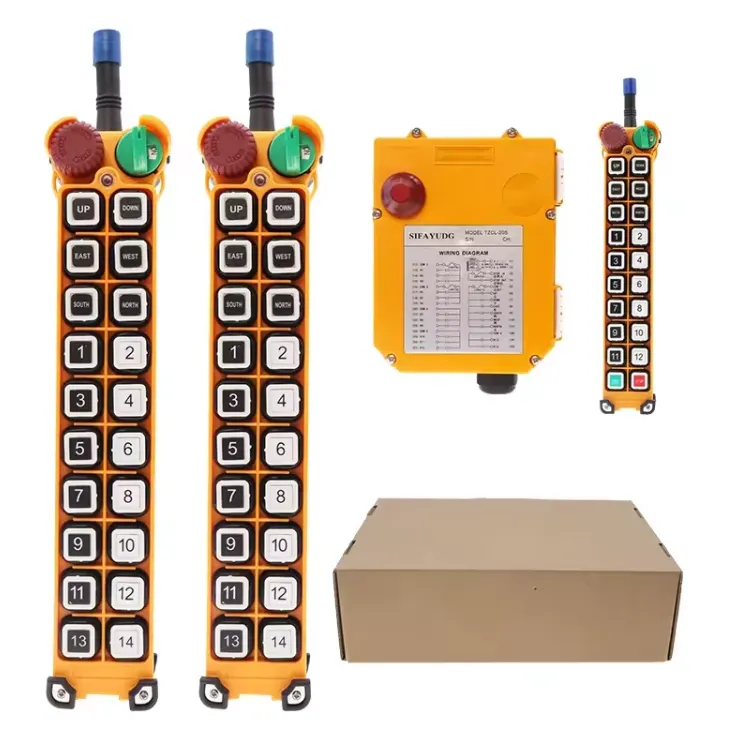
إن إضافة جهاز التحكم عن بُعد اللاسلكي يُبعد موقع المشغل الفعلي تمامًا عن منطقة الخطر. وبفضل نطاق تشغيل يتراوح بين 50 و100 قدم (15-30 مترًا)، يمكن لمالك الشاحنة الوقوف بعيدًا تمامًا عن خط الحمولة، وممر الحبل، والمركبة التي يتم إنقاذها، مع إصدار أوامر دقيقة لسحب الحمولة بالرافعة وإخراجها من جهاز الإرسال.
يتيح نظام الطاقة الذي يعمل بتيار مستمر 12 فولت الاستفادة من هذه الإمكانية في أي شاحنة بيك آب أو سيارة دفع رباعي أو مركبة تجارية متعددة الأغراض، دون الحاجة إلى تركيب مضخة هيدروليكية أو تعديل المحرك أو استخدام معدات طاقة إضافية. حيث يوفر نظام البطارية والمولد الموجود في المركبة الطاقة اللازمة، بينما توفر المحركات الحديثة التي يتم التحكم فيها بواسطة المقاطع الكهربائي قوة سحب كاملة في غضون ثوانٍ من تشغيلها.
لقد استخدمنا هذا التكوين بالذات على مسارات تقنية للطرق الوعرة في جنوب غرب الولايات المتحدة، وفي عمليات الإغاثة بعد الفيضانات، وكذلك في عمليات نشر الشاحنات الخدمية في المناطق الجبلية النائية. إن التحسن في الإنتاجية والسلامة مقارنة بالرافعات التي تعمل بالكابلات الفولاذية والمُشغَّلة بواسطة حبل معلق ليس هامشيًّا — بل هو تحوُّل جذري.
كيف يقارن الحبل الصناعي بالكابل الفولاذي في رافعة الشاحنة؟
فيزياء انهيار الحبال: لماذا يُعد اختيار المادة قرارًا يتعلق بالسلامة
الحجة الأساسية التي ترجح استخدام الحبل الصناعي على الكابل الفولاذي لا تكمن في التسويق — بل في الفيزياء. عندما ينقطع الحبل تحت الحمل، فإنه يطلق الطاقة الكامنة المرنة المخزنة في المادة الممتدة. يتميز الحبل السلكي الفولاذي بمعامل مرونة مرتفع نسبيًا (حوالي 80-100 جيجا باسكال)، مما يعني أنه يمتد قليلاً جدًّا تحت الحمل ولكنه يخزن طاقة كبيرة لكل وحدة امتداد. يتميز الحبل الاصطناعي المصنوع من البولي إيثيلين عالي الكثافة (UHMWPE) بمعامل مرونة أقل بكثير (حوالي 100-150 جيجا باسكال في الدرجات التجارية، ولكن عند مستويات إجهاد أقل بكثير قبل الانهيار)، وفي الواقع العملي يخزن طاقة أقل بنحو 10-15 مرة لكل وحدة وزن مقارنةً بالكابل الفولاذي ذي القوة المكافئة.
والنتيجة: عندما ينقطع الحبل الصناعي، فإنه يسقط. أما عندما ينقطع الكابل الفولاذي، فإنه ينطلق بسرعة. ولهذا الاختلاف الفيزيائي تأثير مباشر وقابل للقياس على معدلات الإصابات في عمليات استخدام الرافعات.
مقارنة مفصلة بين العقارات
| الممتلكات | حبل فولاذي (6×19 IWRC) | حبل صناعي من مادة البولي إيثيلين عالي الكثافة (UHMWPE) (داينيما SK75 / أمستيل بلو) |
|---|---|---|
| الوزن لكل 100 قدم (30 مترًا) بقطر 3/8 بوصة | حوالي 22 رطلاً (10 كجم) | ~3.5 رطل (1.6 كجم) |
| ميزة الوزن | الخط الأساسي | ~85% ولاعة |
| قوة الشد (قطر 3/8 بوصة) | ~14,400 رطل قوة كبح | ~19,600 رطل قوة كبح |
| يطفو على الماء | لا (أحواض) | نعم |
| طاقة الارتداد عند الفشل | مرتفع جدًّا | قريب من الصفر |
| نصف قطر الانحناء الأدنى | 6-8 أضعاف قطر الحبل | 2-4 أضعاف قطر الحبل |
| مقاومة الأشعة فوق البنفسجية | ممتاز | معتدل (يتدهور بمرور السنين) |
| مقاومة التآكل | جيد جدًا | متوسط (يحتاج إلى غلاف عند ممر الحبل) |
| المقاومة الكيميائية | جيد (مجلفن) | ممتاز (معظم الأحماض والقلويات) |
| خطر التواء | متوسطة إلى عالية | منخفض جدًّا |
| قدرة الربط | يتطلب استخدام أداة ضغط أو مشابك | يمكن إجراء الربط يدويًّا |
| نطاق درجة حرارة التشغيل | من -40 درجة مئوية إلى +150 درجة مئوية | من -70 درجة مئوية إلى +70 درجة مئوية (يفقد متانته عند درجات حرارة تزيد عن 75 درجة مئوية) |
| سهولة الاستخدام | صلب، ثقيل، يتطلب ارتداء قفازات | خفيفة الوزن، ومرنة، ولطيفة على اليدين |
| فحص الأضرار الظاهرة | صعب (انقطاع الأسلاك الداخلية) | سهل (فصل الألياف المرئي) |
| الفترة الزمنية المعتادة بين عمليات الاستبدال | 2-5 سنوات في ظل الاستخدام العادي | 3-7 سنوات حسب التعرض للأشعة فوق البنفسجية |
حيث توجد قيود على استخدام الحبال الاصطناعية
لا يُعتبر الحبل الصناعي أفضل بشكل عام في جميع الظروف. وهناك حالتان يحتفظ فيهما الكابل الفولاذي بميزة ملموسة، وهما:
البيئات ذات درجات الحرارة المرتفعة: يبدأ البولي إيثيلين عالي الكثافة (UHMWPE) في فقدان قوة الشد عند درجات حرارة تزيد عن 70-75 درجة مئوية. وفي التطبيقات التي يتلامس فيها الحبل مع أسطح ساخنة — مثل أنابيب العادم، أو مكونات المحرك الساخنة، أو العناصر الهيكلية التي تم لحامها مؤخرًا — يُعد الكابل الفولاذي الخيار الأكثر أمانًا. وفي عمليات سحب المركبات الخارجية العادية، نادرًا ما تقترب درجات حرارة الحبل من هذا الحد، لكن يجب على المشغلين أن يكونوا على دراية بهذه القيود.
تآكل شديد على الحواف الحادة: عندما يتعين لف حبل صناعي حول الصخور أو حواف الخرسانة أو الأسطح المعدنية الخشنة دون استخدام غلاف واقٍ، فإن التآكل الناتج عن الاحتكاك يؤدي إلى تآكل الألياف الخارجية بسرعة أكبر مما يحدث في الأسلاك الخارجية للكابل الفولاذي. ويُعد غلاف الحماية المصنوع من النايلون أو البوليستر، والمثبت عند نقطة التلامس مع موجه الحبل، ملحقًا إلزاميًا عند استخدام الحبل الصناعي على التضاريس الصخرية.
ما هي المكونات الأساسية لنظام الرافعة اللاسلكية التي تعمل بجهد 12 فولت؟
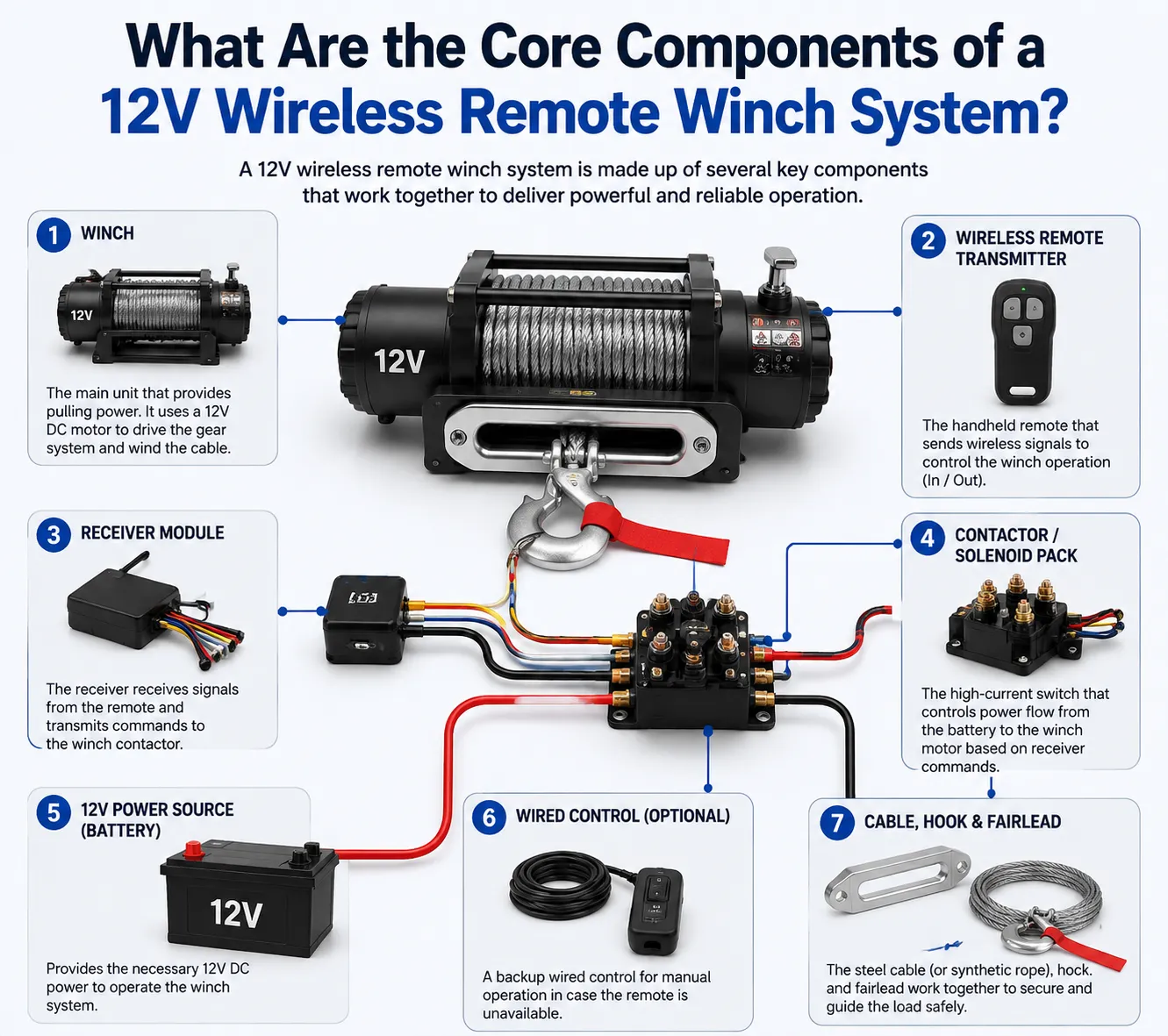
بنية النظام الكاملة
يتألف نظام الرافعة اللاسلكية التي تعمل بجهد 12 فولت من ثمانية أنظمة فرعية رئيسية يجب أن تعمل معًا بشكل موثوق تحت الحمل:
1. المحرك الكهربائي:
المحرك عبارة عن وحدة تيار مستمر ذات مغناطيس دائم (PMDC) مُحسَّنة لتوفير عزم دوران عالٍ عند التشغيل ودورة تشغيل متقطعة. تستخدم معظم رافعات الشاحنات محركات PMDC ذات لفات متسلسلة أو مركبة، تتراوح قدرتها بين 3.5 حصان و6.5 حصان بشكل مستمر (مع خرج ذروي أعلى بكثير على المدى القصير). يعمل المحرك بتيار مستمر 12 فولت يتم سحبه مباشرة من نظام بطارية المركبة.
عند الحمل المقنن الكامل، يستهلك محرك الونش النموذجي الذي تبلغ سعته 9,500 رطل ما بين 350 و450 أمبير. وهذا يمثل حوالي 30 ضعف التيار المستمر الذي تستهلكه دائرة المصابيح الأمامية النموذجية للمركبة، ولهذا السبب يُعد استخدام كابلات طاقة مخصصة ذات مقطع كبير ومصاهر ذات تصنيف مناسب أمرًا إلزاميًا.
2. سلسلة التروس:
يعمل نظام التروس على تخفيض السرعة العالية لدوران المحرك (التي تتراوح عادةً بين 3,000 و4,000 دورة في الدقيقة) إلى سرعة دوران الأسطوانة البطيئة ذات العزم العالي اللازمة لعملية الرفع (التي تتراوح عادةً بين 15 و40 دورة في الدقيقة عند الحمل المقنن). وتُستخدم ثلاث هياكل تروس:
| نوع التروس | الكفاءة | قفل ذاتي | التكلفة | نموذج التقديم الموحد |
|---|---|---|---|---|
| كوكبي (ثلاث مراحل) | 65-75% | لا (يتطلب فرامل منفصلة) | معتدل | أفضل الرافعات من حيث الجودة المخصصة للمستهلكين والمستهلكين المحترفين |
| التروس الدودية | 40-55% | نعم (مزود بقفل ذاتي مدمج) | منخفض | الرافعات ذات الأسعار المعقولة، للاستخدامات الخفيفة |
| على غرار ناقل الحركة الأوتوماتيكي | 70-80% | لا | مرتفع | الرافعات التجارية عالية التحمل |
تُعد أنظمة التروس الكوكبية هي التصميم السائد في الرافعات عالية الجودة التي تعمل بجهد 12 فولت والمخصصة للشاحنات، لأنها توفر أفضل توازن بين الكفاءة والحجم والمتانة. ويقوم النظام الكوكبي ثلاثي المراحل، الذي يتراوح معدل تخفيض التروس الإجمالي فيه بين 218:1 و265:1، بتحويل عزم دوران المحرك إلى عزم دوران الأسطوانة بكفاءة ميكانيكية معقولة.
3. الطبلة:
بكرة الحبل عبارة عن أسطوانة فولاذية يُلف عليها الحبل الصناعي. ويحدد قطر البكرة وطولها وقطر حافتها مجتمعة سعة الحبل (عدد أقدام الحبل التي يمكن تخزينها بقطر معين). فكلما كانت البكرة أعرض وأكبر قطرًا، زادت سعة تخزين الحبل، لكن ذلك يؤدي إلى زيادة الحجم والوزن الفعليين للرافعة.
4. آلية القابض / الدوران الحر:
يتيح نظام الدوران الحر أو القابض اليدوي للأسطوانة أن تدور بحرية دون تشغيل مجموعة التروس. وهذا يمكّن المشغل من سحب الحبل يدويًّا بسرعة عند ربطه بمرساة أو بمركبة عالقة، دون الحاجة إلى تشغيل المحرك في الاتجاه العكسي. وتتميز أنظمة الدوران الحر عالية الجودة بقدرتها على التشغيل والإيقاف بسلاسة وبجهد يدوي قليل، كما أنها لا تنزلق أثناء عمليات السحب التي تعمل بالطاقة.
5. نظام الفرامل:
تستخدم معظم الرافعات ذات التروس الكوكبية فراملًا مخروطية أو فراملًا شريطية مدمجة في عمود المحرك أو المرحلة الكوكبية الأولى. تعمل الفرامل على تثبيت الحمولة عندما يكون المحرك غير مشغّل، كما تمنع انطلاق الأسطوانة بشكل غير متحكم فيه أثناء وضع الدوران الحر. ويجب أن تتحمل الفرامل قوة السحب المقدرة للحبل دون أي زحف أو انزلاق.
6. نظام التحكم اللاسلكي:
زوج جهاز الإرسال والاستقبال الذي يتيح التشغيل عن بُعد. سيتم تناوله بالتفصيل في القسم المخصص أدناه.
7. مجموعة القاطع/الملف اللولبي:
يقوم زوج من الملامسات الكهرومغناطيسية عالية التحمل بتحويل الدائرة ذات التيار العالي للمحرك من أجل التشغيل في الاتجاه الأمامي (سحب الرافعة) والاتجاه الخلفي (إخراج الرافعة). يتحمل كل ملامس تيار توقف المحرك الكامل (400-600 أمبير في الوحدات الأكبر حجمًا)، لذا ترتبط جودة الملامس ارتباطًا مباشرًا بموثوقية النظام على المدى الطويل. تستخدم الرافعات عالية الجودة ملامسات ذات أطراف تلامس من سبيكة الفضة التي تقاوم تآكل القوس الكهربائي بشكل أفضل من الملامسات النحاسية القياسية.
8. الحبل الصناعي وممر الحبل:
ويكمل الحبل وممر توجيهه النظام الميكانيكي. ويتطلب الحبل الصناعي استخدام ممر توجيه أسطواني أو ممر توجيه ذي فتحة مع حواف ناعمة ومدورة لمنع التآكل. أما ممرات التوجيه ذات الحواف الحادة المصممة للكابلات الفولاذية، فستؤدي إلى قطع الألياف الصناعية إذا استُخدمت دون تعديل.
جدول تقييم جودة المكونات
| المكون | مؤشر درجة الميزانية | مؤشر درجة الجودة |
|---|---|---|
| المحرك | هيكل من الصلب المختوم، بدون حماية حرارية | هيكل من الألمنيوم المصبوب، مزود بفتيل حراري مدمج |
| سلسلة التروس | كوكبي ثنائي المراحل، من الحديد الزهر | تروس كوكبية من 3 مراحل، مصنوعة من الفولاذ المقوى |
| الطبل | فولاذ ذو جدران رقيقة، خطوط لحام ظاهرة | فولاذ مُشكَّل آليًّا ذو جدران سميكة، بلمسة نهائية ناعمة |
| الموصل الكهربائي | أطراف تلامس نحاسية، بدون ملصق تصنيف | أطراف من سبيكة الفضة، تصنيف 500 أمبير فأكثر، غلاف بمعيار IP56 |
| جهاز تحكم عن بُعد لاسلكي | تردد ثابت، هيكل بلاستيكي بسيط | FHSS، معيار IP65+، زر إيقاف طارئ مخصص |
| حبل صناعي | ماركة غير معروفة، ضفيرة واحدة | ماركة معروفة (Dyneema، Samson)، مضفر مزدوج |
| ممر الحبل | بكرة من الفولاذ الطري، بكرات بلاستيكية | حلقة ربط من الفولاذ المقاوم للصدأ أو الألومنيوم ذات حواف مستديرة |
كيف تحسب السعة المناسبة للرافعة الخاصة بشاحنتك؟
قاعدة 1.5× وحدودها
أكثر القواعد شيوعًا لتحديد حجم الونش هي اختيار ونش تبلغ سعته 1.5 ضعف الوزن الإجمالي للمركبة (GVW) لأثقل مركبة تتوقع سحبها. ويأخذ هذا العامل في الحسبان المقاومة الإضافية الناتجة عن التضاريس (الطين، الرمل، المنحدرات) مقارنةً بسحب مركبة على سطح مستوٍ وصلب.
ومع ذلك، فإن قاعدة «1.5×» هي مجرد نقطة انطلاق، وليست منهجية كاملة لتحديد المواصفات. فهناك العديد من المتغيرات التي قد تتطلب معامل قدرة أعلى:
مقاومة الدرجات: على منحدر بزاوية 30° (ما يعادل تقريبًا انحدارًا بنسبة 58%)، تبلغ المكونة من وزن المركبة العالقة التي تعمل في اتجاه المنحدر 50% من وزنها الإجمالي، بالإضافة إلى مقاومة التضاريس. ويمكن أن يصل إجمالي المقاومة على منحدر طيني شديد الانحدار بسهولة إلى 2-3 أضعاف الوزن الإجمالي للمركبة (GVW).
ضرب كتل السحب: يؤدي استخدام كتلة الرفع إلى مضاعفة قوة السحب المتوفرة من الرافعة بشكل فعلي (مع خفض سرعة الحبل إلى النصف). وهذا يتيح للرافعة ذات السعة الأقل التعامل مع حالات المقاومة العالية، ولكن يجب أن تكون سعة حبل الرافعة وأسطوانتها وهيكلها كافية لتحمل الحمل الجانبي للمرساة.
تأثير طبقة الطبل: تفقد الرافعات التي تعمل بالحبال السلكية والحبال الاصطناعية قوتها الاسمية للسحب مع تراكم الحبل على الأسطوانة. فالرافعة التي تبلغ قوتها الاسمية 9,500 رطل في الطبقة الأولى قد لا توفر سوى 7,200 رطل في الطبقة الثالثة و5,800 رطل في الطبقة الرابعة. ويؤدي التشغيل مع أسطوانة ممتلئة بالحبل إلى انخفاض كبير في قدرة السحب الفعلية.
اختيار السعة حسب فئة المركبة
| نوع المركبة | الوزن الإجمالي المعتاد للمركبة | السعة الموصى بها للرافعة | ملاحظات |
|---|---|---|---|
| سيارة دفع رباعي مدمجة / كروس أوفر | 3,500-4,500 رطل | 6,000-8,000 رطل | الاستخدام الخفيف على الطرق الوعرة |
| سيارة دفع رباعي كبيرة الحجم / شاحنة بيك آب سعة نصف طن | 5,500-7,000 رطل | 9,500-12,000 رطل | عمليات الإنقاذ القياسية على الطرق الوعرة |
| شاحنة بيك آب سعة ثلاثة أرباع الطن | 7,500-9,000 رطل | 12,000-15,000 رطل | القيادة على الطرق الوعرة الشاقة، والقطر |
| شاحنة بيك آب سعة طن واحد / ذات عجلات مزدوجة | 9,500-12,000 رطل | 15,000-18,000 رطل | الاسترداد التجاري، التضاريس الوعرة |
| شاحنة تجارية خفيفة (الفئة 3-4) | 12,000-16,000 رطل | 17,500-20,000 رطل | المرافق العامة، البناء، الشؤون البلدية |
| تجاري متوسط (الفئة 5-6) | 16,000-26,000 رطل | 20,000+ رطل (24 فولت أو هيدروليكي) | تتجاوز السعة القياسية البالغة 12 فولت |
فهم تقنية تقليل قوة سحب خط طبقة الأسطوانة
| طبقة الحبل على الأسطوانة | الزيادة الفعّالة في نصف قطر الأسطوانة | تقليل قوة السحب | مثال: تصنيف الطبقة الأولى: 9,500 رطل |
|---|---|---|---|
| الطبقة 1 (الأعمق) | الخط الأساسي | تخفيض 0% | 9,500 رطل |
| الطبقة الثانية | +قطر الحبل | ~15% تخفيض | ~8,075 رطل |
| الطبقة الثالثة | +2× قطر الحبل | ~28% تخفيض | ~6,840 رطل |
| الطبقة الرابعة (الطبقة الخارجية) | +3 أضعاف قطر الحبل | ~39% تخفيض | ~5,795 رطل |
يوضح هذا الجدول السبب الذي يجعل المتخصصين في عمليات الإنقاذ يوصون دائمًا بتقليل كمية الحبل الموجودة على الأسطوانة إلى أدنى حد ممكن قبل بدء عملية السحب. فإخراج أكبر قدر ممكن من الحبل قبل ربطه بنقطة التثبيت يجعل الجزء الفعلي من عملية السحب يتم على الطبقات الداخلية للحبل، حيث تسري السعة التصنيفية.
ما هي تقنية التحكم عن بُعد اللاسلكية التي تعمل بها الرافعات الحديثة التي تعمل بجهد 12 فولت؟
كيف تعمل بنية النظام اللاسلكي
يعمل نظام التحكم عن بُعد اللاسلكي المثبت على رافعة شاحنة تعمل بجهد 12 فولت وفقًا لنفس المبدأ الأساسي الذي تعمل به أجهزة التحكم اللاسلكية للرافعات الصناعية: حيث يقوم جهاز إرسال محمول يعمل بالبطارية بإرسال أوامر لاسلكية مشفرة إلى وحدة استقبال موصولة بدائرة الموصل الكهربائي للرافعة.
عندما يضغط المشغل على زر “سحب الرافعة” في جهاز الإرسال، يقوم الجهاز بتشفير هذا الأمر وبثه على تردده التشغيلي. ويقوم جهاز الاستقبال بفك تشفير الإشارة، والتحقق من رمز التعريف الفريد لجهاز الإرسال، وتفعيل مخرج الملامس الكهرومغناطيسي المناسب لتشغيل المحرك في اتجاه اللف.
يجب أن يتحمل نظام التحكم عن بُعد اللاسلكي المثبت على رافعة شاحنة ظروفًا أكثر قسوة بكثير من تلك التي يواجهها جهاز التحكم عن بُعد الخاص بالرافعات الصناعية الثابتة: التعرض للطين والغمر في الماء أثناء عمليات الإنقاذ، والتقلبات الشديدة في درجات الحرارة في البيئات غير المكيفة، والصدمات المادية الناتجة عن وضعه على الأسطح الصخرية أو مصدات المركبات، بالإضافة إلى البيئة الخاصة بترددات الراديو (RF) السائدة في الطرق الوعرة أو مواقع العمل.
تقنية التردد في أجهزة التحكم عن بُعد لرافعات الشاحنات
| التكنولوجيا | التردد | النطاق | مقاومة التداخل | التأثير على التكلفة |
|---|---|---|---|---|
| ثابت 27 ميجاهرتز | نطاق CB 27 ميغاهرتز | 30-60 قدمًا | منخفض جدًّا | منخفض جدًّا |
| تردد ثابت 433 ميجاهرتز | 433 ميغاهرتز ISM | 50-100 قدم | منخفض إلى متوسط | منخفض |
| تردد ثابت 868/915 ميجاهرتز | 868/915 ميغاهرتز ISM | 75-150 قدمًا | معتدل | معتدل |
| FHSS 433/868 ميغاهرتز | التنقل عبر ISM | 100-300 قدم | مرتفع | متوسط إلى مرتفع |
| بلوتوث 5.x (يعمل عبر التطبيق) | 2.4 جيجاهرتز | 30-100 قدم | معتدل | معتدل |
بالنسبة لتطبيقات الرافعات في الشاحنات، نوصي باستخدام تقنية FHSS كحد أدنى. فبيئة التشغيل على مسارات الإنقاذ أو في مواقع العمل — حيث قد تحتوي المركبات الأخرى على أجهزة إرسال تعمل بالترددات اللاسلكية، وحيث تُستخدم الاتصالات اللاسلكية، وحيث تتغير العوائق المادية باستمرار — تخلق الظروف المثالية التي تتعرض فيها أنظمة التردد الثابت للتداخل بشكل متكرر.
الميزات الأكثر أهمية في أجهزة التحكم عن بُعد اللاسلكية لاستخدامها في عمليات الإنقاذ
العزل المائي: إن أهم مواصفة على الإطلاق لجهاز التحكم عن بُعد الخاص بمرفع الشاحنة هي تصنيف IP الخاص به. فعملية الإنقاذ أثناء عبور نهر، أو في عاصفة ثلجية، أو أثناء هطول أمطار غزيرة، تعرض جهاز الإرسال لظروف من شأنها تدمير الوحدات ذات تصنيف IP54 في غضون موسم واحد. ويُعد تصنيف IP67 هو المعيار الأدنى الذي نوصي به للاستخدام الجاد على الطرق الوعرة.
سيطرة الرجل الميت: يجب أن تكون أزرار التحكم في الحركة من النوع الذي يعمل بالضغط المستمر — حيث يتوقف الرافعة على الفور عندما يرفع المشغل إصبعه عن الزر. وهذا يتيح التوقف الفوري دون الحاجة إلى الضغط على زر توقف مخصص، وهو أمر بالغ الأهمية عندما يصل الحبل إلى نقطة التوصيل أو عندما تبدأ المركبة القابلة للاسترداد في التحرك بشكل غير متوقع.
زر إيقاف الطوارئ المخصص: بصرف النظر عن وظيفة «الرجل الميت»، يُعد زر الإيقاف الطارئ المخصص، الذي يوقف جميع الحركات ويتطلب إعادة تشغيل متعمدة، ميزة أمان لا غنى عنها.
كفاية النطاق: بالنسبة لعمليات إنقاذ المركبات، يُعد 50 قدمًا (15 مترًا) الحد الأدنى للمدى الفعال. ويجب على المشغل الوقوف بعيدًا تمامًا عن خط الحمولة، والمركبة التي يتم إنقاذها، وأي كتل سحب موجودة في نظام الحبال. ويوفر مسافة 100 قدم (30 مترًا) مساحة آمنة كافية في معظم حالات الإنقاذ.
مؤشر عمر البطارية: يمنع تحذير انخفاض شحن البطارية (صوتي أو بصري عبر مصباح LED) قبل انقطاع التيار تمامًا حدوث حالة يتوقف فيها جهاز التحكم عن العمل أثناء عملية السحب لأن المشغل لم يكن على علم بأن البطاريات قد نفدت.
تصميم أزرار يسهل استخدامه بالقفازات: أزرار كبيرة ومميزة بوضوح يمكن تشغيلها حتى عند ارتداء قفازات العمل الثقيلة أو قفازات التزلج. أما لوحات المفاتيح الغشائية ذات الأزرار الصغيرة فهي تكاد تكون غير قابلة للاستخدام عند ارتداء القفازات، وهو أمر يثير الإحباط بشكل متكرر في حالات الإنقاذ التي تتم في الطقس البارد.
ما هي معايير السلامة والشهادات التي تنطبق على رافعات الشاحنات التي تعمل بجهد 12 فولت؟
الإطار التنظيمي وإطار إصدار الشهادات
على عكس الرافعات الصناعية العلوية، تعمل الرافعات المثبتة على الشاحنات ضمن فئة تخضع لوائح تنظيمية أقل صرامة، وتشمل معايير معدات المركبات، والسلامة الكهربائية، ومطابقة المعدات اللاسلكية:
الولايات المتحدة:
- SAE J706: معيار الرافعات الخاصة بالشاحنات (الأداء الهيكلي والميكانيكي)
- SAE J2807: متطلبات الأداء لتحديد التصنيفات الوزنية للمقطورات التي تجرها المركبات (ذات صلة غير مباشرة بالأحمال الهيكلية التي تتحملها المركبة نتيجة لقوى الونش)
- الجزء 15 من لوائح لجنة الاتصالات الفيدرالية (FCC): اعتماد الأجهزة اللاسلكية غير الخاضعة للترخيص (إلزامي بالنسبة لأجهزة التحكم عن بُعد اللاسلكية التي تُباع في الولايات المتحدة)
- UL 508A: لوحات التحكم الصناعية (ذات صلة بتصميم مجموعات الملفات اللولبية)
الاتحاد الأوروبي:
- توجيه الاتحاد الأوروبي بشأن معدات الراديو رقم 2014/53/EU (RED): إلزامية وضع علامة CE على المكونات اللاسلكية عن بُعد.
- توجيه الاتحاد الأوروبي بشأن الآلات رقم 2006/42/EC: ينطبق عندما تكون الرافعة جزءًا من نظام آلي.
- EN 14492-1: الرافعات التي تعمل بالطاقة (المعيار التقني الأوروبي لتصميم الرافعات)
أستراليا / نيوزيلندا:
- AS 4991: أجهزة الرفع (تنطبق على بعض تركيبات الرافعات في المركبات التجارية)
- علامة الامتثال التنظيمي (RCM): مطلوبة للأجهزة اللاسلكية التي تُباع في أستراليا.
ميزات السلامة الأساسية المطلوبة في أي رافعة شاحنة تعمل بجهد 12 فولت ومتوافقة مع المعايير
| ميزة السلامة | الوصف الوظيفي | لماذا هذا مهم؟ |
|---|---|---|
| علامة الحد الأقصى للحمل التشغيلي المقدر (WLL) | ملصق دائم يوضح الحمولة القصوى المسموح بها (WLL) وشهادة الاختبار | يمنع التحميل الزائد |
| الفرامل الميكانيكية | يحافظ على الحمل عند إيقاف تشغيل المحرك | يمنع انطلاق الأسطوانة بشكل غير متحكم فيه في وضع الدوران الحر أو عند انقطاع التيار الكهربائي |
| قاطع الحماية الحراري | يقطع التيار عن المحرك عند الحد الحراري الآمن | يمنع اشتعال المحرك بسبب ارتفاع درجة الحرارة |
| قاطع الدائرة / مصهر ANL | يحمي كابل الطاقة من التيار الزائد | يمنع نشوب حريق في الأسلاك الكهربائية |
| قفل «فريسبول» | يمنع التشغيل التلقائي غير المقصود تحت الحمل | يمنع انزلاق الحبل بشكل غير متحكم فيه |
| زر الإيقاف الطارئ عن بُعد | إيقاف فوري من جهاز الإرسال | يتيح الإلغاء الآمن عن بُعد |
| التحكم عن طريق الضغط المستمر للتشغيل | تتوقف الحركة تمامًا عند رفع الإصبع عن الزر | يمنع الالتفاف الزائد للحبل أو الشد الزائد عليه |
| مزلاج أمان بخطاف من الحبل الصناعي | يُحافظ على ثبات الخطاف في نقطة التثبيت | يمنع انفصال الخطاف تحت تأثير الحمل |
كيف يتم تركيب وتثبيت رافعة كهربائية بجهد 12 فولت مزودة بجهاز تحكم عن بُعد لاسلكي على شاحنة؟
خيارات منصات التثبيت
يحدد تخطيط التركيب مكان تثبيت الرافعة على الشاحنة وكيفية نقلها للحمل إلى هيكل المركبة:
حامل المصد الأمامي: التكوين الأكثر شيوعًا لرافعات الإنقاذ المخصصة للطرق الوعرة. يتم تثبيت الرافعة على مصد فولاذي شديد التحمل من قطع الغيار، أو على لوحة مخصصة للرافعة يتم تثبيتها بمسامير على قضبان الإطار الأمامي للمركبة. ويؤدي ذلك إلى وضع الرافعة في موضع منخفض على المركبة، مما يوفر زاوية مناسبة للحبل بالنسبة للأرض أثناء عملية الإنقاذ الذاتي.
حامل المصد الخلفي: يوفر الرافعة الثانية المثبتة على المصد الخلفي إمكانية سحب المركبة عندما تكون عالقة ولا يمكن الوصول إلى مقدمتها. وهي شائعة الاستخدام في مركبات الرحلات الاستكشافية وشاحنات الإنقاذ ومركبات الرحلات البرية التي تعمل في المناطق النائية دون مركبات دعم.
منصة مثبتة على السرير: تتيح منصة الونش القابلة للإزالة الموجودة في صندوق الشاحنة إعادة وضع الونش أو نقله بين المركبات. ورغم أنها أقل مثالية من الناحية الهيكلية مقارنة بالمصد المثبت على الإطار، إلا أنها توفر مرونة في الاستخدام مع مركبات متعددة.
محول وصلة الجر للمستقبل: يتم تثبيت حامل الونش الخاص بمقبض الجر في مقبض الجر مقاس 2 بوصة، مما يتيح تركيب الونش وإزالته بسرعة. وتقتصر سعة الحمولة المقدرة على الحد الأقصى لوزن اللسان المحدد لمقبض الجر (عادةً ما يتراوح بين 500 و1,000 رطل عموديًا، لكن سعة السحب الأفقية تعتمد على طريقة تثبيت مقبض الجر في المركبة).
التركيبات الكهربائية: المتطلبات غير القابلة للتفاوض
تتسبب التركيبات الكهربائية غير الصحيحة في حدوث أعطال في الرافعات التي تعمل بجهد 12 فولت — وتؤدي إلى مخاطر حريق أكبر — أكثر من أي عطل في المكونات الميكانيكية. وهذه المتطلبات ليست اختيارية:
مقاس الكابل:
يجب تحديد مقاس كابلات الطاقة وفقًا لتيار التوقف الأقصى للمحرك، وليس فقط وفقًا لتيار التشغيل المقنن. تتطلب الرافعة التي تبلغ حمولتها 9,500 رطل والتي يبلغ تيار توقفها 450 أمبير ما يلي:
| طول الكابل (في اتجاه واحد) | الحد الأدنى لمقياس السلك (AWG) | أقصى انخفاض في الجهد عند 450 أمبير |
|---|---|---|
| ما يصل إلى 3 أقدام (0.9 متر) | 2 AWG | أقل من 3% |
| 3-6 أقدام (0.9-1.8 متر) | 1/0 AWG | أقل من 3% |
| 6-10 أقدام (1.8-3 أمتار) | 2/0 AWG | أقل من 3% |
| 10-15 قدمًا (3-4.5 مترًا) | 3/0 AWG | أقل من 3% |
| أكثر من 15 قدمًا (4.5+ متر) | 4/0 AWG | أقل من 3% |
الدمج:
قم بتركيب مصهر ANL أو قاطع دائرة أوتوماتيكي على مسافة لا تزيد عن 18 بوصة (450 مم) من الطرف الموجب للبطارية، بحيث تكون سعته 125% من تيار التوقف الأقصى للرافعة. يتطلب الونش الذي يبلغ تيار التوقف فيه 450 أمبير مصهر ANL بقدرة 500 أمبير على الأقل. يؤدي استخدام مصهر أصغر من المطلوب إلى انقطاعات مزعجة أثناء عمليات السحب الشاقة؛ كما أن الاستغناء عن المصهر تمامًا يشكل خطرًا لاندلاع حريق في المركبة في حالة احتكاك كابل الطاقة بالأرض.
توصيلات أطراف البطارية:
استخدم أطراف توصيل حلقية مُثبَّتة بشكل صحيح (وليس مجرد لفها) على أطراف الكابل. يجب أن تكون الوصلات المثبتة بمسامير على أطراف البطارية محكمة الإغلاق ومحمية بشحم عازل كهربائي لمنع التآكل. تؤدي الوصلات غير المحكمة إلى حدوث مقاومة تسبب ارتفاع درجة الحرارة، وانخفاض الجهد، واحتمال حدوث شرارة كهربائية في حالة ارتفاع الطلب على التيار.
الكابل الأرضي:
يجب أن يكون قطر الكابل السالب مطابقًا لقطر الكابل الموجب، ويجب أن ينتهي عند نقطة تأريض صلبة وخالية من الطلاء في الهيكل بالقرب من موقع تركيب الرافعة، وليس عند الطرف السالب للبطارية وحده.
تركيب جهاز الاستقبال اللاسلكي ووضع الهوائي
تُوصَّل وحدة الاستقبال بين جهاز الإرسال اللاسلكي ومجموعة الملف اللولبي. قم بتركيب وحدة الاستقبال في مكان محمي — ويفضل أن يكون ذلك داخل غلاف محكم الإغلاق على الرافعة أو داخل مقصورة المركبة — مع توجيه الهوائي عموديًا ووضعه بحيث يكون في خط رؤية مباشر مع منطقة التشغيل.
الأخطاء الشائعة في التركيب:
- تركيب الهوائي داخل مصد معدني أو غطاء الرافعة، مما يؤدي إلى انخفاض المدى الفعال بنسبة 60-80%.
- توجيه كابل الهوائي في نفس القناة مع كابلات الطاقة عالية التيار (تداخل الترددات اللاسلكية).
- وضع جهاز الاستقبال في مكان سيغمره الماء أثناء عبور الممرات المائية دون التحقق من تصنيف IP الخاص به.
- فشل إقران جهاز إرسال احتياطي أثناء الإعداد الأولي.
ما هي أفضل مواصفات الحبال الاصطناعية التي تناسب رافعة الشاحنة؟
أنواع تركيب الحبال
يتم تصنيع حبال الرافعات الاصطناعية بنوعين رئيسيين من التصميمات:
ضفيرة مفردة (ضفيرة مجوفة مكونة من 12 خيطًا): التصميم الأكثر شيوعًا في رافعات الشاحنات. يتم تجديل اثني عشر خيطًا من ألياف البولي إيثيلين عالي الكثافة (UHMWPE) في طبقة واحدة بدون قلب. يتميز هذا التصميم بخفة الوزن والمرونة وسهولة الربط. ويتيح القلب المجوف تشكيل وصلة العروة عن طريق دفن الطرف العامل داخل جسم الحبل، مما ينتج عنه طرف قوي للغاية.
ضفيرة مزدوجة (اللب والغلاف): يحمي الغلاف الخارجي المضفر النواة الداخلية المضفرة. ويتحمل الغلاف التلف الناتج عن التآكل في البداية قبل أن يصل إلى النواة الحاملة للحمل، مما يطيل من العمر التشغيلي في البيئات التي تتسم بالتآكل. وهو أثقل قليلاً وأقل مرونة من النوع ذي الضفيرة الواحدة، لكنه أكثر متانة في ظروف التسلق على الصخور.
المواصفات القياسية للحبال حسب سعة الرافعة
| قدرة الونش | قطر الحبل الموصى به | طول الحبل الموصى به | قوة الكسر النموذجية | WLL بمعامل 5:1 |
|---|---|---|---|---|
| 3,500-5,000 رطل | 1/4 بوصة (6 ملم) | 50 قدمًا (15 مترًا) | 10,800 رطل | 2,160 رطلاً |
| 6,000-8,000 رطل | 5/16 بوصة (8 ملم) | 80 قدمًا (24 مترًا) | 16,800 رطل | 3,360 رطل |
| 9,000-10,000 رطل | 3/8 بوصة (10 ملم) | 80-100 قدم (24-30 مترًا) | 19,600 رطل | 3,920 رطل |
| 12,000-15,000 رطل | 7/16 بوصة (11 ملم) | 80-100 قدم (24-30 مترًا) | 26,600 رطل | 5,320 رطل |
| 16,000-18,000 رطل | 1/2 بوصة (12 ملم) | 100 قدم (30 مترًا) | 34,600 رطل | 6,920 رطلاً |
خيارات إنهاء أطراف الحبال
يتطلب طرف الخطاف في الحبل الصناعي إنهاءً مناسبًا لا يركز الضغط على عدد قليل من الألياف:
وصلة «ثيمبل آي» مع حلقة تثبيت: يتم ربط طرف الحبل حول حلقة معدنية، ويقوم قفل بربط الحلقة بالخطاف. ويؤدي ذلك إلى توزيع الحمل على نطاق واسع، وتُعد هذه الطريقة أقوى طرق التوصيل وأكثرها متانة. تصل قوة الوصلات الحلقية المصنوعة بشكل صحيح من حبل UHMWPE المكون من 12 خيطًا إلى 85-95% من قوة الانكسار المحددة في الكتالوج للحبل.
العين المخيطة: نهاية مخيطة آليًّا تُستخدم في الحبال الاصطناعية ذات الأسعار المعقولة. وهي أقل متانة من الوصلة (تبلغ كفاءتها عادةً 70-80%) ولا يمكن إصلاحها ميدانيًّا في حالة تلفها.
حلقة معدنية مُشكَّلة بالضغط أو بالضغط: حلقة معدنية مجعدة مثبتة على طرف الحبل. وهي مريحة في الاستخدام، لكنها غير قابلة للإصلاح في حالة تلفها، كما أن حافة الحلقة الصلبة قد تقطع ألياف الحبل المجاورة إذا انهارت العروة تحت تأثير الحمل الصدمي.
توافق قنوات تمرير الحبل: القناة الدوارة مقابل قناة «هاوز»
| نوع حامل الحبل | الأفضل مع | حماية الحبل | الوزن | التكلفة |
|---|---|---|---|---|
| ممر بكرات (4 بكرات) | كابل فولاذي | مناسب للفولاذ، ويؤدي إلى تآكل مفرط للمواد الاصطناعية | ثقيل | منخفض إلى متوسط |
| ممر حبل من الألومنيوم | حبل صناعي | ممتاز (حواف ذات نصف قطر ناعم) | الضوء | معتدل |
| حلقة ربط من الفولاذ المقاوم للصدأ | اصطناعي أو فولاذي | ممتاز (الأكثر متانة) | معتدل | أعلى |
| حلقة ربط بلاستيكية/مركبة | مصنوع من مواد اصطناعية فقط، استخدام خفيف | معتدل | خفيف جدًا | منخفض |
عند تحويل الرافعة التي تعمل بحبل فولاذي إلى حبل صناعي، يجب استبدال موجه الحبل الأسطواني بموجه حبل من الألومنيوم أو الفولاذ المقاوم للصدأ ذي حواف مستديرة تمامًا. فمرور الحبل الصناعي عبر موجه الحبل الأسطواني يؤدي إلى تآكل متسارع في النقاط التي يتلامس فيها الحبل مع أطراف الأسطوانة، مما يقصر بشكل كبير من العمر التشغيلي للحبل.
كيف يمكن تشغيل الرافعة اللاسلكية بأمان أثناء عملية إنقاذ المركبة؟
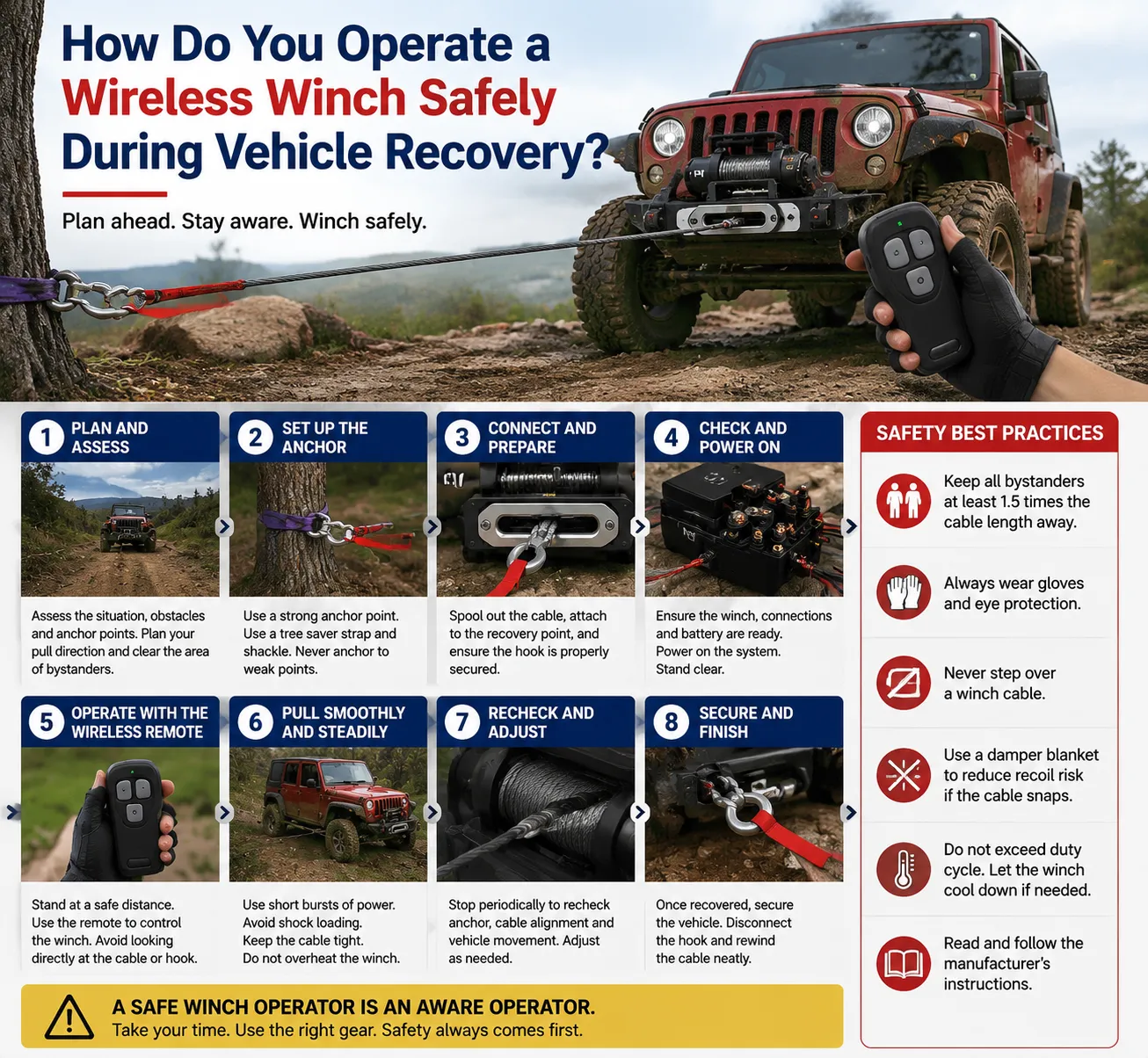
تسلسل عملية الاسترداد: خطوة بخطوة
يتبع التشغيل الآمن للرافعة تسلسلاً محدداً يكرره مشغلو معدات الإنقاذ المتمرسون باستمرار، بغض النظر عن مدى إلحاح الموقف. فالتسرع في أي خطوة من هذه الخطوات يهيئ الظروف لوقوع الحوادث الأكثر شيوعاً المتعلقة باستخدام الرافعة.
الخطوة 1 – تقييم الموقع:
قبل لمس الرافعة، قم بتقييم الموقف. حدد نقاط التثبيت، وقم بتقييم استقرار الأرض، وقم بتقدير وزن الحمولة ومقاومتها، وحدد مواقع المارة. أخرج جميع الأفراد غير الضروريين من منطقة خط الحمولة (المنطقة التي تقع ضمن مسافة تبلغ 1.5 ضعف طول الحبل على جانبي الحبل).
الخطوة 2 – اختيار المرساة وتركيبها:
اختر نقطة تثبيت مصنفة لتحمل قوة الشد المتوقعة. وتُعد الشجرة الحية التي يبلغ قطر جذعها 8 بوصات على الأقل هي نقطة التثبيت الطبيعية القياسية. استخدم حزام حماية الشجرة (حزام نايلون عريض) حول الشجرة بدلاً من ربط الحبل مباشرةً، لأن ذلك قد يتسبب في إتلاف لحاء الشجرة وتركيز الضغط على منطقة تلامس صغيرة للحبل. بالنسبة لعملية سحب مركبة من مركبة أخرى، قم بتثبيت الحبل بنقاط السحب (خطافات السحب أو نقاط التثبيت المصنفة) الموجودة على هيكل المركبة العالقة، ولا تقم أبدًا بتثبيته على دعامات المصد أو ألواح هيكل المركبة.
الخطوة 3 – وضع المثبط:
ضع مخمد حبل (بطانية ثقيلة، أو كيس ثقيل، أو منتج مخصص كمخمد للحبل) على نقطة منتصف الحبل قبل البدء في السحب. في حالة انقطاع الحبل الصناعي تحت تأثير الحمل، يمتص المثبط زخم الحبل المتساقط ويمنعه من الاصطدام بالأفراد أو المعدات. غالبًا ما يتم تجاهل هذه الخطوة، وهي الإجراء الأمني الأكثر تأثيرًا على الإطلاق في حالات انقطاع الحبل.
الخطوة 4 – وضع ما قبل السحب:
تتجلى هنا الميزة الرئيسية لجهاز التحكم عن بُعد اللاسلكي. حيث يقف المشغل بزاوية تتراوح بين 45 و90 درجة بالنسبة للحبل، بعيدًا تمامًا عن منطقة الخطر، مع رؤية واضحة لكلتا المركبتين وجميع مكونات التثبيت. ويتيح جهاز التحكم عن بُعد اللاسلكي الذي يعمل بجهد 12 فولت التحكم الكامل من هذا الموقع الآمن.
الخطوة 5 – السحب المتحكم فيه:
ابدأ عملية السحب بأوامر قصيرة ومتقطعة — قم بسحب الحبل لمدة 2-3 ثوانٍ، ثم توقف قليلاً، وقم بالتقييم، ثم تابع. وهذا يسمح لأحزمة السحب والتجهيزات بالاستقرار تحت الحمل، ويمنح المركبة العالقة وقتًا للاستجابة، ويمنع لف الحبل بشكل مفرط على الأسطوانة. لا تقم أبدًا بتشغيل المحرك بشكل مستمر في حالة التوقف التام (عدم حركة الحبل) لأكثر من 10-15 ثانية، لأن هذه هي الحالة التي تؤدي إلى تسخين لفات المحرك بأسرع ما يمكن.
الخطوة 6 – إدارة الحبل بعد عملية الاسترداد:
بعد اكتمال عملية سحب الحبل، قم بلف الحبل مرة أخرى على الأسطوانة مع فرض شد خفيف (باستخدام يد ترتدي قفازًا لتوفير مقاومة خفيفة عند ممر الحبل). فالحبل الصناعي المربوط بشكل فضفاض أو غير محكم يؤدي إلى انغماس الطبقات اللاحقة في الطبقات السفلية تحت تأثير الحمل، مما قد يتسبب في تلف الألياف ويجعل من الصعب فك الحبل عند الاستخدام التالي.
ملخص قواعد السلامة الخاصة باستخدام الرافعات
| القاعدة | الأساس المنطقي |
|---|---|
| لا تقف أبدًا في منطقة خط الحمولة | الموقع الأكثر احتمالاً للإصابة في حالة انقطاع الحبل أو فشل نظام التثبيت |
| استخدم دائمًا مخمدًا حبليًّا | يمتص طاقة الحبل المتساقط عند حدوث انقطاع |
| قم بالتثبيت فقط على نقاط التثبيت المصرح بها | قد تتعرض ألواح الهيكل وحوامل المصدات لأعطال كارثية |
| لا تتجاوز أبدًا الحمولة القصوى المسموح بها (WLL) | يؤدي التحميل الزائد إلى تسريع تآكل الحبل والرافعة |
| احرص على ترك ما لا يقل عن 5 لفات على الأسطوانة | يحافظ على ثبات تثبيت قلب الأسطوانة تحت الحمل الكامل |
| استخدم القفازات عند التعامل مع الحبل | تتسبب ألياف البولي إيثيلين عالي الكثافة (UHMWPE) في جروح خطيرة على الجلد المكشوف |
| لا تستخدم الرافعة بمفردك أبدًا إن أمكن تجنب ذلك | يقوم الشخص الثاني بمراقبة السلامة |
| مراقبة درجة حرارة المحرك | توقف واسترح إذا أصبح غطاء المحرك ساخنًا لدرجة لا يمكن لمسه |
| افحص الحبل قبل كل استخدام | يشير التلف الظاهر إلى ضعف في المتانة |
| استخدم كتلة السحب في حالات السحب الصعبة | يضاعف قوة السحب، ويقلل من الضغط على المحرك |
ما هي أعمال الصيانة التي يتطلبها الرافعة ذات الحبل الاصطناعي التي تعمل بجهد 12 فولت؟
جدول الصيانة الوقائية
| التردد | المهمة | الأدوات/المواد المطلوبة |
|---|---|---|
| بعد كل استخدام | افحص الحبل للتأكد من عدم وجود تآكل أو قطع أو تغير في اللون؛ أعد لفه وهو مشدود؛ امسح الحبل بقطعة قماش نظيفة مبللة | قطعة قماش نظيفة، قفازات |
| شهريًّا | اختبر جهاز التحكم عن بُعد اللاسلكي في نطاق التشغيل الكامل؛ وتحقق من عدم وجود تآكل في توصيلات الملف اللولبي؛ وقم بتزييت ذراع التحرير التلقائي | شحم عازل، مفتاح ربط |
| ربع سنوي | افحص جميع مكونات التثبيت (الخطافات، والأغلال، وكتل السحب) للتأكد من عدم وجود تشوهات أو تشققات؛ واختبر وظيفة الإيقاف الطارئ؛ وتحقق من عزم دوران مكونات التثبيت | مفتاح عزم الدوران، مصباح الفحص |
| سنويًّا | افحص مجموعة التروس (افتح الغطاء)؛ وتحقق من تآكل فرش المحرك إن أمكن الوصول إليها؛ وتأكد من عمل الفرامل تحت الحمل المقنن؛ وافحص أطراف التوصيل الكهربائية بحثًا عن أي تآكل؛ وقم بإجراء اختبار الشد عند السعة المقننة 50% | ميزان الحمولة، جهاز القياس المتعدد، أدوات يدوية أساسية |
| حسب الحاجة | استبدل الحبل في حالة استيفاء أي من معايير الاستبدال؛ واستبدل حزمة بطاريات جهاز الإرسال أو خلاياها وفقًا للجدول الزمني المحدد | حبل بديل، بطاريات |
معايير سحب الحبال الاصطناعية من الخدمة
يجب إيقاف استخدام الحبل فورًا في حالة وجود أي من الحالات التالية:
- أي جرح أو شق أو تآكل يكشف عن أكثر من 20% من المقطع العرضي للحبل.
- ظهور علامات ذوبان أو تلميع الألياف (بسبب الحرارة أو الاحتكاك).
- تغير مستمر في لون المنتج لا يمكن تفسيره بالاستخدام العادي.
- تصلب أو صلابة في جزء من الحبل (يشير إلى تلف داخلي في الألياف أو تسرب ملوثات).
- أي وصلة تظهر عليها علامات انزلاق أو انفصال الخيوط.
- تعرض الحبل لحمل صدمي كاد أن يؤدي إلى انقطاعه.
- يظهر التدهور الناتج عن الأشعة فوق البنفسجية في شكل تفتت سطحي مفرط أو ملمس طباشيري (عادةً بعد 3-5 سنوات من التعرض للعوامل الخارجية).
صيانة الأنظمة اللاسلكية
قم باستبدال بطاريات جهاز الإرسال وفقًا لجدول زمني محدد — كل 60 يومًا في حالة الاستخدام المكثف، وكل 90 يومًا في حالة الاستخدام المتقطع — بدلاً من الانتظار حتى يظهر مؤشر انخفاض مستوى البطارية. وتعد الأعطال التي تحدث أثناء التشغيل بسبب البطاريات أكثر مشكلات الأنظمة اللاسلكية شيوعًا التي يمكن تجنبها والتي نواجهها.
افحص أختام غلاف جهاز الإرسال كل ثلاثة أشهر. قد يتعرض جهاز الإرسال الذي سقط على الأرض لصدوع مجهرية في غلافه، مما يضعف مانع تسرب IP دون ظهور أي تلف واضح للعين المجردة. اغمر جهاز الإرسال لفترة وجيزة في وعاء مملوء بالماء وراقب ما إذا كانت هناك فقاعات تخرج من الغلاف. إذا ظهرت فقاعات، فهذا يعني أن مانع التسرب قد تعرض للتلف ويجب إصلاحه أو استبدال جهاز الإرسال قبل العملية التالية التي يتعرض فيها للماء.
كيف تقارن الرافعات اللاسلكية التي تعمل بجهد 12 فولت عبر فئات السعة الرائدة؟
مقارنة الأداء حسب فئة السعة
| المواصفات | فئة 6,000 رطل | فئة 9,500 رطل | فئة 12,000 رطل | فئة 17,500 رطل |
|---|---|---|---|---|
| القوة الاسمية النموذجية للمحرك | 3.5 حصان | 4.5-5.5 حصان | 5.5-6.0 حصان | 6.0-7.0 حصان |
| قوة السحب المقدرة للخط (الطبقة 1) | 6,000 رطل | 9,500 رطل | 12,000 رطل | 17,500 رطل |
| قوة السحب المقدرة للخط (الطبقة 4) | حوالي 3,600 رطل | حوالي 5,800 رطل | حوالي 7,300 رطل | ~10,700 رطل |
| التيار الأقصى للمحرك (12 فولت) | ~280 أمبير | ~380-450 أمبير | ~450-500 أمبير | ~500-600 أمبير |
| قطر الحبل (الاصطناعي) | 5/16 بوصة | 3/8 بوصة | 7/16 بوصة | 1/2 بوصة |
| طول الحبل (نموذجي) | 80 قدمًا | 80-100 قدم | 100 قدم | 100 قدم |
| وزن الرافعة | 28-35 رطلاً | 48-65 رطلاً | 65-85 رطلاً | 90-120 رطلاً |
| الحد الأدنى لمواصفات المصد/حامل التثبيت | الأعمال الخفيفة | الواجب العادي | للخدمة الشاقة | مخصص للاستخدام الشديد القسوة |
| الوزن الإجمالي المسموح به للمركبة المناسبة | ما يصل إلى 4,000 رطل | ما يصل إلى 7,000 رطل | ما يصل إلى 9,000 رطل | ما يصل إلى 12,000 رطل |
| نطاق التحكم عن بُعد الموصى به | 50 قدمًا | 75-100 قدم | 100 قدم | 100-150 قدمًا |
متى تختار كل فئة من فئات السعة
تمثل فئة الـ 9,500 رطل الخيار الأمثل لغالبية مالكي الشاحنات الكبيرة الحجم الذين يستخدمون مركباتهم في الأنشطة الترفيهية على الطرق الوعرة والأعمال الخدمية من حين لآخر. توفر هذه الفئة سعة كافية لأكثر سيناريوهات الإنقاذ شيوعًا، ووزنًا يمكن التحكم فيه، وتوافرًا واسعًا لقطع الغيار.
تُعد فئة الـ 12,000 رطل مناسبة للشاحنات التي تبلغ حمولتها ثلاثة أرباع الطن وطن واحد، والمستخدمة في التضاريس الوعرة أو في التطبيقات التجارية التي قد تحمل فيها الشاحنة حمولة كبيرة وقت عملية الإنقاذ. ويستحق الوزن الإضافي — الذي يزيد بنحو 20-25 رطلاً عن الوحدة التي تزن 9,500 رطل — أن يتم حمله نظراً لهامش الأمان الذي يوفره.
صُممت فئة الـ 17,500 رطل للشاحنات سعة طن واحد والمركبات التجارية الخفيفة التي تعمل في ظروف يُتوقع فيها مواجهة مقاومة شديدة: مثل الوحل العميق، أو المنحدرات الشديدة، أو سحب مركبات أخرى تزيد وزنها بشكل كبير عن وزن شاحنة السحب.
ما هي أحدث الابتكارات في تكنولوجيا الرافعات اللاسلكية لعام 2026؟
التطورات التكنولوجية التي وصلت إلى مرحلة النضج التجاري
خلية تحميل مدمجة وشاشة عرض لاسلكية:
قدمت العديد من الشركات المصنعة خلايا تحميل مدمجة في لوحة تثبيت موجه الحبل أو مجموعة خطاف الحبل. يتم إرسال قيمة الشد المقاسة إلى شاشة جهاز التحكم عن بُعد اللاسلكي، مما يتيح للمشغل رؤية في الوقت الفعلي لمدى اقتراب قوة السحب من الحد الأقصى للحمل التشغيلي للحبل. وقد كانت هذه الميزة متوفرة في تطبيقات الرافعات الصناعية لسنوات عديدة، لكنها بدأت الآن في الانتشار في سوق الرافعات الخاصة بالشاحنات، حيث لها قيمة كبيرة من حيث السلامة والتدريب.
تكامل تطبيقات البلوتوث:
توفر تطبيقات الهواتف الذكية المصاحبة الآن واجهة تحكم ثانوية تُكمل وظيفة جهاز الإرسال الفعلي. وعادةً ما يضيف التطبيق ميزات لا يمكن استخدامها عمليًّا على جهاز التحكم عن بُعد الفعلي: مراقبة استهلاك الطاقة في الوقت الفعلي، وعدد الدورات المتراكمة، وعرض درجة حرارة المحرك، وتسجيل رموز الأعطال. ويظل جهاز الإرسال الفعلي هو الوسيلة الأساسية للتشغيل الفعلي (حيث إن استخدام شاشات الهواتف الذكية غير عملي عند ارتداء القفازات)، بينما يخدم التطبيق وظائف المراقبة والتشخيص.
المراقبة التلقائية لشد الحبل:
تتضمن بعض الرافعات المتطورة من طراز 2026 ميزة «الحفاظ التلقائي على الشد»؛ حيث تراقب وحدة التحكم في الرافعة تيار المحرك وتحافظ على شد محدد للحبل بدلاً من العمل بسرعة ثابتة. وعندما ينخفض شد الحبل (مما يشير إلى أن المركبة العالقة قد تحركت وأن المقاومة قد انخفضت)، فإن الرافعة تبطئ أو تتوقف تلقائيًا لمنع لف الحبل بشكل مفرط أو ارتخائه على الأسطوانة.
دمج بطارية الليثيوم الاحتياطية:
مع انتشار استخدام البطاريات المساعدة المصنوعة من فوسفات الحديد والليثيوم (LiFePO4) على نطاق واسع في أوساط عشاق القيادة على الطرق الوعرة والرحلات البرية، يتم تصميم أنظمة الرافعات بحيث تستفيد من قدرة الليثيوم الفائقة على توفير تيار كهربائي عالي. تحافظ بطاريات LiFePO4 على جهد الأطراف بشكل أفضل بكثير من بطاريات الرصاص الحمضية أثناء سحب التيار العالي، مما يؤدي إلى قوة سحب أعلى بشكل ملحوظ عند الطبقة الأولى من الأسطوانة مقارنةً بنفس الرافعة التي تعمل ببطارية رصاص حمضية قياسية.
أنظمة كاملة مقاومة للماء بمعيار IP68:
أصبحت مجموعة الونش الكاملة — التي تشمل المحرك، ومجموعة التروس، وعلبة الملف اللولبي، وجهاز الاستقبال اللاسلكي — متوفرة الآن بتصميمات حاصلة على تصنيف IP68 من عدة شركات مصنعة. وقد صُممت هذه الأنظمة لعمليات عبور المياه المنتظمة التي يُتوقع فيها غمر الونش المثبت على المصد الأمامي بالكامل. يحمل جهاز الإرسال اللاسلكي في هذه المجموعات تصنيف IP67 أو IP68، مما يتيح التشغيل الكامل أثناء عمليات عبور المياه.
حبل صناعي مزود بعلامات فحص RFID مدمجة:
هناك اتجاه متخصص ولكنه آخذ في النمو يتمثل في استخدام الحبال الاصطناعية المزودة بعلامات RFID مدمجة على مسافات متباعدة على طول جسم الحبل. ويقوم ماسح ضوئي محمول بقراءة سجل الخدمة المسجل لكل علامة — عدد مرات الشد، والشد الأقصى المسجل في حالة اقترانها بخلية تحميل، وتاريخ الفحص الأخير — مما يتيح اتخاذ قرارات موضوعية ومدعومة بالبيانات بشأن سحب الحبل من الخدمة، بدلاً من الاعتماد فقط على الفحص البصري.
الأسئلة الشائعة (FAQs)
1: هل الحبل الصناعي أقوى من الكابل الفولاذي المستخدم في رافعة الشاحنة؟
يُعد الحبل الاصطناعي المصنوع من مادة UHMWPE أقوى من الكابل الفولاذي مقارنةً بالوزن، مما يعني أنه يحقق مقاومة كسر أعلى عند الوزن المكافئ. ينكسر حبل «داينيما SK75» بقطر 3/8 بوصة عند حوالي 19,600 رطل، بينما يزن حوالي 3.5 رطل لكل 100 قدم. أما الكابل الفولاذي المجلفن 6×19 IWRC المماثل بقطر 3/8 بوصة، فينكسر عند حوالي 14,400 رطل، لكن وزنه يبلغ حوالي 22 رطلاً لكل 100 قدم. ومع ذلك، فإن المقارنة بين القطر والقطر تعتمد على درجة الحبل المحددة وبنيته. والفرق العملي الأهم ليس قوة الانكسار المطلقة، بل السلوك عند الانكسار: فالحبل الصناعي يسقط عند انكساره، بينما يتأرجح الكابل الفولاذي بعنف. وهذه الخاصية المتعلقة بالسلامة هي السبب الرئيسي الذي يجعل مشغلي الإنقاذ المحترفين والعديد من مصنعي المركبات يوصون الآن باستخدام الحبل الصناعي في رافعات الشاحنات أو يشترطون استخدامه.
2: ما المسافة القصوى التي يمكنني الوقوف عندها عند تشغيل الرافعة باستخدام جهاز تحكم عن بُعد لاسلكي؟
توفر معظم أجهزة التحكم عن بُعد اللاسلكية للرافعات المخصصة للاستخدام الاستهلاكي أداءً موثوقًا به على مسافة تتراوح بين 50 و100 قدم (15 إلى 30 مترًا) من الرافعة في الأماكن المفتوحة في الهواء الطلق. أما أجهزة التحكم عن بُعد الاحترافية التي تعمل بتقنية FHSS، فتزيد هذه المسافة إلى ما بين 150 و300 قدم. لضمان سلامة عملية الإنقاذ، يوصى بأن تكون المسافة الدنيا بين المشغل وحبل الحمولة 1.5 ضعف طول الحبل المستخدم. في عملية إنقاذ نموذجية يتم فيها استخدام حبل بطول 60 قدمًا، يجب أن يقف المشغل على مسافة لا تقل عن 90 قدمًا من نقاط التثبيت. وهذا يعني أن جهاز التحكم عن بُعد الذي يبلغ مداه 100 قدم هو الحد الأدنى العملي لمعظم عمليات السحب الكاملة. يجب أن يتجاوز مدى الإرسال اللاسلكي دائمًا الحد الأدنى لمسافة الأمان للمشغل بهامش لا يقل عن 50%.
3: ما هي ترقية البطارية التي تحتاجها شاحنتي لتشغيل رافعة ذات سعة عالية؟
يستهلك الونش الذي يعمل بجهد 12 فولت وذو سعة 9,500 رطل أو أكثر ما بين 380 إلى 500 أمبير أثناء عمليات السحب الشاقة، مما قد يؤدي إلى تفريغ بطارية السيارة القياسية في غضون 2 إلى 5 دقائق من التشغيل المتواصل، كما سيؤدي إلى انخفاض جهد البطارية إلى ما دون عتبة التشغيل الفعال للمحرك. تشمل التحسينات الموصى بها: استبدال البطارية القياسية التي تأتي من المصنع ببطارية AGM ذات سعة احتياطية عالية (100 أمبير ساعة كحد أدنى، ويُفضل أن تكون 120+ أمبير ساعة)، وتركيب مولد كهربائي عالي الخرج (خرج 220-250 أمبير يحل محل الوحدة القياسية من المصنع التي تتراوح بين 130 و150 أمبير)، وبالنسبة للاستخدامات الشاقة، إضافة بطارية مساعدة مخصصة من نوع AGM أو LiFePO4 يتم توصيلها عبر عازل أو شاحن تيار مستمر إلى تيار مستمر. توفر البطارية الإضافية تيارًا عاليًا أثناء عمليات السحب الشاقة بينما يحافظ المولد على شحن البطارية الرئيسية. وبدون هذه التحسينات، ستؤدي جلسات السحب المطولة إلى استنزاف بطارية التشغيل وترك المشغل عالقًا.
4: هل يمكنني استخدام رافعة بحبل صناعي لسحب الأشجار أو لأعمال المزرعة، وليس فقط لإنقاذ المركبات؟
نعم، يُعد الونش المزود بحبل صناعي بجهد 12 فولت فعالاً للغاية في سحب الأشجار، وسحب جذوع الأشجار، واستخراج أعمدة الأسوار، ووضع المعدات الزراعية في مواقعها، والمهام الزراعية ومهام إدارة الأراضي المماثلة. ويُعد جهاز التحكم عن بُعد اللاسلكي ذا قيمة خاصة في هذه الاستخدامات لأنه يتيح للمشغل التحكم في الونش من موقع يمكنه من مراقبة كل من نقطة التثبيت والجسم الذي يتم سحبه في آن واحد. عند استخدام الونش لسحب الأشجار، تنطبق نفس قواعد السلامة الخاصة بالتجهيزات: استخدم معدات مصنفة طوال العملية، وضع مخمد الحبل على الخط، ابق بعيدًا عن منطقة الحمولة، ولا تتجاوز أبدًا الحمولة القصوى المسموح بها (WLL) للونش. لاحظ أن التشغيل المستمر في وضع التقدم دون إتاحة فترات تبريد يقصر من عمر المحرك؛ لذا، يجب العمل على شكل دورات تتراوح مدة السحب المستمر فيها بين 30 و60 ثانية كحد أقصى، مع فترة راحة تتراوح بين دقيقتين وثلاث دقائق بين كل دورة وأخرى.
5: كيف أقوم بلف الحبل الصناعي بشكل صحيح على أسطوانة الرافعة؟
يُعد لف الحبل الصناعي بشكل صحيح أمرًا بالغ الأهمية لكل من إطالة عمر الحبل وضمان الأداء الموثوق للرافعة. ابدأ بتثبيت المركبة (ضعها في وضع «بارك» على أرض صلبة) وربط الطرف الحر للحبل بمثبت ثابت متين على بعد 50-100 قدم. قم بشد الحبل بشد معتدل عن طريق سحبه في اتجاه نقطة التثبيت بينما تقوم بسحبه ببطء باستخدام الرافعة. يمنع هذا الشد الحبل من التراكم بشكل فضفاض على الأسطوانة، حيث يمكن أن تنغرس الطبقات اللاحقة في الطبقات السفلية تحت الحمل العالي وتؤدي إلى تلف الألياف. حافظ على ضغط يدوي خفيف على موجه الحبل (باستخدام قفازات جلدية) لتوجيه الحبل في طبقات متساوية ومحكمة عبر عرض الأسطوانة. لا تسمح أبدًا بلف الحبل الصناعي على الأسطوانة دون شد، حيث ستتضرر الطبقات الداخلية الرخوة بشدة عند تطبيق الحمل لأول مرة.
6: ما هي الطريقة الصحيحة لربط خطاف بنقطة الإنقاذ باستخدام حبل صناعي؟
يتم توصيل الخطاف الموجود في نهاية الحبل الصناعي بمركبة الإنقاذ أو المرساة من خلال حلقة ربط مقوسة معتمدة، أو حلقة ربط مرنة، أو مباشرةً بخطاف إنقاذ معتمد إذا سمحت هندسة نقطة التثبيت بذلك. عند استخدام حلقة قوسية (أوميغا)، يجب أن يكون الدبوس مدمجًا بالكامل في الفتحة ثم يُرجع للخلف بمقدار ربع دورة، ثم يُثبت بسلك أو شريط لاصق عبر فتحة الدبوس لمنع الدوران تحت الحمل من فك الدبوس. يجب إغلاق مزلاج أمان الخطاف قبل التحميل. لا تقم أبدًا بتحميل الخطاف على طرفه أو جانبه — يجب أن يتحمل الحمل على سرج الخطاف (الجزء السفلي الداخلي المنحني). تزداد شعبية الأغلال اللينة المصنوعة من البولي إيثيلين عالي الكثافة (UHMWPE) في توصيلات الخطافات لأنها تقضي على خطر التصادم بين المعدن والمعدن في حالة فشل التوصيلة، كما أنها لا تزن شيئًا تقريبًا مقارنةً بالأغلال الفولاذية.
7: هل يعمل جهاز التحكم عن بُعد للرافعة اللاسلكية عندما يكون محرك الشاحنة متوقفًا؟
نعم، يعمل الونش اللاسلكي بجهد 12 فولت من بطارية الشاحنة دون الحاجة إلى تشغيل المحرك. يستمد الونش الطاقة مباشرةً من البطارية بغض النظر عن حالة المحرك. ومع ذلك، فإن استخدام الونش والمحرك مطفأ يؤدي إلى استنزاف البطارية بسرعة، خاصةً مع الونشات ذات السعة الأكبر. فالرافعة التي تبلغ سعتها 9,500 رطل وتستهلك تيارًا يبلغ 400 أمبير من بطارية سعة 100 أمبير ساعة بجهد 12 فولت ستستنزف البطارية إلى مستوى منخفض بشكل خطير خلال ما يقارب 8 إلى 12 دقيقة من إجمالي وقت التشغيل. يسمح تشغيل المحرك أثناء استخدام الرافعة للمولد (الذي يوفر 1,800-3,000 واط عند 12 فولت) بتعويض جزء من التيار الذي تستهلكه الرافعة، مما يطيل بشكل كبير من وقت تشغيل الرافعة المتاح ويحافظ على جهد البطارية. في أي حالة من حالات الإنقاذ الذاتي، قم بتشغيل المحرك قبل بدء تشغيل الونش إن أمكن ذلك.
8: كم مرة يجب أن أستبدل الحبل الصناعي في الرافعة الخاصة بي؟
لا توجد فترة استبدال محددة وفقًا للتقويم لحبل الونش المصنوع من مادة UHMWPE الاصطناعية؛ حيث يعتمد سحب الحبل من الخدمة على معايير الفحص وليس على الوقت وحده. في ظل الاستخدام الترفيهي النموذجي على الطرق الوعرة (6-12 عملية سحب إنقاذ سنويًّا)، يظل الحبل عالي الجودة مقاس 3/8 بوصة من شركة مصنعة مرموقة صالحًا للاستخدام عادةً لمدة تتراوح بين 5 و7 سنوات. تشمل العوامل التي تسرع من تقصير العمر التشغيلي ما يلي: التشغيل المنتظم في الرمال أو الحصى (التي تتغلغل في الفراغات بين الألياف وتعمل كمواد كاشطة داخلية)، التعرض للأشعة فوق البنفسجية نتيجة التخزين في الهواء الطلق دون غطاء (يفقد مادة UHMWPE ما يصل إلى 30% من قوة الانكسار بعد التعرض المطول للأشعة فوق البنفسجية)، وحالات التحميل الصدمي بالقرب من الحمل الأقصى المسموح به (WLL) للحبل، والتلف الناتج عن الاحتكاك بالصخور أو حواف قادة الحبل الخشنة في حالة عدم وجود غلاف واقي. افحص طول الحبل بالكامل قبل كل استخدام وقم بسحبه من الخدمة فورًا في حالة استيفاء أي من معايير سحب الحبل من الخدمة، بغض النظر عن عمره.
9: ما الفرق بين الونش وجهاز «كوم-ألونغ» في عمليات إنقاذ المركبات؟
يُعد كل من الونش وجهاز «كوم-ألونغ» من أجهزة السحب، لكنهما يعملان وفق مبادئ مختلفة جذريًّا، كما أنهما مناسبان لحالات إنقاذ مختلفة. يستخدم الونش محركًا كهربائيًّا (أو هيدروليكيًّا) لف الحبل أو الكابل بشكل مستمر على أسطوانة، مما يوفر قوة سحب مستمرة يتحكم فيها المشغل من مسافة آمنة عبر جهاز تحكم عن بُعد لاسلكي. أما جهاز «كوم-ألونغ» فهو جهاز سقاطة يُشغَّل يدويًّا ويقوم بالسحب بزيادات تتراوح بين 6 و18 بوصة لكل ضغطة على الذراع، مما يتطلب جهدًا بدنيًّا مستمرًّا ويجبر المشغل على التواجد بالقرب من حبل الحمولة. وتُعتبر الرافعات أفضل بكثير في عمليات إنقاذ المركبات لأنها توفر قوة دفع مستمرة وخاضعة للتحكم، وتسمح بالتشغيل عن بُعد لضمان السلامة، ولا تتسبب في إجهاد المشغل. أما أجهزة «كوم-ألونغ» فهي أخف وزنًا ومفيدة لمهام السحب الأصغر حجمًا حيث لا يحتاج المشغل إلى البقاء على مسافة بعيدة أو القيام بعملية سحب طويلة. وبالنسبة لأي عملية إنقاذ جادة على الطرق الوعرة، فإن الرافعة هي الأداة المناسبة.
10: هل يمكنني تركيب رافعة كهربائية بجهد 12 فولت على قاعدة التثبيت الخلفية، وما هي حدود الحمولة المسموح بها؟
يُعد حامل الونش المثبت على وصلة الجر حلاً مؤقتًا ملائمًا يتيح استخدام الونش من الجزء الخلفي للمركبة أو نقله بين المركبات. وتقتصر سعة حمل السحب لحامل الونش المثبت على وصلة الجر على التصنيف الهيكلي لوصلة الجر وسعة هيكل المركبة عند نقطة تثبيت الوصلة. معظم مشابك السحب مقاس 2 بوصة المخصصة للشاحنات الكبيرة مصنفة لتحمل وزن لسان يبلغ 500-1,000 رطل (عمودي) وقدرة سحب تتراوح بين 10,000 و20,000 رطل (حمل جر أفقي). ومع ذلك، تُطبق قوى سحب الونش في اتجاهات قد تختلف عن أحمال السحب القياسية وقد تولد أحمال عزم على أنبوب الوصلة لم يُصمم جهاز السحب خصيصًا لتحملها. قبل استخدام حامل الونش المثبت على وصلة الجر عند الأحمال العالية، تأكد من التصنيف المحدد للحامل ووصلة الجر من خلال الرجوع إلى الشركة المصنعة للمركبة أو مهندس مؤهل. بالنسبة لعمليات السحب المنتظمة ذات الأحمال العالية، فإن الحل المناسب هو نظام ونش مُصمم هندسيًا بشكل صحيح ومثبت على المصد أو الإطار.
مصادر ومراجع يمكن التحقق منها
تستند البيانات الفنية ومتطلبات السلامة والمواصفات الهندسية الواردة في هذه المقالة إلى المنشورات والمعايير والمراجع الصناعية الموثوقة التالية:
- SAE J706 – الرافعات (SAE International) – معيار يحدد اختبارات الأداء وطرق التصنيف ومتطلبات التصميم الخاصة برافعات المركبات.
- EN 14492-1:2006+A1:2009 – الرافعات: الرافعات ذات المحركات، الجزء 1 (اللجنة الأوروبية للتوحيد القياسي) – المعيار التقني الأوروبي لتصميم وأداء الرافعات التي تعمل بالطاقة.
- المجلس الفني للحبال السلكية (WRTB) – دليل مستخدمي الحبال السلكية، الطبعة الخامسة – مرجع صناعي لمعايير اختيار الحبال وفحصها وسحبها من الخدمة، ينطبق على الفهم المقارن لخصائص الحبال الاصطناعية مقارنةً بالحبال الفولاذية.
- الجزء 15 من لوائح لجنة الاتصالات الفيدرالية (FCC) – أجهزة الترددات الراديوية (لجنة الاتصالات الفيدرالية الأمريكية) – المتطلبات التنظيمية الخاصة بأجهزة الإرسال اللاسلكية غير المرخصة، بما في ذلك أجهزة التحكم عن بُعد الخاصة بالرافعات التي تُباع في الولايات المتحدة.
- توجيه الاتحاد الأوروبي بشأن معدات الراديو رقم 2014/53/EU (RED) (البرلمان الأوروبي والمجلس الأوروبي) – الإطار القانوني لوضع علامة CE على المعدات اللاسلكية في أسواق الاتحاد الأوروبي.
- وثائق منتجات «داينيما» – خصائص ألياف SK75 وSK78 (DSM / Avient Protective Materials) – أوراق البيانات الفنية الخاصة بألياف البولي إيثيلين عالي الكثافة (UHMWPE) المستخدمة في حبال الرافعات الاصطناعية.
- شركة Samson Rope Technologies – ورقة بيانات المنتج «Amsteel Blue» – المواصفات الفنية لحبل الرافعة الاصطناعي المكون من 12 خيطًا والمصنوع من البولي إيثيلين عالي الكثافة (UHMWPE).
- OSHA 29 CFR 1926.1416 – فحص الرافعات والرافعات البرجية وإصلاحها وصيانتها (إدارة السلامة والصحة المهنية الأمريكية) – متطلبات التفتيش المطبقة على أنظمة الرافعات في مواقع البناء.
- IEC 60529 – درجات الحماية التي توفرها الأغلفة (رمز IP) (اللجنة الكهروتقنية الدولية) – معيار يحدد تصنيفات IP الخاصة بمقاومة الماء والغبار لأغلفة المعدات الإلكترونية.
- ISO 23853:2021 – الرافعات: أنظمة التحكم عن بُعد اللاسلكية (المنظمة الدولية للتوحيد القياسي) – المعيار الدولي لأنظمة التحكم عن بُعد اللاسلكية في معدات الرفع، والذي ينطبق على متطلبات تصميم أجهزة التحكم عن بُعد اللاسلكية للرافعات.
- NFPA 70: القانون الوطني للكهرباء (NEC)، طبعة عام 2023 (الرابطة الوطنية للحماية من الحرائق) – متطلبات الأسلاك الكهربائية المطبقة على تركيب أنظمة الطاقة الخاصة بالرافعات المثبتة على المركبات في الولايات المتحدة.
- إرشادات تجهيز معدات الاسترداد (الجمعية الأمريكية لإنقاذ المركبات) – إرشادات القطاع بشأن الممارسات الآمنة لاستخدام معدات رفع المركبات.
احصل على الرافعة اللاسلكية المناسبة بجهد 12 فولت والحبل الصناعي من Nomi
في «نومي»، نتعاون مع عشاق القيادة على الطرق الوعرة ومشغلي أساطيل المركبات ومقاولي الخدمات العامة ومديري المركبات التجارية لتحديد المواصفات الدقيقة للرافعة التي تتوافق مع متطلبات الحمولة لكل استخدام، ومنصة المركبة، وبيئة التشغيل.
تشمل مجموعة منتجاتنا وحدات ترفيهية تزن 6,000 رطل وصولاً إلى أنظمة من الفئة التجارية تزن 17,500 رطل، وتُشحن جميعها مزودة بأجهزة تحكم عن بُعد لاسلكية تعمل بتقنية FHSS ومقاومة للماء وفقًا لمعيار IP67، وحبال اصطناعية من مادة UHMWPE من شركات مصنعة معتمدة، بالإضافة إلى الوثائق الكاملة الخاصة بشهادات FCC وCE.
اتصل بفريقنا الفني اليوم للتأكد من المواصفات الصحيحة للرافعة الشوكية المناسبة لشاحنتك، أو لطلب مقارنة تفصيلية بين فئات السعة المتاحة لمساعدتك في اتخاذ قرار شراء أسطولك. نحن نقدم أوراق المواصفات الفنية، وإرشادات التركيب، وأسعار الشراء بالجملة لطلبات الأساطيل التجارية والحكومية.
اطلب استشارة مجانية بشأن المواصفات اتصل بأحد متخصصي الرافعات من Nomi، أو قم بتنزيل «دليل اختيار رافعات الشاحنات التي تعمل بجهد 12 فولت» الخاص بنا لبدء مشروعك بثقة تقنية تامة.