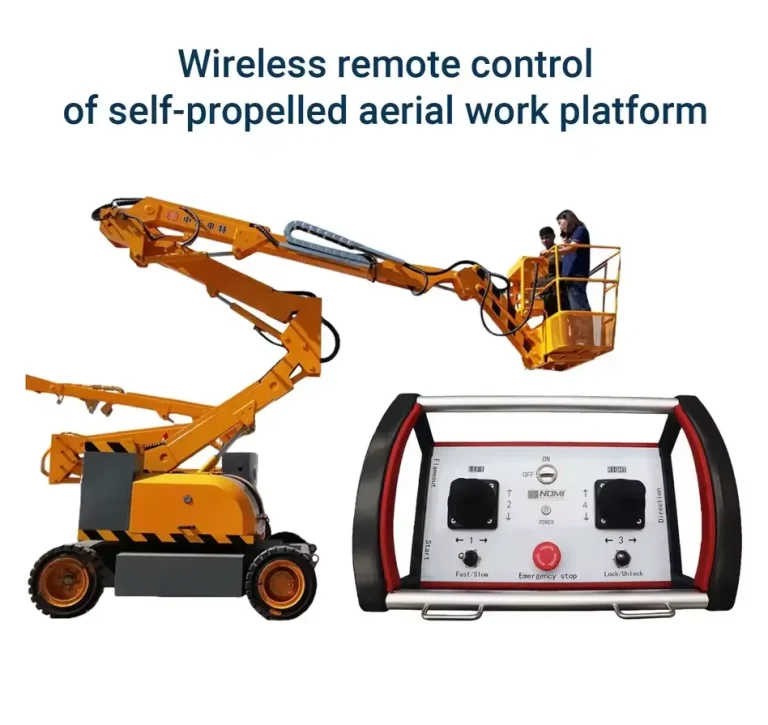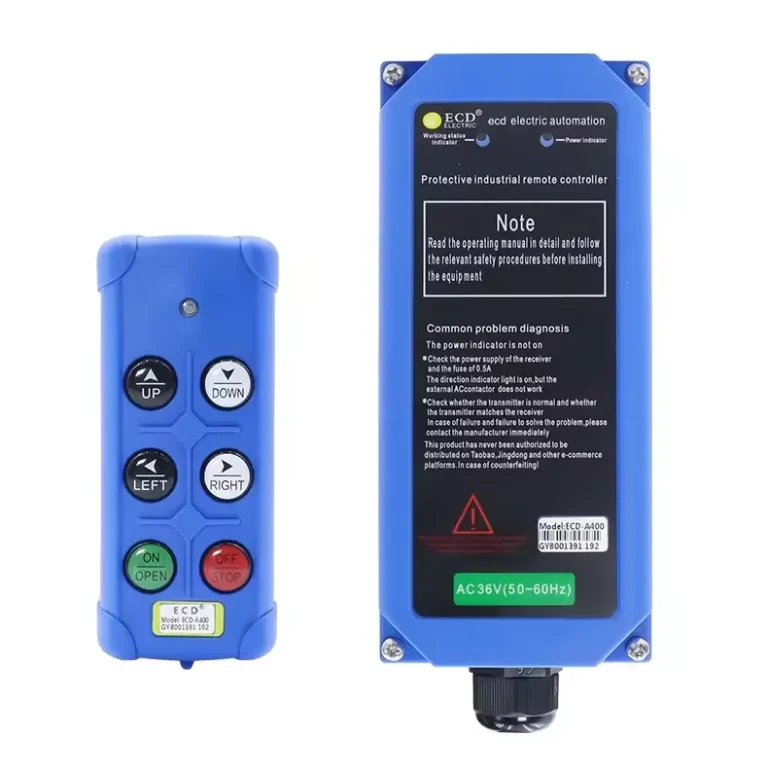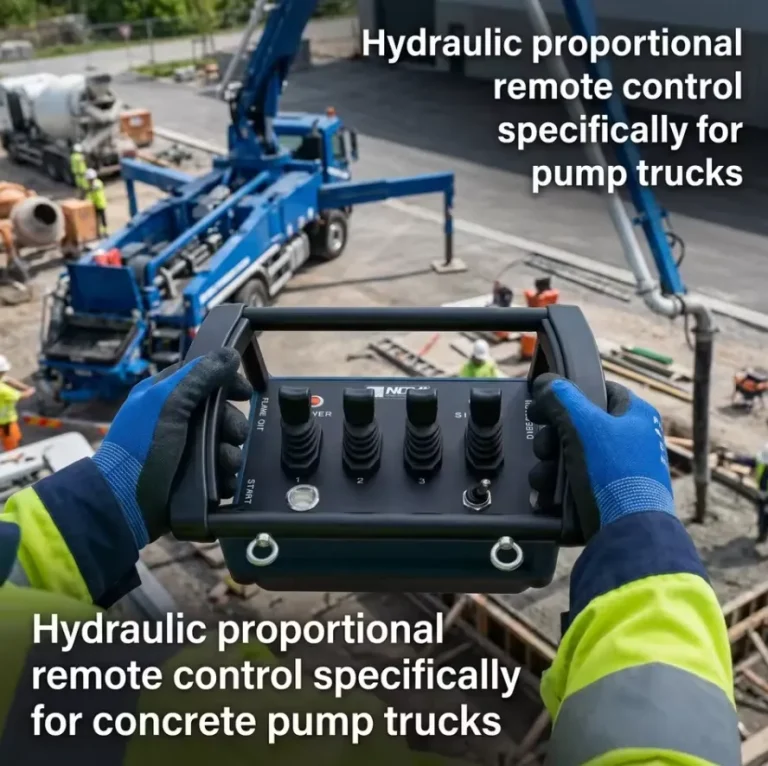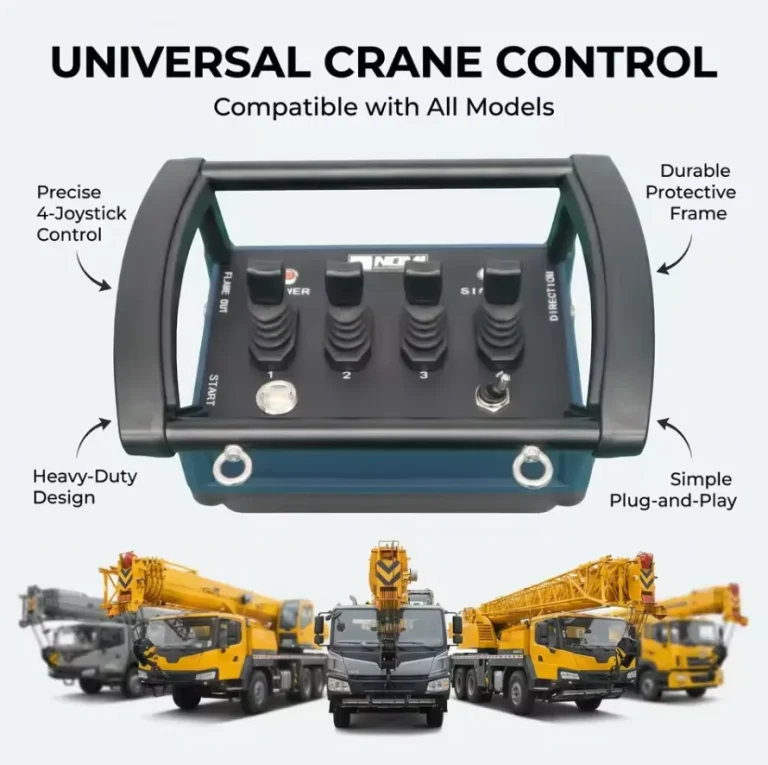

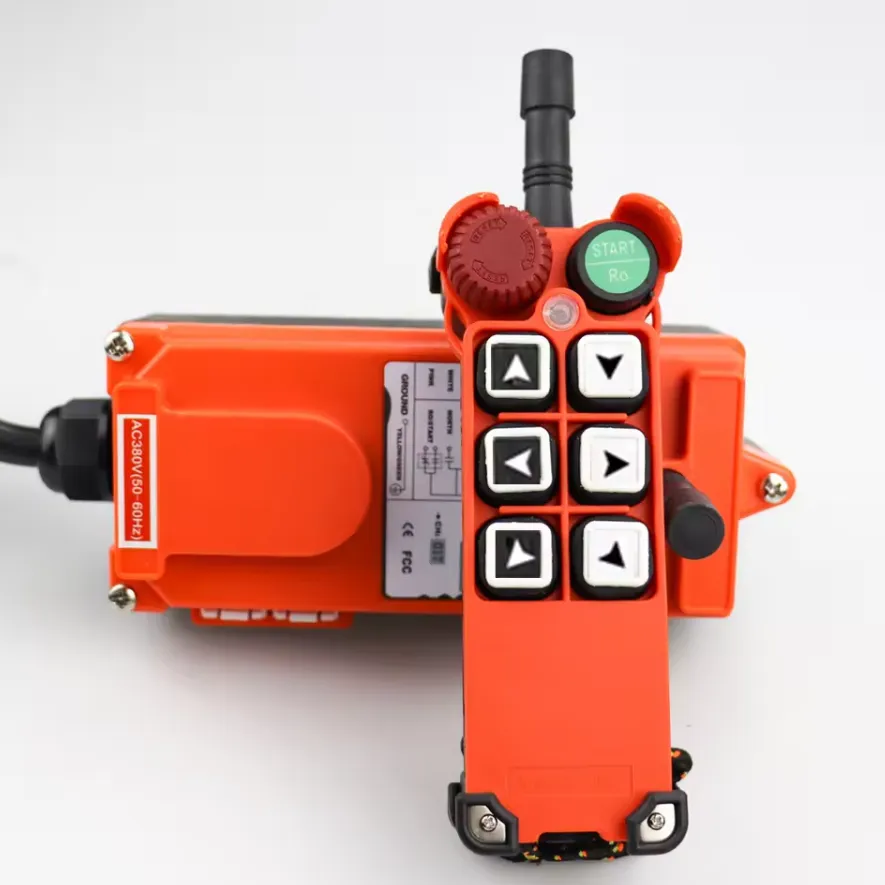
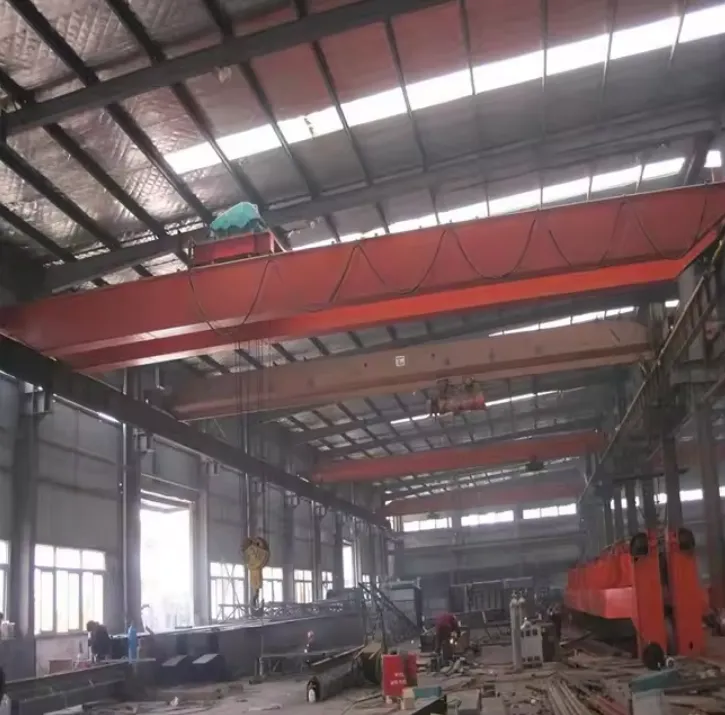
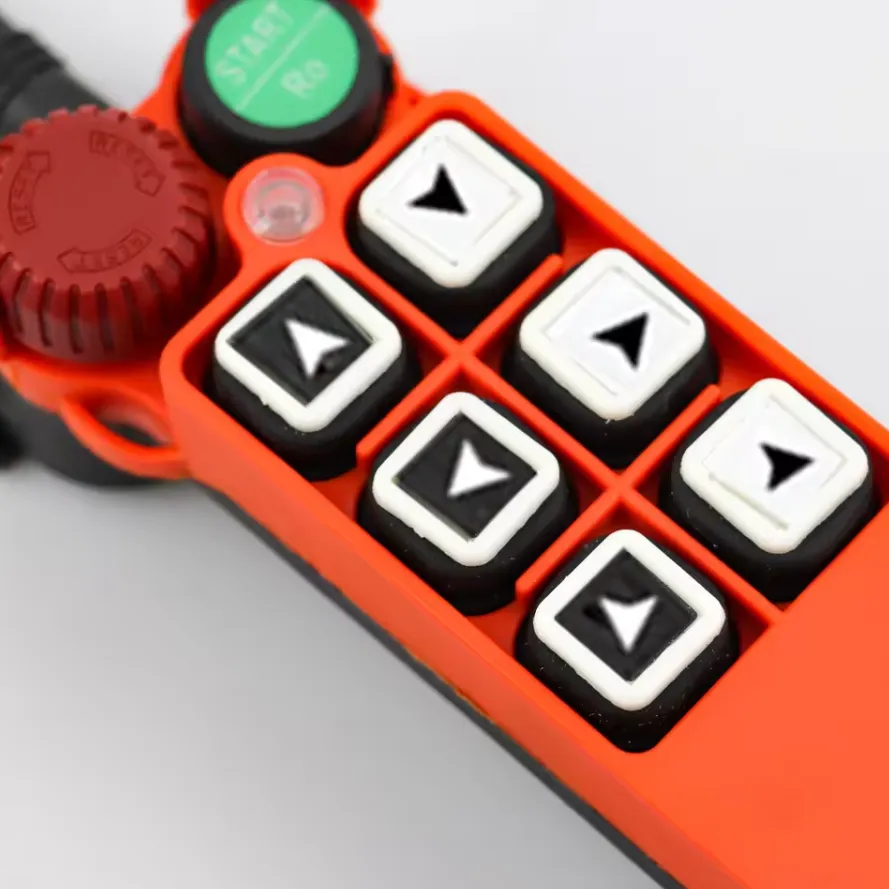
Remote control nirkabel untuk crane overhead industri dengan konfigurasi 6 hingga 12 tombol merupakan solusi standar industri untuk pengelolaan crane yang aman, efisien, dan dapat dioperasikan oleh satu orang operator di lingkungan manufaktur, pergudangan, pengolahan baja, dan pengangkutan beban berat. Pengendali nirkabel gantung dengan 6–12 tombol yang dirancang dengan tepat dapat menggantikan stasiun tarik tali berkabel, menghilangkan risiko kabel yang kusut, dan memberikan kebebasan posisi penuh kepada operator sambil mempertahankan waktu respons perintah di bawah 100 milidetik. Baik Anda sedang melakukan retrofit pada kran jembatan yang sudah ada atau menentukan spesifikasi kontrol untuk sistem gantry baru, referensi ini mencakup setiap aspek teknis, regulasi, dan operasional yang Anda butuhkan.
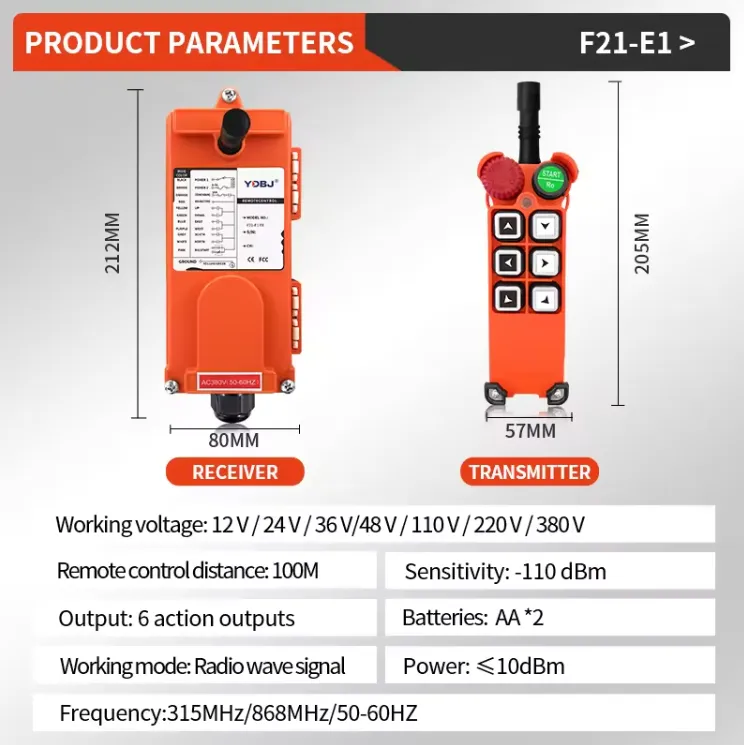
| gunakan | Derek | kode | Salin Kode (Opsional) |
| Jarak Pengendalian | 100 meter (328,08 kaki) | fungsi | Tahan air, Tahan guncangan |
| bahan | ABS, Plastik | cetakan khusus | Tidak |
| tombol | 6 | tempat asal | Henan, Tiongkok |
| nomor model | F21-E1 | MOQ | 1 |
| Nama Merek | Nomi | Nama produk | Pengendali Jarak Jauh Industri |
| Model | F21-4S | Sertifikasi | CE FCC |
| Bahan | Plastik dan Silikon | Tempat Asal | Henan, Tiongkok |
| Fungsi | Tahan air dan tahan debu | Tegangan | 12–380 V |
| Jarak pengendalian | sekitar 100 m | Frekuensi | 868 MHz |
| Unit yang Dijual | Satu barang | Ukuran kemasan tunggal | 33 × 23 × 21 cm |
| Berat kotor satuan | 1.500 kg |
Apa Itu Remote Control Nirkabel untuk Derek Langit-Langit Industri dan Mengapa Jumlah Tombolnya Penting?
Remote control nirkabel untuk crane overhead industri adalah pemancar elektronik genggam yang mengirimkan perintah frekuensi radio (RF) yang terenkripsi ke unit penerima yang terpasang pada panel listrik crane, untuk mengendalikan fungsi-fungsi seperti pergerakan jembatan, pergerakan troli, pengangkatan hoist, penurunan hoist, klakson, dan penghentian darurat. Sistem ini menggantikan — atau melengkapi — pengendali tombol tekan berkabel tradisional, sehingga membebaskan operator dari keterikatan kabel tetap dan memungkinkan pergerakan tanpa hambatan di sekitar zona beban.
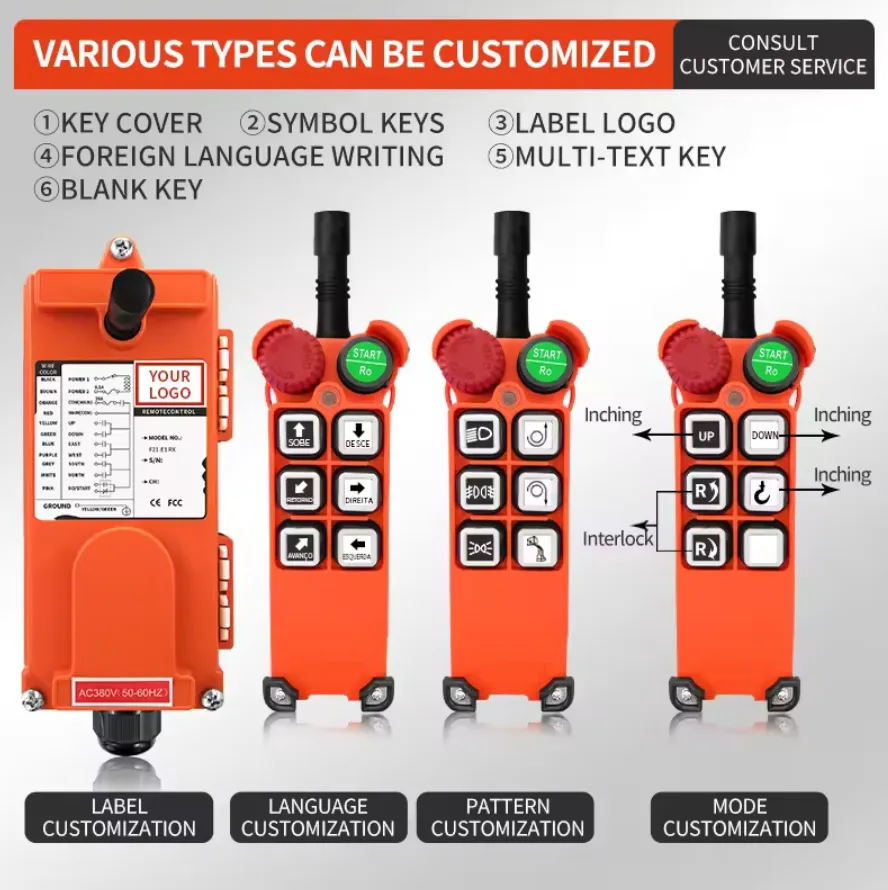
Jumlah tombol — khususnya dalam rentang 6 hingga 12 tombol — secara langsung menentukan berapa banyak fungsi derek terpisah yang dapat dikendalikan operator dari unit genggam. Transmitter 6 tombol biasanya menangani kontrol kecepatan tunggal pada tiga sumbu gerak: jembatan ke kiri/kanan, troli maju/mundur, dan pengangkat naik/turun, ditambah tombol E-stop. Transmitter 12 tombol memperluas kemampuan ini dengan mencakup pengendalian dua kecepatan pada sumbu yang sama, fungsi tambahan (seperti hoist kedua, penjepit bermotor, atau kait berputar), serta tombol fungsi khusus untuk klakson dan pengabaian batas.
Pemilihan jumlah tombol bukan sekadar soal kuantitas fitur. Hal ini berkaitan dengan penyesuaian antarmuka kontrol terhadap kompleksitas operasional derek serta beban kognitif yang ditanggung operator. Memilih jumlah tombol yang terlalu sedikit memaksa penggunaan solusi sementara yang memperlambat produksi dan menimbulkan risiko kesalahan. Sebaliknya, memilih terlalu banyak tombol pada derek balok tunggal yang sederhana justru menambah kompleksitas yang tidak perlu dan memperpanjang waktu pelatihan. Kami telah menyaksikan fasilitas-fasilitas yang melakukan kedua kesalahan tersebut, dan dalam kedua kasus tersebut, konsekuensinya dapat diukur dari penurunan produktivitas dan kejadian keselamatan yang nyaris terjadi.
Apa Perbedaan Fungsi dan Penggunaan Antara Remote Nirkabel Crane 6 Tombol dan 12 Tombol?
Menguraikan Konfigurasi Kunci Standar
Industri ini telah menetapkan beberapa konfigurasi jumlah tombol standar, yang masing-masing sesuai dengan kemampuan fungsional yang telah ditentukan. Berikut ini adalah rincian terstrukturnya:
| Jumlah Kunci | Fungsi Standar | Jenis Derek yang Umum | Aplikasi Umum |
|---|---|---|---|
| 6 Tombol | 3 sumbu, kecepatan tunggal + tombol darurat | Balok tunggal, monorel | Perakitan ringan, penyimpanan, pemeliharaan |
| 8 Tombol | 3 sumbu, kecepatan tunggal + klakson + fungsi tambahan + tombol darurat | Balok tunggal atau ganda | Manufaktur umum, beban sedang |
| 10-Tombol | 3 sumbu, dua kecepatan + klakson + tombol darurat | Jembatan gantung dengan dua balok | Fabrikasi baja, industri otomotif, pabrik kertas |
| 12-Tombol | 3 sumbu, dua kecepatan + 2 fungsi tambahan + klakson + tombol darurat | Derek balok ganda, derek khusus | Pabrik pengecoran, galangan kapal, bengkel mesin pres berat |
| 16-Tombol+ | Multifungsi lengkap + multi-hoist | Portal, gantry, jembatan layang | Penanganan pelabuhan, pembangkit listrik tenaga air, peleburan |
Signifikansi Praktis Pengendalian Dua Kecepatan
Peralihan dari pemancar 6 tombol ke pemancar 10 tombol atau 12 tombol sering kali berkaitan dengan kontrol dua kecepatan. Dalam konfigurasi dua kecepatan, menekan tombol gerakan sekali akan mengaktifkan kecepatan lambat (biasanya 10-20% dari kecepatan maksimum), sedangkan menekannya untuk kedua kalinya — atau menekan tombol khusus yang terpisah — akan mengaktifkan kecepatan penuh. Pendekatan bimodal ini memberikan operator kendali yang presisi selama penempatan beban tanpa mengorbankan waktu siklus selama pergerakan transit.
Dalam aplikasi presisi seperti penanganan cetakan di bengkel pengepresan, pemindahan peralatan fasilitas nuklir, atau pemasangan komponen turbin, perbedaan antara sistem kendali satu kecepatan dan dua kecepatan dapat menentukan apakah beban dapat ditempatkan secara akurat pada upaya pertama atau memerlukan beberapa siklus penyesuaian posisi. Selain berdampak pada produktivitas, upaya penyesuaian posisi yang berulang-ulang meningkatkan beban kelelahan kumulatif pada struktur derek dan tali kawat.
Tombol Fungsi Tambahan: Apa Sebenarnya yang Dikendalikan oleh Tombol-Tombol Tersebut
Pada unit dengan 12 tombol, tombol tambahan (biasanya diberi label AUX1 dan AUX2, atau F1 dan F2) dapat dikonfigurasi oleh teknisi pemasang sistem untuk mengendalikan berbagai fungsi sekunder:
- Hoist kedua (pada derek dua hoist)
- Pengendali kait berputar atau pengendali putar dengan bantalan bola
- Pengaktifan/penonaktifan magnet bermotor
- Pengaktif/penonaktif pengangkat vakum
- Penyesuaian lebar batang penyebar
- Penyalaan lampu peringatan
- Pembukaan/penutupan ember pengambil bermotor
- Pemasangan pin pengunci pada gerbong pengangkut
Fleksibilitas dalam penugasan fungsi tambahan merupakan salah satu faktor pembeda utama antara sistem remote nirkabel kelas pemula dan kelas profesional. Sistem kelas premium memungkinkan penugasan ulang fungsi tambahan di lapangan tanpa perlu mengakses kabel internal penerima, dengan menggunakan antarmuka perangkat lunak konfigurasi melalui USB atau Bluetooth.
Apa Saja Komponen Teknis Utama yang Terdapat di Dalam Sistem Remote Nirkabel untuk Derek?
Arsitektur Pemancar
Pemancar genggam merupakan antarmuka utama bagi operator. Arsitektur internalnya menentukan baik keandalan maupun kinerja ergonomisnya:
Unit Mikrokontroler (MCU): Memproses masukan tombol, mengkodekan perintah ke dalam protokol transmisi, mengelola daya baterai, dan menangani logika pemasangan dengan penerima. Pemancar kelas industri menggunakan MCU kelas otomotif yang dirancang untuk beroperasi pada suhu -40°C hingga +85°C.
Modul RF: Chip transceiver radio yang memodulasi sinyal yang telah dikodekan ke frekuensi pembawa. Sebagian besar sistem modern menggunakan chip pita ISM sub-GHz (433 MHz, 868 MHz, atau 915 MHz, tergantung wilayahnya) yang dilengkapi dengan kemampuan lompatan frekuensi terintegrasi.
Matriks Tombol: Rakitan papan tombol mekanis atau membran. Pemancar industri menggunakan papan tombol membran bersertifikasi IP yang dilengkapi umpan balik taktil dan gaya penekanan tinggi (biasanya 1,5 hingga 3 N) untuk mencegah aktivasi yang tidak disengaja. Aktivasi dengan menekan lama untuk fungsi-fungsi kritis seperti penghentian darurat (E-stop) atau operasi tambahan memberikan lapisan perlindungan tambahan.
Sirkuit Pengelolaan Daya: Mengatur pengosongan daya baterai, memicu peringatan baterai lemah (suara dan visual), serta mengontrol aktivasi mode tidur setelah batas waktu tidak aktif yang dapat diprogram. Sebagian besar unit menggunakan 4 buah baterai alkaline AA dengan masa pakai di lapangan 40 hingga 120 jam, tergantung pada siklus kerja, atau paket baterai isi ulang NiMH/lithium.
Perumahan: Casing berbahan ABS atau polikarbonat yang tahan benturan, dilengkapi lapisan karet cetakan untuk perlindungan terhadap benturan saat terjatuh. Tingkat perlindungan IP standarnya berkisar antara IP65 hingga IP67. Casing ini biasanya dilengkapi klip sabuk atau titik pengikatan tali pengaman, serta fasilitas untuk memasang tali pergelangan tangan atau tali bahu.
Arsitektur Penerima
Unit penerima, yang dipasang di dalam panel listrik utama derek atau di dalam kotak khusus pada jembatan derek, menjalankan fungsi sebaliknya: unit ini mendekode sinyal RF yang masuk dan mengubahnya menjadi perintah keluaran relai atau solid-state yang mengendalikan kontaktor motor derek.
| Komponen Penerima | Fungsi | Rentang Spesifikasi |
|---|---|---|
| Bagian Depan RF | Menerima dan mendemodulasi sinyal RF | Sensitivitas: -110 hingga -120 dBm |
| Mikrokontroler | Mendekode protokol perintah, mengelola keluaran | MCU Industri, -40°C hingga +85°C |
| Relay Keluaran / SSR | Sirkuit kontaktor motor sakelar | 8A hingga 16A per relai, 250 VAC |
| Timer Pengawas | Memicu tombol darurat jika sinyal terputus | Dapat diatur antara 0,3 hingga 2,0 detik |
| Indikator Status | Tampilan LED saluran yang aktif, kode kesalahan | 4–8 LED berwarna-warni |
| Catu Daya | Mengubah tegangan suplai panel crane menjadi tegangan operasi | Masukan 24 VAC/DC, 110 VAC, atau 220 VAC |
| Antena | Menerima sinyal RF dari pemancar | Jalur kabel atau jalur PCB; eksternal atau internal |
| Blok Terminal | Antarmuka kabel ke rangkaian pengendali derek | 12 hingga 32 terminal, tergantung pada jumlah saluran |
Proses Pemasangan dan Pengikatan
Setiap pasangan pemancar-penerima beroperasi menggunakan kode digital yang unik, sehingga mencegah terjadinya pengendalian silang antara derek-derek yang berdekatan di lantai fasilitas yang sama. Proses pengikatan dilakukan dengan menekan kombinasi tombol pada pemancar secara bersamaan saat menyalakan penerima dalam mode pemrograman; setelah itu, ID pemancar yang unik disimpan dalam memori non-volatil penerima. Sebagian besar sistem profesional dapat menyimpan 2 hingga 4 ID pemancar secara bersamaan, sehingga pemancar cadangan dapat dipasangkan terlebih dahulu dan siap untuk segera digunakan sebagai pengganti jika unit utama rusak atau hilang.
Protokol Transmisi dan Pita Frekuensi Apa Saja yang Digunakan pada Remote Control Derek Langit-langit?
Alokasi Pita Frekuensi menurut Wilayah
Frekuensi operasi remote nirkabel crane harus sesuai dengan peraturan telekomunikasi setempat, karena pita frekuensi ISM (Industrial, Scientific, and Medical) berbeda-beda di setiap negara:
| Wilayah | Pita Frekuensi Utama | Badan Pengatur |
|---|---|---|
| Amerika Serikat dan Kanada | 902–928 MHz (900 MHz ISM) | FCC (Bagian 15) |
| Uni Eropa | 433,05–434,79 MHz, 868,0–868,6 MHz | ETSI EN 300 220 |
| Australia dan Selandia Baru | 915–928 MHz | ACMA |
| Jepang | 426 MHz, 429 MHz | MIC Jepang |
| Tiongkok | 433 MHz, 470–510 MHz | MIIT |
| India | 865–867 MHz | WPC |
Penggunaan pemancar di luar pita frekuensi yang telah disertifikasi merupakan tindakan ilegal di sebagian besar yurisdiksi dan dapat mengakibatkan penyitaan peralatan, denda yang besar, serta gangguan terhadap sistem-sistem penting lainnya, termasuk komunikasi layanan darurat.
Teknologi Frekuensi-Hopping Spread Spectrum (FHSS)
FHSS merupakan teknologi transmisi yang paling umum digunakan pada remote control derek industri kelas profesional. Pemancar dan penerima secara pseudo-acak berganti-ganti frekuensi operasi di antara sekumpulan saluran yang telah ditentukan dengan kecepatan beberapa ratus lompatan per detik. Keunggulan utamanya:
- Penolakan gangguan: Bahkan di fasilitas yang memiliki puluhan perangkat nirkabel, kemungkinan terjadinya tabrakan sinyal yang berkepanjangan pada frekuensi yang sama pada waktu yang sama secara statistik dapat diabaikan.
- Ketahanan terhadap penyadapan: Penyadapan sinyal tidak mungkin dilakukan tanpa mengetahui urutan lompatan, yang bersifat unik bagi setiap pasangan perangkat.
- Kepatuhan terhadap peraturan: Sistem FHSS memenuhi syarat untuk batas daya pancar yang lebih tinggi berdasarkan FCC Bagian 15, sehingga jangkauan operasinya lebih luas dibandingkan dengan sistem pita sempit frekuensi tetap.
Latensi Sinyal dan Waktu Respons Perintah
Waktu respons perintah — jeda antara menekan tombol dan pengaktifan kontaktor motor derek — merupakan spesifikasi krusial untuk operasi presisi. Dalam sistem FHSS yang dirancang dengan baik, latensi transmisi satu arah biasanya berkisar antara 5 hingga 20 milidetik. Jika ditambah dengan waktu pemrosesan penerima dan penundaan pengaktifan kontaktor, waktu respons sistem secara keseluruhan biasanya berkisar antara 50 hingga 150 milidetik. Sebagai perbandingan, pengendali gantung yang terhubung secara kabel memiliki latensi elektronik mendekati nol, meskipun dalam praktiknya, keterlambatan mekanis kabel dapat menambah 20 hingga 50 milidetik.
Waktu respons di atas 200 milidetik dapat dirasakan oleh operator dan dapat membuat penempatan beban secara presisi menjadi jauh lebih sulit. Saat mengevaluasi sistem nirkabel yang bersaing, mintalah spesifikasi latensi yang konkret, alih-alih hanya mengandalkan klaim kualitatif seperti “respons instan.”
Standar Keselamatan dan Sertifikasi Apa Saja yang Harus Dipenuhi oleh Remote Nirkabel untuk Derek?
Lanskap Regulasi Global
Sistem kendali jarak jauh nirkabel untuk derek gantung beroperasi di persimpangan dua bidang regulasi: kompatibilitas elektromagnetik dan keselamatan derek. Kedua persyaratan tersebut harus dipenuhi secara bersamaan.
Amerika Serikat:
- FCC Bagian 15 (Perangkat Nirkabel Tanpa Izin)
- OSHA 29 CFR 1910.179 (Derek Langit-langit dan Derek Gantry)
- ASME B30.2 (Derek Langit-langit dan Derek Gantry)
- ASME B30.17 (Derek Gantung dan Derek Tergantung)
- Spesifikasi CMAA No. 70 dan No. 74 (Asosiasi Produsen Derek Amerika)
Uni Eropa:
- Petunjuk Perangkat Radio 2014/53/EU (RED)
- Petunjuk Mesin 2006/42/EC
- Petunjuk EMC 2014/30/EU
- EN 60068 (Pengujian Lingkungan untuk Peralatan Elektronik)
- EN 13557:2003+A2:2008 (Derek: Perangkat Pengendali dan Pos Pengendali)
Internasional:
- ISO 13849-1 (Keamanan Mesin: Komponen Sistem Pengendalian yang Berkaitan dengan Keamanan)
- IEC 61800-5-2 (Keamanan Fungsional untuk Sistem Penggerak Daya)
- ISO 23853:2021 (Derek: Sistem Pengendali Jarak Jauh Nirkabel)
ISO 23853: Standar Khusus untuk Pengendali Jarak Jauh Radio untuk Derek
ISO 23853:2021 adalah standar internasional yang paling relevan secara langsung untuk sistem pengendali jarak jauh nirkabel pada crane overhead. Standar ini menetapkan persyaratan untuk:
- Kategori keselamatan fungsional (hingga Kategori 3 / PLd sesuai ISO 13849-1).
- Metrik keandalan transmisi (Tingkat Kesalahan Bit di bawah 10⁻⁶).
- Persyaratan batas waktu watchdog (hilangnya sinyal harus memicu penghentian aman dalam waktu 1 detik).
- Persyaratan anti-gangguan (FHSS atau yang setara).
- Protokol pengujian lingkungan (suhu, kelembapan, getaran, jatuh).
- Persyaratan penandaan dan dokumentasi.
Kami secara konsisten merekomendasikan agar tim pengadaan mewajibkan adanya dokumentasi kepatuhan terhadap ISO 23853, alih-alih menerima pernyataan kesesuaian yang disampaikan sendiri tanpa bukti pengujian.
Persyaratan Kategori Keselamatan Berdasarkan Aplikasi
| Tingkat Risiko Aplikasi | Kategori Keselamatan yang Diwajibkan | PL yang Umum | Contoh Aplikasi |
|---|---|---|---|
| Rendah (tidak ada personel yang sedang memikul beban) | Kategori 1 / PLb | PLb | Penumpukan rak penyimpanan di lorong-lorong yang kosong |
| Sedang (paparan insidental terhadap personel) | Kategori 2 / PLC | PLc | Pengangkatan umum di lantai produksi |
| Tinggi (jarak antar personel reguler) | Kategori 3 / PLd | PLd | Pengangkatan di atas jalur perakitan, logam cair |
| Sangat Tinggi (konsekuensi kegagalan yang ekstrem) | Kategori 4 / PLe | PLe | Penanganan bahan nuklir dan bahan peledak |
Fitur Keselamatan Penting yang Harus Ada
Sebelum sistem pengendali jarak jauh nirkabel apa pun dioperasikan pada crane gantung, kami memastikan adanya fitur-fitur keselamatan berikut yang tidak dapat ditawar-tawar:
- Tombol E-stop khusus dengan mekanisme penggerak berbentuk kepala jamur, yang memerlukan pengaturan ulang secara manual setelah diaktifkan.
- Operasi "Dead man" / "hold-to-run" pada semua fungsi gerakan (hoist langsung berhenti saat tombol dilepaskan).
- Waktu tunggu pengawas yang menghentikan seluruh gerakan derek dalam waktu 1 detik setelah sinyal terputus.
- Peringatan baterai lemah dengan fitur penguncian gerakan otomatis saat daya baterai turun di bawah ambang batas pengoperasian yang aman.
- Kode pasangan digital yang unik mencegah terjadinya interferensi antar-kendali dengan derek-derek di sekitarnya.
- Perlindungan anti-pengaktifan memerlukan urutan reset yang disengaja sebelum perintah gerakan dapat diterima setelah penghentian darurat (E-stop) atau terputusnya aliran listrik.
- Wadah dengan tanda perusakan dengan akses ke pengencang yang hanya dapat dilakukan menggunakan alat khusus.
Bagaimana Cara Memilih Remote Nirkabel yang Tepat untuk Sistem Derek Langit-Langit Anda?
Metodologi Seleksi Terstruktur
Pemilihan remote nirkabel untuk crane overhead merupakan keputusan di bidang rekayasa sistem, bukan sekadar proses pengadaan komponen. Pemancar dan penerima harus sesuai dengan arsitektur kelistrikan crane, lingkungan fisik, siklus kerja operasional, serta kerangka regulasi yang berlaku. Kami menggunakan proses terstruktur berikut ini:
Langkah 1 – Menentukan Fungsi-Fungsi Derek yang Diperlukan
Sebutkan setiap sumbu gerak dan fungsi tambahan yang harus dijalankan oleh crane tersebut. Hitung jumlah minimum masukan kendali terpisah yang diperlukan. Tambahkan kapasitas perluasan 20% untuk mengakomodasi perubahan peralatan di masa mendatang.
Langkah 2 – Menentukan Tahapan Kecepatan yang Diperlukan
Pastikan apakah diperlukan pengendalian satu kecepatan atau dua kecepatan (atau kecepatan variabel melalui antarmuka VFD). Pengendalian dua kecepatan dan pengendalian proporsional VFD memerlukan jenis pemancar tertentu serta konfigurasi keluaran penerima yang spesifik.
Langkah 3 – Menentukan Parameter Lingkungan
Identifikasi kisaran suhu lingkungan, tingkat kelembapan, paparan debu dan partikel, keberadaan bahan kimia korosif, paparan sinar UV, serta risiko benturan atau terendam air. Faktor-faktor ini menentukan tingkat perlindungan IP yang diperlukan, spesifikasi suhu pengoperasian, dan bahan casing.
Langkah 4 – Memastikan Kompatibilitas Catu Daya
Periksa tegangan kendali yang tersedia pada panel derek (24 VDC, 24 VAC, 110 VAC, 220 VAC) dan pastikan tegangan masukan catu daya penerima sesuai. Perlu diperhatikan bahwa sebagian besar penerima dapat menerima rentang tegangan masukan tertentu, namun pastikan hal ini sebelum memesan.
Langkah 5 – Menilai Lingkungan Gangguan
Lakukan survei terhadap fasilitas tersebut untuk mengidentifikasi perangkat nirkabel yang ada dan beroperasi pada pita frekuensi ISM. Di lingkungan nirkabel yang padat — seperti pabrik perakitan otomotif yang memiliki ratusan titik akses WiFi, sensor Bluetooth, dan perangkat RF lainnya — tentukan sistem FHSS dengan bandwidth hopping terluas yang tersedia.
Langkah 6 – Menentukan Persyaratan Rentang Operasi
Ukur jarak maksimum antara posisi kerja yang diharapkan bagi operator dan crane pada ujung terjauh jangkauan geraknya. Tambahkan margin 30% untuk atenuasi gelombang radio akibat struktur. Pastikan jangkauan sistem yang ditentukan memenuhi persyaratan ini dalam kondisi gelombang radio terburuk di fasilitas tersebut.
Langkah 7 – Memverifikasi Paket Kepatuhan Regulasi
Pastikan sistem tersebut telah memiliki sertifikasi FCC, CE, atau sertifikasi regional lain yang diwajibkan. Mintalah Surat Pernyataan Kesesuaian, laporan pengujian dari laboratorium terakreditasi, serta dokumen kepatuhan terhadap standar ISO 23853.
Langkah 8 – Mengevaluasi Infrastruktur Dukungan Pemasok
Pastikan pemasok dapat menyediakan: pemancar pengganti dengan waktu tunggu yang tidak melebihi jangka waktu pemeliharaan Anda, kemampuan pembaruan firmware, dukungan teknis lokal, serta layanan kalibrasi/perbaikan.
Tabel Perbandingan Spesifikasi Remote Nirkabel
| Spesifikasi | Kelas Ekonomi | Kelas Profesional | Kelas Industri |
|---|---|---|---|
| Opsi Jumlah Kunci | 6, 8 | 6, 8, 10, 12 | 6 hingga 24+ |
| Pita Frekuensi | Tetap pada 433 MHz | FHSS 433/868 MHz | FHSS 433/868/915 MHz |
| Jangkauan Operasional | 50–100 m | 100–200 m | 200–500 m |
| Peringkat IP (Pemancar) | IP54 | IP65 | IP67–IP68 |
| Suhu Operasional | -10°C hingga +55°C | -20°C hingga +70°C | -40°C hingga +85°C |
| Daya Tahan Baterai | 20–40 jam | 60–100 jam | 100–200+ jam |
| Pengaturan Kecepatan | Satu kecepatan | Satu atau dua kecepatan | VFD proporsional |
| Kode Pemasangan | Tetap atau 8-bit | 16-bit | terenkripsi 32-bit |
| Kategori Keselamatan | Kategori 1 / PLb | Kategori 2-3 / PLc-d | Kategori 3-4 / PLd-e |
| Sertifikasi | CE yang dinyatakan sendiri | CE, FCC, RoHS | CE, FCC, ISO 23853, ATEX |
| Garansi | 6–12 bulan | 2 tahun | 3–5 tahun |
| Kisaran Harga Umum | $80-$200 | $250-$600 | $700-$2,500+ |
Bagaimana Cara Memasang Sistem Pengendali Jarak Jauh Nirkabel pada Overhead Crane yang Sudah Ada?
Penilaian Pra-Pemasangan
Sebelum memasang sistem nirkabel pada crane yang sudah ada, seorang teknisi listrik yang berkualifikasi atau teknisi servis crane harus melakukan penilaian awal yang mencakup:
- Peninjauan skema kelistrikan crane yang ada untuk mengidentifikasi tegangan kumparan kontaktor dan arsitektur rangkaian pengendali.
- Pemeriksaan untuk memastikan bahwa sistem pengereman crane yang ada (elektromagnetik, regeneratif, atau injeksi DC) kompatibel dengan sinyal penghentian nirkabel.
- Pastikan bahwa sakelar batas (atas, bawah, dan ujung perjalanan) berfungsi dengan baik dan telah disetel dengan benar.
- Penilaian ruang yang tersedia di kotak listrik utama derek untuk pemasangan penerima.
- Pengukuran tegangan suplai panel kontrol untuk pemilihan catu daya penerima.
Gambaran Umum Pemasangan Langkah demi Langkah
Tahap 1 – Pemasangan Penerima: Pasang unit penerima di dalam panel listrik utama derek atau di dalam kotak pelindung terpisah yang bersertifikasi NEMA/IP yang dipasang pada jembatan derek. Atur posisi antena penerima agar memiliki garis pandang yang optimal ke lantai operasi, biasanya di bagian bawah balok jembatan.
Tahap 2 – Pemasangan Sumber Daya: Hubungkan input catu daya penerima ke sumber catu daya sirkuit kendali panel derek. Sebagian besar penerima profesional mendukung input tegangan mulai dari 24 VDC hingga 220 VAC dengan fitur deteksi tegangan otomatis.
Tahap 3 – Pemasangan Kabel Keluaran: Hubungkan keluaran relai penerima ke rangkaian kumparan kontaktor motor derek. Setiap keluaran relai sesuai dengan satu fungsi kendali (misalnya, relai 1 = mengangkat, relai 2 = menurunkan, relai 3 = jembatan ke arah timur, dan seterusnya). Output E-stop dihubungkan secara seri dengan rangkaian relai pengaman utama crane.
Fase 4 – Pengikatan Pemancar-Penerima: Lakukan prosedur pemasangan untuk menghubungkan pemancar ke penerima. Catat kode pemasangan yang unik. Pasangkan setidaknya satu pemancar cadangan secara bersamaan.
Tahap 5 – Pengujian Fungsi: Setelah beban diturunkan dari derek, uji setiap fungsi kendali pada seluruh rentang pergerakan. Pastikan fungsi penghentian darurat (E-stop) berfungsi pada jarak operasi maksimum. Uji batas waktu watchdog dengan mematikan pemancar dan memastikan derek berhenti dalam batas waktu yang ditentukan.
Fase 6 – Pengujian Beban: Lakukan uji beban uji pada kapasitas terukur derek, untuk memastikan bahwa semua fungsi beroperasi dengan benar saat dibebani dan bahwa rem mampu menahan beban dengan aman saat terjadi pemadaman listrik.
Tahap 7 – Dokumentasi: Perbarui skema kelistrikan crane agar mencerminkan pemasangan sistem nirkabel. Buat entri catatan pemeliharaan yang memuat tanggal pemasangan, identitas teknisi pemasang, dan hasil pengujian.
Kesalahan Pemasangan Umum yang Harus Dihindari
| Kesalahan | Akibat | Praktik yang Benar |
|---|---|---|
| Antena yang dipasang di dalam wadah logam | Penurunan jangkauan yang parah | Pasang antena di bagian luar atau di tepi casing |
| Tombol darurat (E-stop) yang terhubung ke satu output relai saja | Titik kegagalan tunggal pada rangkaian keselamatan | Hubungkan tombol darurat (E-stop) melalui rangkaian relai pengaman utama derek |
| Nilai tegangan relai yang salah | Kerusakan kontaktor atau kebakaran | Sesuaikan nilai keluaran relai dengan tegangan kumparan kontaktor secara tepat |
| Tidak ada pemancar cadangan yang terpasangkan | Penghentian produksi akibat kerusakan pemancar | Selalu pasangkan minimal satu pemancar cadangan saat pemasangan |
| Melewati uji batas waktu watchdog | Respons yang tidak diketahui terhadap hilangnya sinyal | Uji perangkat pemantau pada jangkauan maksimum dan catat hasilnya |
| Menggunakan pita frekuensi yang salah untuk wilayah tersebut | Pelanggaran peraturan, campur tangan | Pastikan sertifikasi FCC/CE sesuai dengan negara tempat perangkat dipasang |
Apa Saja Persyaratan Pemeliharaan dan Pemeriksaan untuk Remote Nirkabel Derek?
Kerangka Kerja Inspeksi Regulasi
OSHA 29 CFR 1910.179 mewajibkan agar derek gantung — termasuk seluruh sistem kendalinya — menjalani pemeriksaan harian sebelum dioperasikan oleh orang yang ditunjuk, pemeriksaan bulanan yang didokumentasikan, serta pemeriksaan menyeluruh tahunan oleh orang yang berkualifikasi. Sistem kendali jarak jauh nirkabel merupakan bagian dari sistem kendali derek dan termasuk dalam ruang lingkup persyaratan ini.
ASME B30.2 menambahkan bahwa setiap modifikasi pada sistem kendali derek (termasuk pemasangan remote nirkabel) harus didokumentasikan dan disetujui oleh pihak yang berkompeten sebelum derek tersebut kembali beroperasi.
Jadwal Perawatan yang Direkomendasikan untuk Remote Kontrol Nirkabel Derek
| Frekuensi | Tugas Pemeriksaan/Pemeliharaan |
|---|---|
| Sebelum setiap shift | Uji semua fungsi gerak; periksa apakah tombol darurat (E-stop) berfungsi; periksa indikator tingkat daya baterai |
| Mingguan | Periksa casing pemancar apakah ada retakan, kerusakan segel, atau keausan tombol; bersihkan permukaan papan tombol |
| Bulanan | Periksa antena penerima apakah ada kerusakan fisik atau korosi; pastikan semua keluaran relai berfungsi dengan benar; periksa sambungan blok terminal apakah ada yang longgar |
| Triwulanan | Uji jangkauan penuh pada jarak operasi maksimum; verifikasi waktu habis (timeout) watchdog menggunakan osiloskop atau pengatur waktu; periksa kedap udara pada casing penerima |
| Setiap tahun | Lakukan uji fungsi secara menyeluruh dalam kondisi beban; periksa apakah ada korosi pada kontak baterai internal pemancar; pastikan firmware sudah yang terbaru; kalibrasi pembatas beban jika terintegrasi |
| Setelah terjatuh atau terkena benturan | Lakukan pemeriksaan menyeluruh sebelum dioperasikan kembali; uji semua fungsi; periksa bodi untuk memastikan tidak ada retakan tersembunyi |
Praktik Terbaik dalam Pengelolaan Baterai
Kegagalan baterai pada pemancar crane di tengah shift merupakan salah satu penyebab paling umum terjadinya penghentian produksi yang tidak direncanakan di fasilitas-fasilitas yang kami survei. Penerapan protokol pengelolaan baterai yang proaktif dapat mengatasi masalah ini:
- Gantilah baterai sesuai jadwal tetap (misalnya, setiap 90 hari untuk baterai alkaline ukuran AA) daripada menunggu munculnya peringatan baterai lemah.
- Selalu sediakan persediaan baterai cadangan atau pemancar cadangan yang sudah terisi daya di setiap stasiun kerja derek.
- Jika menggunakan pemancar yang dapat diisi ulang, tetapkan prosedur pengisian daya di akhir shift dan sediakan satu pemancar cadangan yang sudah terisi daya untuk setiap crane.
- Catat tanggal penggantian baterai dalam buku catatan pemeliharaan crane untuk mengidentifikasi pola konsumsi yang tidak wajar yang mungkin menandakan adanya kerusakan pada pemancar.
Bagaimana Perbandingan Remote Nirkabel untuk Derek Industri dengan Alternatif Kontrol Gantung dan Kabin?
Perbandingan Sistem Kontrol Tiga Arah
| Atribut | Remote Nirkabel (6–12 Tombol) | Lampu Gantung dengan Kabel Terpasang Permanen | Stasiun Pengendali Kabin |
|---|---|---|---|
| Kebebasan Operator | Penuh (360° tanpa batasan) | Terbatas oleh panjang kabel | Dipasang pada posisi kabin |
| Visibilitas Zona Pemuatan | Sangat baik (operator berada di dekat beban) | Baik (operator berada di dekat beban) | Diringkas (kabin yang ditinggikan) |
| Biaya Pemasangan | Rendah hingga sedang | Rendah | Sangat tinggi |
| Kompleksitas Pemeliharaan | Sedang (sistem RF + baterai) | Rendah (keausan kabel) | Tinggi (struktur kabin, sistem HVAC) |
| Mode Kegagalan | Gangguan gelombang radio, baterai, kerusakan pemancar | Kabel putus, korosi konektor | Pemadaman listrik, masalah mekanis pada kabin |
| Kelelahan Operator | Ringan (ringan, ergonomis) | Sedang (beban kabel, kelelahan lengan) | Rendah (posisi duduk) |
| Keselamatan bagi Personel yang Mengangkat Beban | Tinggi (operator dapat mengubah posisi sesuka hati) | Sedang | Sedang (jarak pandang terbatas) |
| Kepatuhan terhadap Peraturan | Harus memiliki sertifikasi RF | Jalur kepatuhan yang lebih sederhana | Diperlukan sertifikasi struktur kabin |
| Rentang Kapasitas Muatan yang Sesuai | Tanpa Batas (desain sistem) | Biasanya hingga ~100 ton | Berapa pun kapasitasnya |
| Ukuran Derek pada Umumnya | Apa pun, paling umum pada 5–200 t | Kecil hingga menengah (1–50 t) | Sangat besar (100 ton ke atas), operasi terus-menerus |
| Pengendalian Multi-Derek | Mungkin (pengelolaan frekuensi) | Tidak praktis | Satu kabin per derek |
Kapan Sebaiknya Memilih Kontrol Nirkabel Daripada Kontrol Gantung
Pilihan antara pengendali nirkabel dan pengendali gantung bukan sekadar soal selera. Berdasarkan pengalaman kami dalam mengevaluasi sistem pengendalian derek di puluhan fasilitas, pengendali nirkabel jelas lebih unggul dalam kondisi-kondisi berikut:
- Titik pengambilan dan penyerahan muatan sering berubah, sehingga operator harus terus-menerus mengubah posisi.
- Derek tersebut mencakup area lantai yang luas di mana kabel gantung tidak dapat menjangkau semua posisi kerja.
- Beberapa derek beroperasi di area yang sama, sehingga menimbulkan risiko kabel saling terjerat antara sistem kabel gantung yang berdekatan.
- Persyaratan OSHA atau asuransi mewajibkan agar operator tidak berada di jalur beban, yang sulit dilakukan jika menggunakan kabel gantungan.
- Fasilitas tersebut sedang beralih dari proses pengangkatan yang dioperasikan oleh kru menjadi proses pengangkatan yang dioperasikan oleh satu orang operator.
Sistem kendali gantungan tetap cocok untuk operasi pengangkatan berskala kecil di lokasi tetap dengan siklus kerja yang singkat, di mana kesederhanaan dan sifat bebas gangguan gelombang radio (RF) dari sistem kendali berkabel memberikan keunggulan operasional.
Industri dan Aplikasi Apa Saja yang Mengandalkan 6–12 Remote Nirkabel Utama untuk Derek?
Rincian Penerapan Berdasarkan Sektor Industri
| Industri | Jenis Derek | Jumlah Kunci Jarak Jauh | Fungsi Utama yang Digunakan |
|---|---|---|---|
| Manufaktur Baja | Jembatan gantung, derek cangkir | 10-12 | Pengangkatan naik/turun (2 kecepatan), pergerakan jembatan, troli, tombol darurat |
| Perakitan Kendaraan Bermotor | Jembatan layang, monorel | 8-10 | Hoist, troli, jembatan, alat bantu (penempatan tubuh) |
| Kertas dan Pulp | Jembatan layang | 8-10 | Pengendalian hoist, troli, jembatan, dan penjepit gulung |
| Pembuatan Kapal | Gantry, jembatan gantung | 12+ | Hoist (2 kecepatan), jembatan, troli, alat bantu sudut sling |
| Manufaktur Dirgantara | Overhead presisi | 10-12 | Hoist 2 kecepatan, troli, jembatan, kait putar |
| Beton Pracetak | Jembatan layang | 8-10 | Hoist, troli, jembatan, batang penyebar |
| Nuklir | Jembatan layang | 12 (Kategori 4) | Semua fungsi yang dilengkapi dengan tombol darurat (E-stop) cadangan |
| Pengecoran / Pengecoran Tekanan | Jembatan layang | 10-12 | Pengangkat 2 kecepatan, jembatan, troli, pengendali magnet |
| Pergudangan / Logistik | Monorel, derek jib | 6-8 | Hoist, troli, jembatan |
| Daur Ulang Besi Tua | Jembatan layang | 10-12 | Hoist, troli, jembatan, magnet/grab |
Penerapan di Dunia Nyata: Aplikasi di Pabrik Pencetakan Otomotif
Kami bekerja sama dengan produsen komponen otomotif kelas 1 yang mengoperasikan crane overhead balok ganda berkapasitas 40 ton di bengkel mesin cetak. Fasilitas tersebut menggunakan sistem pengendali gantung yang terhubung secara kabel, yang membutuhkan dua operator: satu untuk mengendalikan crane dan satu lagi untuk memastikan cetakan ditempatkan dengan tepat di atas bantalan mesin cetak. Tekanan dari OSHA untuk menghilangkan operator kedua dari zona bahaya mesin cetak mendorong peralihan ke remote nirkabel FHSS dengan 12 tombol.
Setelah pemasangan, seorang operator dapat menempatkan diri pada sudut pandang optimal untuk penempatan cetakan yang presisi sambil mengendalikan fungsi hoist 2 kecepatan dan pergerakan jembatan. Waktu siklus penggantian cetakan berkurang dari 47 menit menjadi 31 menit — peningkatan sebesar 34%. Fasilitas tersebut melaporkan tidak ada cedera yang terkait dengan beban selama 18 bulan setelah peningkatan sistem nirkabel, dibandingkan dengan tiga insiden ringan pada periode 18 bulan sebelumnya.
Apa Saja Kemajuan Terkini dalam Teknologi Pengendalian Nirkabel untuk Derek Langit-Langit pada Tahun 2026?
Perkembangan Teknologi yang Mengubah Wajah Kategori Ini
Pasar pengendali jarak jauh nirkabel untuk crane overhead berkembang pesat. Beberapa perkembangan penting telah memasuki tahap ketersediaan komersial atau tahap prototipe lanjutan per pertengahan tahun 2026:
Integrasi Kontrol Proporsional dengan VFD: Kemajuan fungsional paling signifikan dalam beberapa tahun terakhir adalah integrasi keluaran analog proporsional dari pemancar nirkabel ke motor pengangkat dan motor penggerak yang dikendalikan oleh penggerak frekuensi variabel (VFD). Alih-alih menggunakan kontrol kecepatan dua tahap tradisional, operator menggunakan joystick proporsional pada pemancar untuk memodulasi kecepatan motor secara kontinu dari 0 hingga 100%. Hal ini memungkinkan penempatan beban yang sangat presisi, yang tidak dapat ditandingi oleh sistem dua kecepatan. Saat ini, beberapa produsen menawarkan sistem nirkabel dengan keluaran analog 0-10V atau 4-20mA dari penerima untuk referensi langsung ke VFD.
Pemancar Layar OLED: Transmitter kelas premium kini dilengkapi dengan layar OLED kecil yang menampilkan data real-time dari sistem derek: ketinggian kait (melalui encoder), berat beban (melalui load cell), suhu motor, status baterai, dan kode kesalahan yang aktif. Hal ini mengubah transmitter dari sekadar perangkat masukan menjadi terminal status derek dua arah.
Komunikasi Dua Arah (RF Bidireksional): Remote control derek tradisional bersifat satu arah: pemancar mengirimkan perintah, penerima menjalankannya, tanpa saluran umpan balik. Sistem dua arah modern menambahkan saluran balik dari penerima ke pemancar, sehingga memungkinkan fitur tampilan yang dijelaskan di atas. Hal ini mengharuskan baik pemancar maupun penerima dilengkapi dengan transceiver RF lengkap, yang meningkatkan biaya sistem namun memberikan nilai operasional yang signifikan dalam skenario pengangkatan beban bernilai tinggi.
Platform Pemeliharaan yang Terhubung ke Awan: Beberapa produsen telah menambahkan modul telematika yang terhubung melalui jaringan seluler atau Wi-Fi ke unit penerima, yang mencatat jumlah siklus, peristiwa pemuatan, aktivasi tombol darurat (E-stop), serta metrik kualitas sinyal ke dasbor berbasis cloud. Manajer armada dapat memantau tingkat pemanfaatan crane, mengidentifikasi tren kelebihan muatan, dan menerima peringatan pemeliharaan prediktif tanpa perlu datang ke lokasi fasilitas.
Unit yang Bersertifikat ATEX dan IECEx: Permintaan akan remote nirkabel yang bersertifikat untuk digunakan di lingkungan yang berpotensi meledak (zona 1, 2, 21, dan 22) telah meningkat secara signifikan di fasilitas pengolahan kimia, kilang minyak, dan penanganan biji-bijian. Remote nirkabel untuk crane generasi kedua yang bersertifikat ATEX Zona 1 kini menawarkan rangkaian fitur yang sama — termasuk kontrol dua kecepatan dan komunikasi dua arah — seperti unit industri non-ATEX.
Komunikasi Terenkripsi untuk Infrastruktur Kritis: Menyusul diterbitkannya beberapa makalah penelitian keamanan yang mendapat sorotan luas yang menunjukkan adanya kerentanan teoretis pada remote control crane dengan kode tetap model lama, industri secara umum telah beralih ke protokol FHSS yang dienkripsi dengan AES-128. Hal ini kini menjadi standar minimum yang diharapkan dalam aplikasi di bidang nuklir, pertahanan, dan infrastruktur kritis.
Evolusi Desain Ergonomis: Desain fisik pemancar kini telah berkembang menjadi unit yang lebih ringan (di bawah 400 g termasuk baterai) dengan pegangan karet yang mengikuti kontur tangan, kelompok tombol yang diberi kode warna, serta perbedaan tekstur yang dapat dirasakan antara kelompok fungsi. Peningkatan ergonomis ini mengurangi kelelahan operator di lingkungan dengan frekuensi penggunaan yang tinggi serta meminimalkan kemungkinan aktivasi tombol yang tidak disengaja.
Pertanyaan yang Sering Diajukan (FAQ)
1: Berapa jangkauan operasi aman maksimum untuk remote nirkabel crane overhead dengan 6–12 tombol?
Remote nirkabel untuk crane overhead dengan 6–12 tombol yang beroperasi menggunakan teknologi FHSS pada pita frekuensi 433 MHz atau 868 MHz menawarkan jangkauan operasi yang andal antara 100 hingga 300 meter dalam kondisi ruangan terbuka. Dalam lingkungan industri nyata dengan struktur baja, dinding beton, dan perangkat RF yang menimbulkan gangguan, jangkauan efektif biasanya berkisar antara 50 hingga 150 meter. Sebagian besar standar keselamatan derek, termasuk ISO 23853, mensyaratkan agar sistem diuji dan dinilai secara khusus sesuai dengan tata letak fasilitas, bukan hanya mengandalkan angka jangkauan di lapangan terbuka. Persyaratan fungsional yang kritis bukanlah jangkauan maksimum, melainkan integritas sinyal yang andal di seluruh area tempat operator akan bekerja. Untuk rentang derek besar yang melebihi 50 meter, kami merekomendasikan untuk menentukan sistem dengan jangkauan terukur minimal 200 meter dan melakukan survei lokasi sebelum pemasangan.
2: Bagaimana cara mencegah agar remote nirkabel dari satu crane tidak secara tidak sengaja mengendalikan crane yang berada di sebelahnya?
Setiap pasangan pemancar-penerima menggunakan kode identifikasi digital unik yang disimpan dalam memori non-volatil selama proses pengikatan (pairing). Ketika penerima menerima sinyal, ia akan memverifikasi ID pemancar sebelum menjalankan perintah apa pun. ID pemancar yang tidak cocok akan ditolak, terlepas dari kekuatan sinyalnya. Sistem kelas profesional menggunakan bidang ID 16-bit atau 32-bit, yang menyediakan 65.536 hingga lebih dari 4 miliar kode unik, sehingga secara statistik tidak mungkin terjadi kontrol silang yang tidak disengaja. Sistem FHSS menambahkan lapisan perlindungan kedua karena meskipun dua sistem kebetulan memiliki kode tetap yang sama (skenario yang sangat tidak mungkin terjadi pada sistem kode panjang), keduanya harus berpindah ke frekuensi yang sama secara bersamaan agar terjadi tabrakan. Untuk fasilitas dengan banyak crane yang berdekatan, kami merekomendasikan untuk mendokumentasikan semua ID yang dipasangkan dalam catatan pemeliharaan crane dan memverifikasi keunikan ID selama tahap komisioning.
3: Apa yang terjadi jika sinyal nirkabel terputus saat proses pengangkatan dengan crane?
Apabila penerima kehilangan sinyal pemancar selama lebih dari periode batas waktu watchdog yang telah dikonfigurasi — biasanya 0,5 hingga 1,0 detik sesuai persyaratan ISO 23853 — sistem akan segera memutus aliran daya ke semua output kontrol gerak dan mengaktifkan sistem pengereman derek. Beban akan ditahan agar tetap diam oleh rem hoist. Gerakan tidak akan dilanjutkan sampai operator memulihkan kontak sinyal dan melakukan urutan restart yang disengaja (biasanya dengan melepaskan semua tombol dan kemudian menekan kembali tombol gerakan yang diinginkan). Perilaku pengaman ini merupakan persyaratan wajib berdasarkan ASME B30.2, EN 13557, dan ISO 23853. Artinya, kejadian kehilangan sinyal, meskipun mengganggu produksi, tidak menimbulkan bahaya jatuhnya beban atau gerakan yang tidak terkendali. Pengujian watchdog secara rutin pada batas-batas rentang operasi harus menjadi bagian dari protokol komisioning dan inspeksi tahunan.
4: Apakah saya bisa memasang remote nirkabel pada crane overhead merek apa pun?
Ya, dalam kebanyakan kasus, sistem pengendali jarak jauh nirkabel dapat dipasang pada crane overhead apa pun terlepas dari produsen aslinya, asalkan pemasangan dilakukan oleh teknisi crane yang berkualifikasi dan antarmuka kelistrikannya dirancang dengan benar. Faktor-faktor utama yang menentukan kompatibilitas pemasangan ulang adalah: tegangan sirkuit kontrol (catu daya penerima harus sesuai dengan tegangan yang tersedia pada panel crane), tegangan kumparan kontaktor (keluaran relai penerima harus sesuai), dan arsitektur sirkuit keselamatan crane yang ada (keluaran E-stop harus terintegrasi dengan benar ke dalam rantai relai keselamatan utama crane). Beberapa crane model lama menggunakan sistem pengendalian kecepatan resistif atau sistem penggerak DC Ward-Leonard yang memerlukan konfigurasi keluaran penerima tertentu. Sebelum menentukan sistem retrofit, peroleh skema kelistrikan lengkap crane tersebut dan bagikan kepada pemasok sistem nirkabel untuk konfirmasi kompatibilitas.
5: Peringkat IP apa yang sebaiknya saya tentukan untuk remote nirkabel crane di lingkungan pengecoran yang panas dan berdebu?
Untuk lingkungan pengecoran dengan suhu lingkungan yang tinggi, debu logam, uap air dari sistem pendingin, dan percikan sesekali akibat proses pendinginan cepat, tentukan peringkat IP65 sebagai standar minimum untuk casing pemancar; meskipun demikian, IP67 merupakan pilihan yang lebih tangguh karena memberikan perlindungan terhadap perendaman air sementara. Selain peringkat IP, pastikan rentang suhu operasi pemancar mencakup setidaknya +70°C, dan periksa ketahanan bahan casing terhadap guncangan termal (perubahan suhu yang cepat antara lingkungan penyimpanan yang dingin dan lingkungan operasi yang panas). Beberapa operator pengecoran membungkus pemancar dengan selongsong neoprene sekunder untuk perlindungan termal dan benturan tambahan. Penerima, yang dipasang di dalam panel kontrol crane, biasanya dilindungi oleh peringkat IP panel itu sendiri, tetapi pastikan bahwa ventilasi panel tidak membuat penerima terpapar infiltrasi partikulat yang berlebihan saat pintu panel dibuka.
6: Bagaimana cara kerja pengendali jarak jauh crane nirkabel terintegrasi dengan sistem penggerak frekuensi variabel?
Integrasi antara remote crane nirkabel dan penggerak frekuensi variabel (VFD) dapat dilakukan pada dua tingkatan. Tingkat pertama menggunakan keluaran relai penerima untuk beralih di antara masukan kecepatan yang telah diprogram sebelumnya pada VFD, sehingga secara efektif menyediakan dua atau tiga tahap kecepatan tetap tanpa sinyal analog kontinu. Tingkat kedua, yang lebih canggih, menggunakan penerima dengan kemampuan keluaran analog (0-10 VDC atau 4-20 mA) yang dikendalikan oleh joystick proporsional pada pemancar. Sinyal analog terhubung langsung ke input referensi kecepatan VFD, sehingga memungkinkan operator memodulasi kecepatan motor secara kontinu dari posisi diam hingga maksimum. Pendekatan kedua ini memberikan akselerasi dan deselerasi yang jauh lebih halus, mengurangi fluktuasi beban, dan memungkinkan pemposisian mikro yang tidak dapat dicapai oleh sistem berbasis relai. Tidak semua remote nirkabel untuk crane mendukung keluaran analog; kemampuan ini harus ditentukan secara eksplisit dan dikonfirmasi dengan pemasok.
7: Pelatihan apa saja yang diperlukan bagi operator yang baru pertama kali menggunakan remote control untuk crane overhead nirkabel?
Operator yang beralih dari pengendalian melalui panel gantung atau kabin ke pengendali jarak jauh nirkabel memerlukan pelatihan terstruktur yang mencakup baik teknik operasional maupun kesadaran akan keselamatan. Materi pelatihan minimal harus mencakup: fungsi dan lokasi setiap tombol pada pemancar, arti sinyal suara dan visual dari pemancar (peringatan baterai lemah, indikator aktivasi E-stop, alarm kehilangan sinyal), prosedur yang benar untuk memulai kembali setelah kejadian E-stop atau kehilangan sinyal, batas fisik jangkauan operasi sistem nirkabel, konsekuensi mengoperasikan crane dari posisi di mana visibilitas beban terhalang, serta prosedur untuk meminta bantuan penghentian darurat jika pemancar mengalami gangguan. Baik ASME B30.2 maupun OSHA 1910.179 mensyaratkan agar operator derek memiliki kualifikasi dan catatan kualifikasi tersebut disimpan. Pelatihan sistem kendali nirkabel harus didokumentasikan sebagai bagian dari catatan kualifikasi operator.
8: Apakah tersedia pengendali nirkabel untuk derek yang bersertifikat ATEX untuk digunakan di lingkungan yang berisiko ledakan?
Ya, sistem pengendali jarak jauh nirkabel untuk derek yang bersertifikasi ATEX Zona 1 dan Zona 2 sudah tersedia secara komersial dari beberapa produsen per tahun 2026. Sistem-sistem ini dirancang, diuji, dan disertifikasi untuk mencegah pemancar atau penerima menghasilkan energi percikan yang cukup untuk memicu ledakan pada atmosfer yang mudah meledak di sekitarnya yang diklasifikasikan berdasarkan standar ATEX atau IECEx. Sertifikasi Zona 2 (yang lebih longgar) mencakup area di mana atmosfer yang mudah meledak hanya ada dalam kondisi abnormal. Sertifikasi Zona 1 (yang lebih ketat) mencakup area di mana atmosfer yang mudah meledak sering terjadi dalam operasi normal. Unit ATEX memiliki tanda Ex dengan penunjukan kelompok dan kelas suhu yang sesuai. Ragam fungsi yang tersedia pada unit bersertifikasi ATEX kini sebanding dengan unit industri standar, termasuk kontrol dua kecepatan dan komunikasi FHSS. Di silo biji-bijian, pabrik kimia, bilik penyemprotan cat, dan bagian tertentu dari kilang minyak, sertifikasi ATEX merupakan persyaratan hukum yang tidak dapat ditawar-tawar untuk perangkat kontrol listrik apa pun, termasuk remote crane nirkabel.
9: Berapa banyak tombol yang sebenarnya saya butuhkan pada remote nirkabel untuk crane overhead dengan satu hoist dan satu kecepatan?
Derek jembatan gantung satu hoist dan satu kecepatan dengan dua sumbu pergerakan memerlukan minimal 6 tombol untuk pengendalian penuh: hoist naik, hoist turun, jembatan ke timur, jembatan ke barat, troli ke utara, troli ke selatan, ditambah satu tombol E-stop. Ini berarti pemancar standar 6 tombol (yang biasanya menyertakan tombol E-stop sebagai tombol khusus terpisah di luar jumlah tombol) merupakan konfigurasi minimum yang memadai. Jika Anda menambahkan persyaratan klakson, Anda memerlukan satu tombol tambahan, yang menjadikan jumlah minimum praktisnya menjadi unit 8 tombol. Untuk fleksibilitas perluasan di masa depan — seperti penambahan tahap kecepatan kedua atau fungsi tambahan — memilih unit 10 tombol pada pembelian awal merupakan pendekatan yang bijaksana untuk menghindari penggantian sistem pemancar-penerima saat kebutuhan operasional berkembang. Kami umumnya merekomendasikan untuk memilih ukuran satu tingkat di atas minimum yang dihitung guna menghindari penghematan berlebihan yang dapat menyebabkan sistem menjadi usang lebih cepat.
10: Berapa lama masa pakai umum remote nirkabel untuk crane overhead industri, dan kapan remote tersebut harus diganti?
Pemancar jarak jauh nirkabel untuk derek industri yang terawat dengan baik umumnya memiliki masa pakai 5 hingga 10 tahun dalam kondisi pengoperasian normal. Faktor-faktor pembatas biasanya meliputi keausan keypad (keypad membran memiliki masa pakai aktuasinya yang dinilai antara 1 hingga 5 juta siklus), degradasi segel casing akibat paparan sinar UV, kontak dengan bahan kimia, atau benturan fisik, serta obsolesensi komponen elektronik pada akhirnya (chip yang tidak diproduksi lagi sehingga perbaikan menjadi tidak praktis). Unit penerima umumnya bertahan beberapa tahun lebih lama daripada pemancar, karena dipasang di lingkungan yang terlindung. Penggantian diindikasikan jika: pemeriksaan fisik menunjukkan kerusakan segel atau casing yang tidak dapat diperbaiki, biaya perbaikan melebihi 50% dari harga pembelian unit baru, suku cadang pengganti tidak lagi tersedia dari pabrikan, sistem tidak lagi memenuhi standar keselamatan terkini akibat perubahan regulasi, atau kegagalan di lapangan yang berulang melebihi satu kali per bulan meskipun telah dilakukan pemeliharaan preventif. Menyediakan pemancar cadangan dalam stok akan menghilangkan gangguan produksi ketika unit utama mencapai akhir masa pakainya.
Sumber dan Referensi yang Dapat Diverifikasi
Isi teknis dalam artikel ini didasarkan pada standar utama, dokumen peraturan, dan publikasi industri yang otoritatif berikut ini. Pembaca sangat disarankan untuk merujuk pada sumber-sumber asli tersebut saat menentukan spesifikasi, memasang, atau mengoperasikan sistem kendali jarak jauh nirkabel untuk crane overhead:
- ISO 23853:2021 – Derek: Sistem Pengendali Jarak Jauh Nirkabel (Organisasi Internasional untuk Standardisasi) – Standar internasional utama yang mengatur perancangan, pengujian, dan kinerja alat kendali jarak jauh nirkabel untuk derek.
- ASME B30.2-2022 – Derek Atap dan Derek Gantry: Jembatan Berjalur Atas, Balok Tunggal atau Ganda, Hoist Troli Berjalur Atas (American Society of Mechanical Engineers) – Standar Amerika Serikat yang mengatur persyaratan desain, inspeksi, dan pengendalian derek.
- ASME B30.17 – Derek Gantung dan Derek Tergantung (American Society of Mechanical Engineers) – Standar pelengkap untuk B30.2 yang mencakup derek jembatan gantung bawah dan sistem monorel.
- OSHA 29 CFR 1910.179 – Derek Langit-langit dan Derek Gantry (Badan Keselamatan dan Kesehatan Kerja Amerika Serikat) – Peraturan federal Amerika Serikat yang mengatur keselamatan penggunaan derek gantung di sektor industri umum.
- EN 13557:2003+A2:2008 – Derek: Perangkat Pengendali dan Stasiun Pengendali (Komite Standardisasi Eropa) – Standar Eropa yang menetapkan persyaratan desain dan kinerja untuk sistem kendali derek, termasuk perangkat nirkabel.
- Petunjuk Uni Eropa tentang Peralatan Radio 2014/53/EU (RED) (Parlemen Eropa dan Dewan Uni Eropa) – Kerangka hukum untuk peralatan radio, termasuk pengendali jarak jauh nirkabel untuk derek yang dipasarkan di Uni Eropa.
- Petunjuk Uni Eropa tentang Mesin 2006/42/EC (Parlemen Eropa dan Dewan Uni Eropa) – Persyaratan kesehatan dan keselamatan yang mendasar untuk mesin, termasuk sistem pengendalian derek.
- ISO 13849-1:2023 – Keselamatan Mesin: Komponen Sistem Pengendalian yang Berkaitan dengan Keselamatan (Organisasi Internasional untuk Standardisasi) – Kerangka kerja untuk penilaian keselamatan fungsional dan penentuan Tingkat Kinerja (PL) bagi sistem kendali derek.
- FCC Bagian 15 – Perangkat Frekuensi Radio (Komisi Komunikasi Federal AS) – Persyaratan regulasi AS untuk perangkat radio tanpa izin, termasuk pengendali jarak jauh nirkabel untuk keperluan industri.
- Spesifikasi CMAA No. 70 – Spesifikasi untuk Kran Listrik Jembatan Atas dan Kran Listrik Jembatan Gantry dengan Balok Ganda yang Bergerak di Atas Kepala (Asosiasi Produsen Derek Amerika) – Spesifikasi industri yang mencakup sistem kelistrikan derek dan persyaratan pengendalian.
- ETSI EN 300 220-2 V3.2.1 – Perangkat Jarak Pendek: Peralatan Radio yang Beroperasi pada Rentang Frekuensi 25 MHz hingga 1 000 MHz (European Telecommunications Standards Institute) – Standar teknis yang mengatur perangkat nirkabel pada pita ISM di Uni Eropa.
- Seri IEC 60068 – Pengujian Lingkungan (Komisi Elektroteknika Internasional) – Metode pengujian untuk mengevaluasi ketahanan peralatan elektronik dalam kondisi suhu, kelembapan, getaran, dan benturan.
- Petunjuk ATEX 2014/34/EU (Parlemen Eropa dan Dewan Uni Eropa) – Kerangka hukum untuk peralatan yang digunakan di lingkungan yang berpotensi meledak, yang berlaku bagi pengendali jarak jauh nirkabel untuk derek yang bersertifikat ATEX.
- Hoist Manufacturers Institute (HMI) – Pedoman Keselamatan untuk Sistem Pengendalian Hoist dan Derek – Dokumen pedoman industri yang membahas praktik-praktik sistem pengendalian yang aman.
Tingkatkan Sistem Kontrol Overhead Crane Anda dengan Nomi
Di Nomi, tim teknik kami bekerja sama secara langsung dengan integrator sistem derek, insinyur pabrik, dan spesialis pengadaan untuk menentukan konfigurasi remote nirkabel dengan 6–12 tombol yang tepat, yang sesuai dengan persyaratan fungsional, kondisi lingkungan, dan kewajiban regulasi masing-masing derek.
Rangkaian produk kami mencakup sistem 6 tombol tingkat pemula untuk derek overhead standar hingga unit profesional FHSS 12 tombol yang dilengkapi dengan output analog yang kompatibel dengan VFD, layar status OLED, dan casing pemancar dengan peringkat IP67. Semua unit dalam jajaran produk industri kami telah memperoleh sertifikasi CE, FCC, dan RoHS, serta dilengkapi dengan dokumentasi keselamatan yang sesuai dengan standar ISO 23853 untuk keperluan pengajuan kepatuhan.
Hubungi tim teknis kami hari ini untuk mendapatkan tinjauan spesifikasi sistem kontrol secara gratis, atau memesan unit sampel untuk dievaluasi di fasilitas Anda. Kami melayani pengiriman ke seluruh dunia dengan dukungan teknis dalam bahasa Inggris, Mandarin, Spanyol, dan Jerman.
Minta Lembar Spesifikasi Teknis atau hubungi spesialis pengendalian crane Nomi untuk memulai proyek peningkatan sistem pengendalian jarak jauh nirkabel Anda dengan penuh keyakinan.